



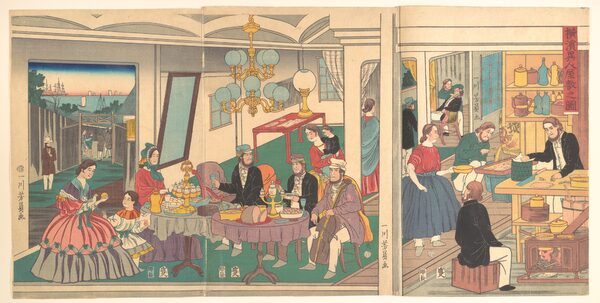
Baroque in Japan? The contemporary Japanese scene
After 1945, despite the dominance of a Germanic and Romantic model, Japan’s musical landscape gradually opened up to other horizons. Bach, Vivaldi, and Rameau found their place in an archipelago where concert halls, schools, radio, and even cafés played a decisive role. Here is the second instalment of a series chronicling a musical discovery in which the recorder takes center stage!


Barocco Napoletano: Treasures from the Conservatorio San Pietro a Majella
Viva Napoli: nativity scenes and pizza, Maradona and music… But Naples is also home to Cimarosa, Pergolesi, Vinci, Leo, Porpora, Durante, as well as Jommelli and Gluck. These musical treasures from Naples’ Baroque libraries are awaiting to be (re)discovered !
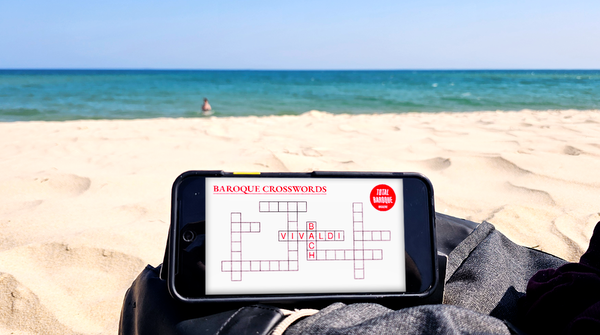

Explore the island and meet the partners of Total Baroque
-
 MUSICA MIRABILIS FESTIVAL 2026 August 14 – October 24 | Clusone, Italy Rediscover the forgotten treasures of Giovanni Legrenzi, a master of the European Baroque.
-
 August 14–16, 2026 | Copenhagen Kammerballetten & Concerto Copenhagen present Kaleidoscope, a captivating encounter between Baroque music and contemporary ballet.
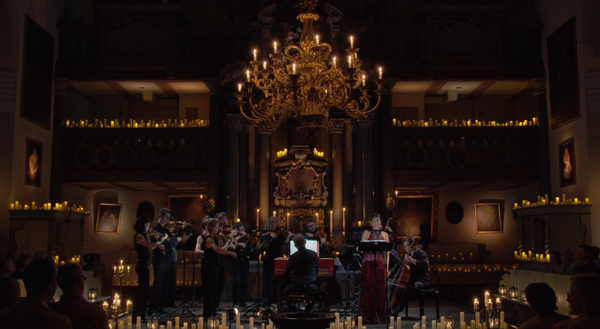

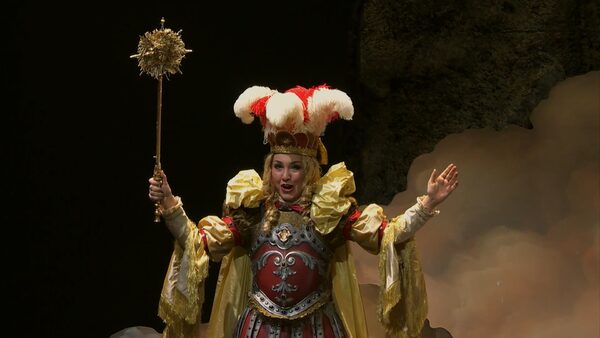
“Il Giasone” by Francesco Cavalli
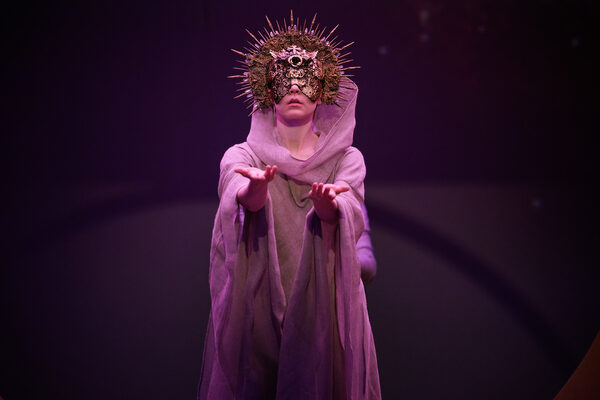
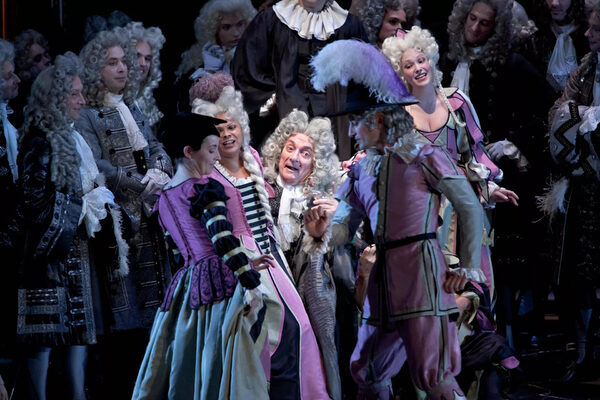
Between heroism and comedy, Cavalli’s “Il Giasone” was the greatest operatic success of the seventeenth century. Rediscover this colourful Baroque fresco at the Grand Théâtre de Genève, in Serena Sinigaglia’s inventive staging, under the vibrant direction of Leonardo García-Alarcón.






 Presto
News of the week
- Death of Joël Cohen, former conductor of the Boston Camerata The American conductor, lutenist and composer Joël Cohen died on 26 July 2026 in Boston (USA). Born on 29 May 1942, this former pupil of Nadia Boulanger in Paris conducted the Boston Camerata for four decades and founded the Camerata Mediterranea ensemble in 1990. Throughout his career, he was committed to promoting early music repertoires […]
- ‘Erasmus klingt’ Festival in Basel from 6 to 13 September The Erasmus klingt! festival in Basel, from 6 to 13 September 2026, is a biennial interdisciplinary event celebrating the legacy of Erasmus of Rotterdam, who lived and died in Basel. For this third edition of ‘Erasmus klingt! – Festival Lab’, Erasmus’s travelogues will serve as a source of inspiration for numerous concerts and events on […]
- In Versailles, Studio Baroque: a new training centre for young singers and instrumentalists The Centre de Musique Baroque de Versailles (CMBV) is launching Studio Baroque, a new training and career development programme for young singers and instrumentalists. Designed as a living laboratory for research, creation and interdisciplinary experimentation, it combines high artistic standards with practical preparation for a career as a musician. Studio Baroque draws on the full […]
- Farinelli Live: Baroque Cinema in Concert at Porto For the first time ever, the iconic film Farinelli by Gérard Corbiau will be presented as a live cine-concert. On June 7, 2026, at the Casa da Música, in Porto ( Portugal) the James Whale Orchestra joins forces with the Orquestra Barroca Casa da Música to perform the celebrated soundtrack live on period instruments, offering […]
- Ulrike Shapiro new Managing Director of Concerto Köln On 1 June 2026, Ulrike Shapiro will take over as Managing Director of the long-established early music ensemble Concerto Köln. An internationally experienced cultural manager and musician, she combines strategic expertise with a deep understanding of artistic practice. Ulrike Shapiro has lived in the USA for many years and brings extensive experience in cultural management […]
- 18-21 June, Montréal Baroque Festival The 24th edition of the Montréal Baroque Festival invites you – in a highly original way – to experience music differently, with some twenty events taking place in Old Montréal and the Quartier des Spectacles. From 18 to 21 June, the Festival presents a programme in which works from the 17th and 18th centuries appeal […]
- The Innsbruck Early Music Festival celebrates its 50th anniversary in 2026. The Innsbruck Early Music Festival will celebrate its 50th anniversary from 24 July to 30 August 2026. The highlight of this edition will be the baroque opera par excellence: Pietro Antonio Cesti’s Il pomo d’oro, a legendary composition by the great composer of the Innsbruck court. Under the musical direction of Ottavio Dantone, Il pomo […]
- Freiburg Baroque Orchestra to have a new management team From July 2026, the Freiburg Baroque Orchestra (FBO) will have a new management team: Selma Brauns will take over as Artistic Director, and Paul Enke as Commercial Director. Together, they will form the ensemble’s new dual leadership. Hans-Georg Kaiser, the outgoing Managing Director and Artistic Director, will remain with the FBO in a new role […]

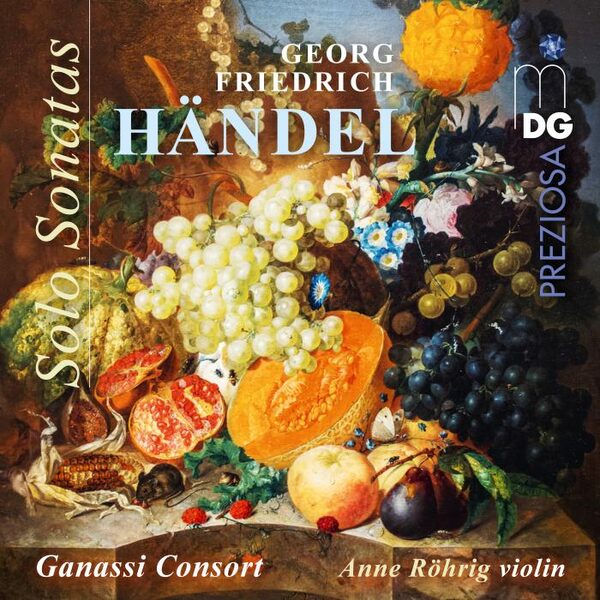
Handel: Solo Sonatas
How should Handel’s solo sonatas be brought to life when their publishing history, their sources and, at times, even their intended instrumentation remain fluid? Released in MDG’s Preziosa series, this double album by the Ganassi Consort with Anne Röhrig does not opt for uniformity: it entrusts the corpus to a whole range of period instruments, in order to recover, as closely as possible to historical practice, the diversity of a chamber Handel who is by turns lyrical, dance-like, theatrical and inventive.
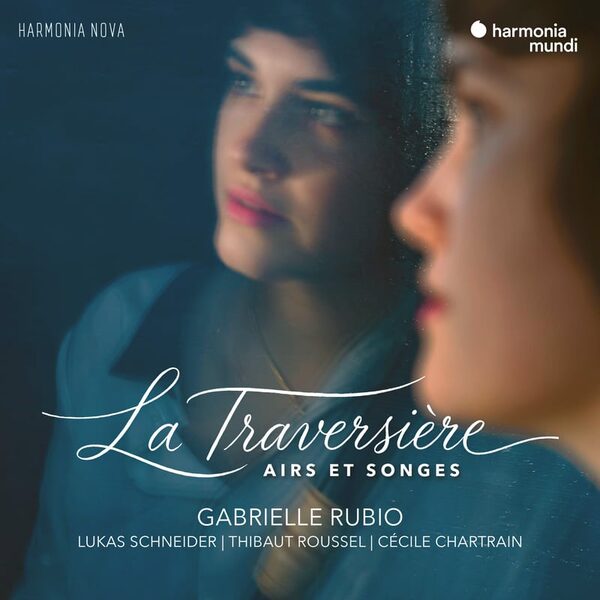
The Transverse Flute
For her first recital on Harmonia mundi, Gabrielle Rubio returns to the composers who first established the French transverse flute as an instrument of distinction. From Michel de La Barre to Michel Blavet, via Hotteterre, Philidor, Boismortier and Couperin, the young flautist traces a journey through dances, reveries and chiaroscuro, from the hushed intimacy of the King’s Chamber to the salons of the eighteenth century.
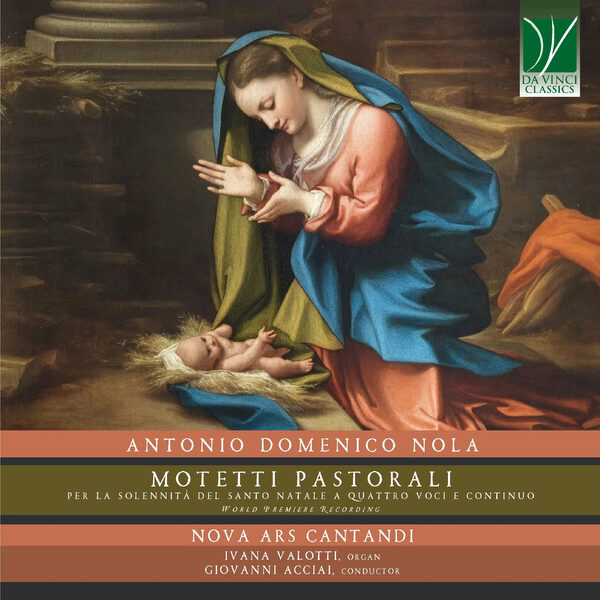
Nola: Motetti pastorali
Giovanni Acciai and Nova Ars Cantandi bring Antonio Domenico Nola’s “Motetti pastorali per la solennità del Santo Natale” back into the light: an expansive Neapolitan fresco for four voices and basso continuo that had remained in obscurity for almost four centuries. Combining sacred narrative, expressive polyphony and echoes of popular Christmas traditions, this recording reveals a still little-known figure in Neapolitan music at the turn of the eighteenth century.


 Our series
-
Countertenors: the South American pathway There are several of them, from different generations—Franco Fagioli, Bruno de Sá, Maximiliano Danta, Dennis Orellana and Samuel Mariño—all originating from South America and now pursuing careers on European stages. How and why did they cross the oceans?

-
Baroque Masters Baroque Masters paints a portrait of legendary figures who shaped the interpretation of early music. From visionary violinist Reinhard Goebel, who moved from Baroque research to modern orchestras, to pioneering conductor Andrew Parrott, advocate of a lively and rigorous approach, each episode explores a common quest: to rediscover the profound meaning of phrasing and the original spirit of the works. Lutenist Hopkinson Smith, a master of transmission, rubs shoulders with the great “baroque musicians” of the 20th century, such as Sigiswald Kuijken, whose commitment to historically informed performance has influenced generations of artists. A series dedicated to the passionate craftsmen who have breathed new life and authenticity into the Baroque.
-
A sopranist physician's diary (1 to 3) Philipp Mathmann, soprano and countertenor, performs on the world's greatest opera and concert stages, while also pursuing an equally demanding career as a physician. Here, he offers a deeply personal account of his daily life.
-
Lucile Richardot’s Diary (1 to 3) During the summer of 2025, at the Salzburg Festival, French mezzo-soprano Lucile Richardot recounts her experiences behind the scenes of Handel's Giulio Cesare, in which she played Cornelia in a production directed by Dmitri Tcherniakov and conducted by Emmanuelle Haïm. Between cargo bike rides, persistent rain, marathon rehearsals, fights on stage, bruises on her body, stress before the dress rehearsal, and a lost contact lens, she delivers the diary of an intense and unique artistic adventure, divided between rehearsals, stage performances, and moments of everyday life.
-
The Diary of Julie Roset (1 to 3) At 28 years old, young French soprano Julie Roset is making her debut at the Metropolitan Opera in New York… She tells us about her daily life and behind the scenes at the MET, from October 6 to November 7, 2025.
-
Musical Europe of the Renaissance (1 to 4) Belgian musicologist Jérôme Lejeune, director of the Ricercar label, invites you to rediscover in this four-part series the musical ferment of Renaissance Europe, at the crossroads of circulating ideas, aesthetic upheavals, and great personalities.

