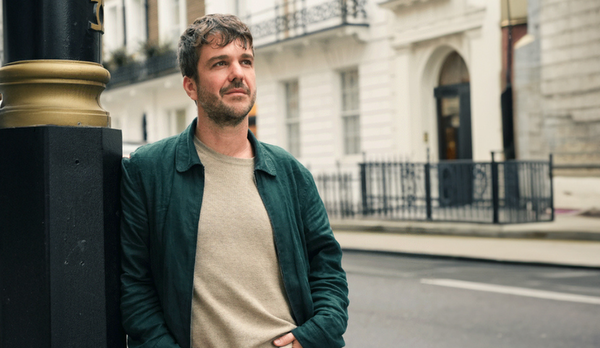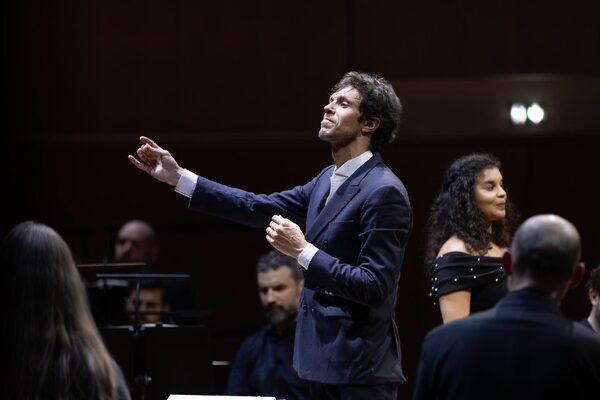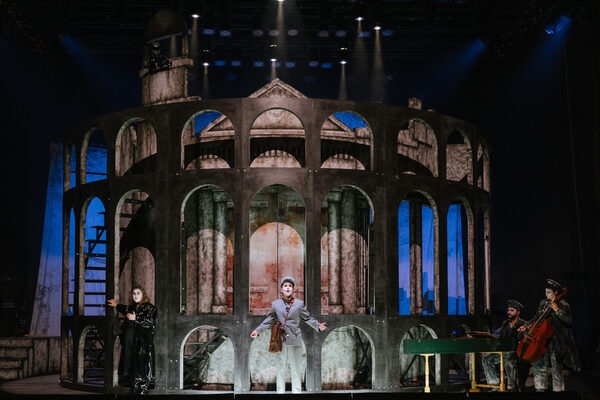
The ensemble Les Surprises and its founder and musical director, Louis-Noël Bestion de Camboulas, are celebrating their 15th anniversary in 2026, notably with a new production of Purcell’s Dido and Aeneas, on the bill since February. This emblematic work of the Baroque repertoire is reimagined by the ensemble in an original staged form: an all-female cast, musicians integrated into the action, spoken texts, and a choreographic dimension.
On Saturday, March 21, early music will be celebrated across Europe thanks to an initiative by the European Early Music Network (REMA). For the occasion, Total Baroque Magazine invites you on a journey through twelve filmed concerts in emblematic locations, from Versailles to Venice, via Madrid, Bayreuth, and Prague. An invitation to explore, wander, and immerse yourself in nearly a thousand years of music.
In March 2026, Total Baroque Magazine celebrates its first anniversary. Twelve months of investigations, interviews, and historical features exploring a repertoire that is at once rooted in heritage and deeply contemporary. This anniversary is an opportunity to take stock and share a few perspectives with you.
Founded in 1980, the Ricercar label celebrates forty-five years of existence with quiet discretion. An opportunity to take stock with founder Jérôme Lejeune about the complicated economics of the CD, and its indispensable role as both a tool of memory and a musicological act.
In Strasbourg, the Saint-Guillaume Choir has been resonating with the music of Bach for 140 years. Founded when Alsace was under German rule, it helped to rekindle Bach’s presence in France after 1918. Championed by Ernest, Fritz and Charles Munch, and courted by Honegger and Poulenc, it continues its journey today under the baton of 32-year-old conductor Étienne Ferrer.
At the helm of Cappella Mediterranea, Argentine conductor Leonardo García-Alarcón brings friends and partners into a sweeping saga that links libraries and stages, South America and Baroque Europe, record and video. And he insists: early music doesn’t exist. The moment it is performed, it becomes alive!
In 1974, the Studio de musique ancienne de Montréal (SMAM) was founded by three organists with one goal in mind: to restore early music and its performance practice to its rightful place in the contemporary world. Fifty years later, this endeavour has been a resounding success.
How a bagpipe competition in 2005 led François Lazarevitch to create Les Musiciens de Saint-Julien—and to celebrate the ensemble’s 20th anniversary with a double concert, both baroque and Celtic.