


 The ensemble Les Surprises and its founder and musical director, Louis-Noël Bestion de Camboulas, are celebrating their 15th anniversary in 2026, notably with a new production of Purcell’s Dido and Aeneas, on the bill since February. This emblematic work of the Baroque repertoire is reimagined by the ensemble in an original staged form: an all-female cast, musicians integrated into the action, spoken texts, and a choreographic dimension.
  By
By 


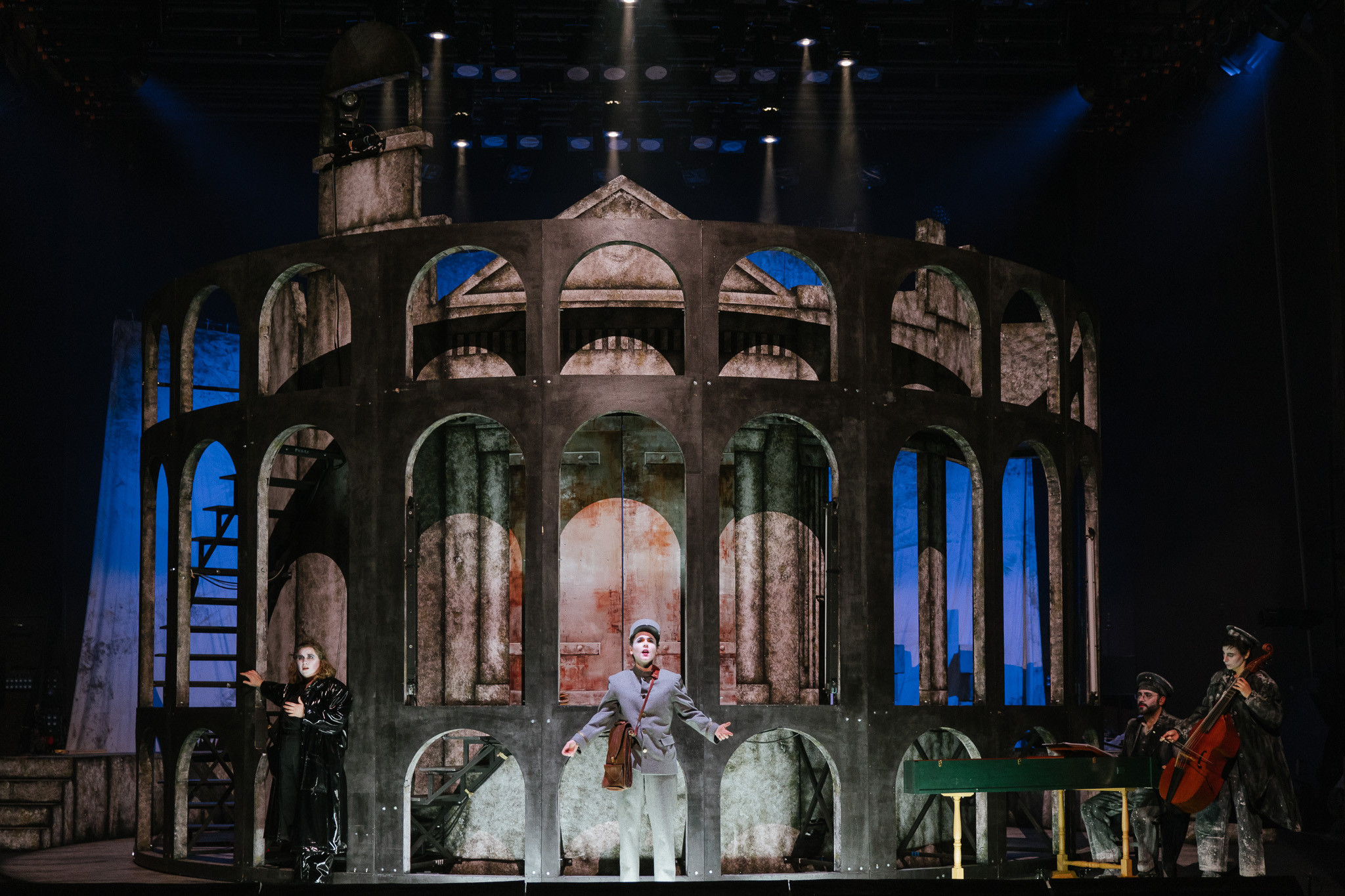
For around fifteen years, Louis-Noël Bestion de Camboulas and his ensemble Les Surprises have cultivated, through their performances and recordings, an art of discovery and original formats. Their latest production, Purcell’s Dido and Aeneas, performed around ten times across France since February, reflects the distinctive aesthetic the ensemble has developed since its founding. At the crossroads of opera, English masque, and musical theatre, the production combines musicological research, a strong ensemble spirit, and dramaturgical inventiveness. The ensemble’s musical director reflects on the beginnings of the project, the way he conceives his programmes, and the economic challenges currently facing Baroque ensembles. A conversation that also sheds light on the future ambitions of Les Surprises, determined to continue exploring repertoires and staged forms, against all odds.
Dido and Aeneas is one of the most famous Baroque operas. Why return to this “great classic,” when your ensemble has often focused on lesser-known repertoire?
Louis-Noël Bestion de Camboulas: It’s true that we have often chosen the path of discovery rather than that of the great “warhorses” … But this project is actually part of the continuation of a production we created a few seasons ago, Médée et Jason, a parody of French Baroque opera in which we combined various seventeenth-century pieces. It was already a highly collective production, with singers, dancers, and instrumentalists all present on stage. Dido and Aeneas continues this exploration, but with a much better-known work. The project originated from a proposal by the Clermont-Ferrand International Singing Competition. The new director of the Opera had greatly appreciated Médée et Jason and invited us to imagine a staged format adapted to the competition, with certain constraints in terms of forces. In this context, Purcell’s masterpiece naturally imposed itself: it is a relatively short opera, extraordinarily effective dramaturgically, and its music is absolutely brilliant!
Your staging seems very collective, almost close to musical theatre.
L.-N.: Yes, that was one of the central ideas. We wanted to go even further in the collective dimension than in our previous production. The singers do not merely sing: they take part in the choreography and in the dramatic action. The instrumentalists themselves are integrated into the stage. They participate in certain choreographic movements, and there are even moments when the entire team, including stage managers, becomes involved in the action… In total, around twenty people on stage genuinely contribute to the dramaturgy. This ensemble dimension was very important to us: it is not simply an opera being performed, but a work built collectively.
Passionate about early music and want to read this subscriber-only article?
If you are not a subscriber, join the international Total Baroque community. Subscribe here from 5.00€.
I subscribe
If you are already a subscriber, sign in.
I sign in 

You must be logged in to be able to post comments.
Sign in