


 PassiSparsi are Italian and unapologetically unconventional. This vocal quartet has chosen a little-known Renaissance polyphonic repertoire: the morescas, irreverent secular songs that composer Orlando di Lasso wrote following a stay in Naples. Discover the mystery of PassiSparsi’s black cat in this many-voiced interview.
  By
By 


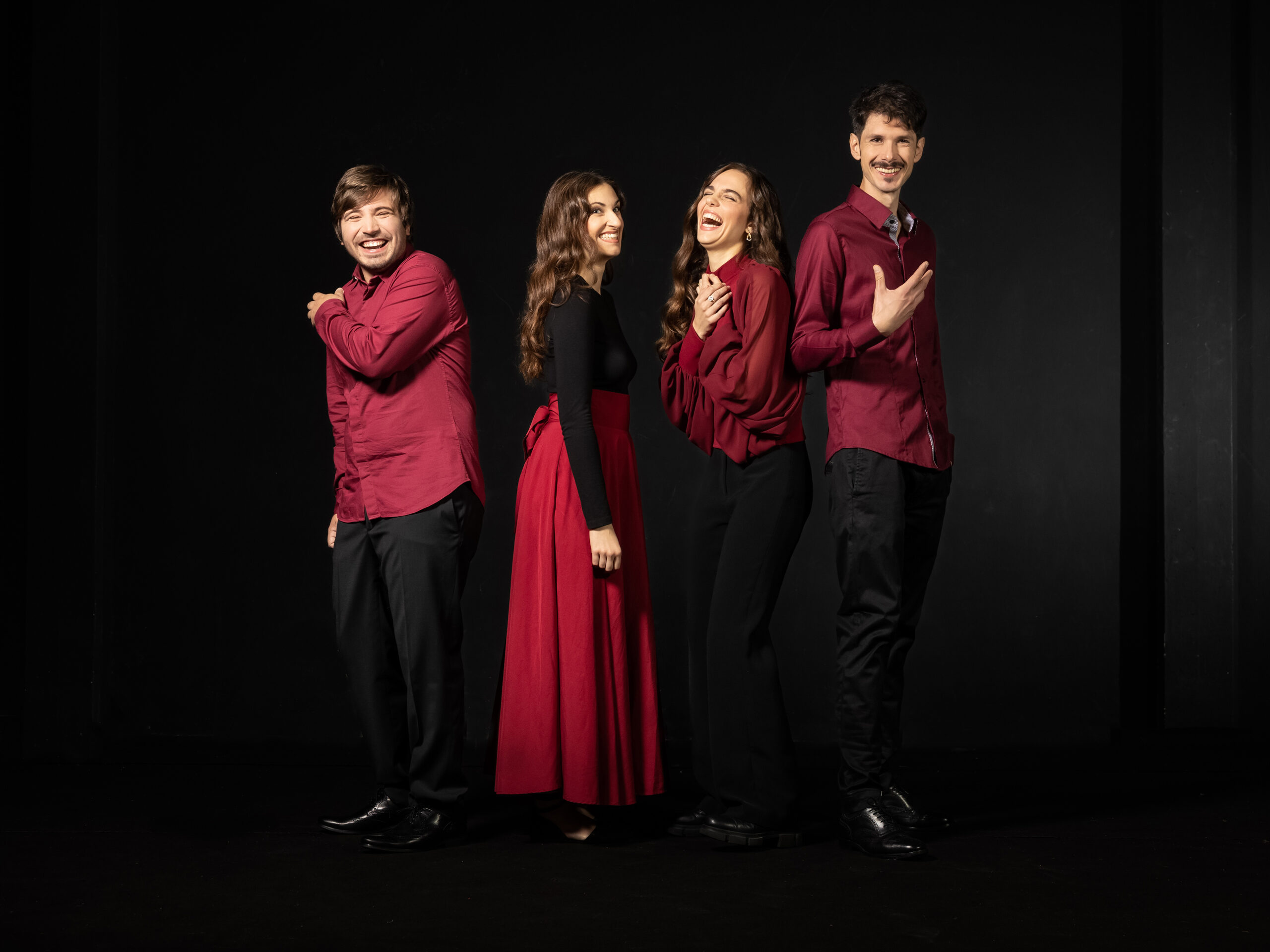
They call themselves PassiSparsi, a vocal quartet founded in Florence shortly before the outbreak of the pandemic, made up of Martha Rook, Cora Mariani, Neri Landi, and Lorenzo Tosi. Seemingly shy and reserved offstage, they transform themselves in performance, bringing to life and theatricalising the repertoire of the morescas, Renaissance polyphonic songs which captivate audiences with their enigmatic, at times obscene texts. They discovered this repertoire through Orlando di Lasso, the most eclectic and musically cosmopolitan composer of the sixteenth century, who wrote a small series of morescas after spending time in Naples and—artistic creation obliges—its underworld as well. Their debut album, Apra Finestra! Canzone moresche, has recently been released on NovAntiqua Records.
When did you form your group and how did you choose its name?
Lorenzo Tosi: We are all Tuscan, and we met at the Cherubini Conservatory in Florence, where we were studying Renaissance and Baroque singing, except for the tenor Neri Landi, who was originally a violin student diverted toward singing because he had this incredibly rare and powerful voice. We sang together in various choral projects, as is usually the case at conservatories, and we immediately shared an interest in Renaissance polyphony, which is very rarely practised in Italian academic institutions. We had four voices that blended well together, and that’s how it began. I had already sung with Cora Mariani when we attended an early music workshop led by Walter Testolin in 2018.
Martha Rook: Cora and I already knew each other as well, and we had started singing together in a group that mainly performed polyphony by contemporary composers. Neri had also sung a great deal of polyphony, mostly sacred music, and that is how our paths crossed at the conservatory and we said to ourselves: “Yes, let’s give this a try.” We began with a concert in 2019, telling ourselves: “Let’s see how we enjoy this…”
L. T.: Then another masterclass, again with Walter Testolin, brought us even closer together as a group, and we decided to adopt what became our definitive name: PassiSparsi. The title comes from a madrigal by Sebastiano Festa (1490–1524), on a text by Petrarch. This image of “passi sparsi” (scattered steps) resonated strongly with our identity as a group, because we are four people who have nothing in common except being Tuscan. Otherwise, we are very different, both in terms of vocal timbre, academic backgrounds, and sensibilities. Our life paths are different as well. We are a group that does not erase individual personalities within the sound, but instead feeds on those individualities…
What were the key moments that helped you grow as a group and decide to take your first steps?
M. R.: It was precisely that very first concert on 13 August 2019, for several reasons. Besides marking our debut, it was also when we began to understand that we wanted to explore a theatrical direction, even though it was still just the beginnings of what our performances are today. On Lorenzo’s suggestion, we decided to choose Orlando di Lasso’s book of villanellas and moresca songs and adopted the title Cantar per scherzo, which remained our flagship programme for many years. I would say that the figure of Orlando di Lasso defined us as an ensemble. We then decided to devote ourselves more broadly to this little-explored comic repertoire of the sixteenth century and to deepen its theatrical dimension. I remember when we performed the moresca Lucia celu, we said to ourselves: “But what does this piece mean, when it is so different from the others?” We understood almost nothing of it, obviously, but it planted a very important seed in our history and led us to where we are today. That’s why it was one of the most decisive moments.
Passionate about early music and want to read this subscriber-only article?
If you are not a subscriber, join the international Total Baroque community. Subscribe here from 5.00€.
I subscribe
If you are already a subscriber, sign in.
I sign in 

You must be logged in to be able to post comments.
Sign in