


 In Valenciennes, northern France, Yannick Lemaire and the ensemble Harmonia Sacra have been spearheading the festival “Embar(o)quement immédiat” for the past twenty years (anniversary edition, 6–31 May), and more recently an ambitious project to establish a music centre at the Hôtel de Barneville. In this former mining region, could the city be emerging as a major new hub for early music?
  By
By 


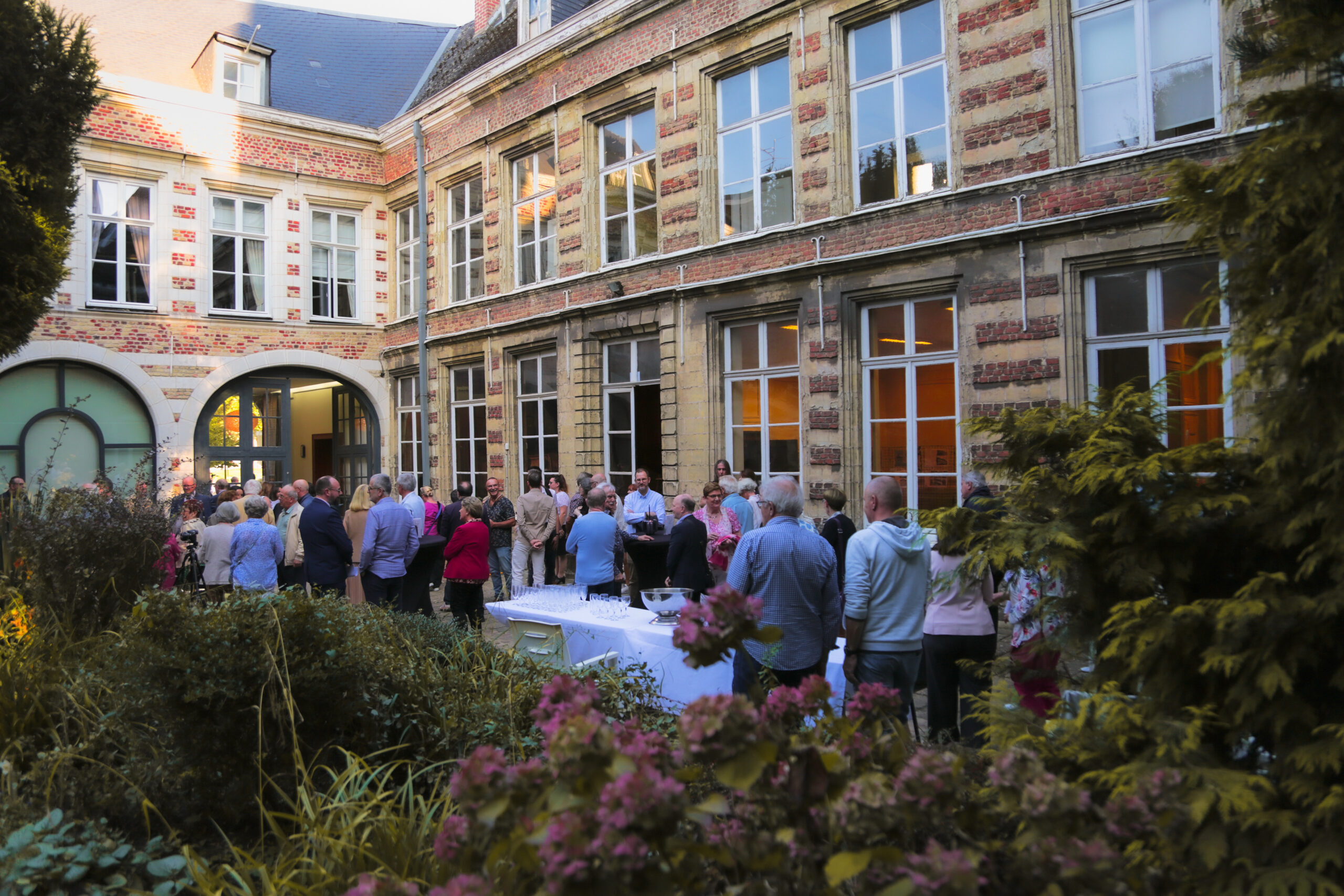
Directing an early music ensemble, running a festival for twenty years, and transforming an 18th-century townhouse into a centre dedicated to historical instruments: for many, that would already amount to three careers. For Yannick Lemaire, a 45-year-old native of Valenciennes, it’s all part of the same project. With ensemble Harmonia Sacra, the Embar(o)quement immédiat (a play on words meaning “All Aboard!”) festival, and the redevelopment of the Hôtel de Barneville, he has been pursuing a vision in which creation, heritage, and local rootedness converge for more than two decades. In this former mining basin, a genuine musical ecosystem is taking shape, driven by a network of musicians, researchers, instrument makers, and volunteers. A singular dynamic that is gradually outlining the contours of a new centre for early music.
A vision and three pillars
How does one manage at once an early music ensemble, Harmonia Sacra (founded in 2002), a festival, Embar(o)quement immédiat—which celebrates its 20th anniversary this year—and the more recent redevelopment of the Hôtel de Barneville in Valenciennes? The answer from the man at the heart of all three projects, Yannick Lemaire: “Very simple… it means, quite concretely… sleeping very little. But when you are passionate, you don’t really keep track. For me, music, projects, and life are very closely intertwined. I enjoy being in this dynamic of projects: it allows me to meet a great many people, and music ultimately irrigates all these initiatives.”
From the outset, Harmonia Sacra was built around several strong guiding principles. The first is, of course, a passion for early repertoire and the desire to make it accessible to all: both seasoned music lovers and newcomers. The second is regional roots. For Yannick Lemaire, returning to Valenciennes, his hometown, was a way of contributing to local cultural life: “When I created Harmonia Sacra, there were virtually no permanent ensembles in the region. Many musicians had left. The idea was also to recreate a dynamic—even a modest one—for artistic employment in this area.”
Finally, a third focus concerns the exploration of the musical heritage of the Hainaut region, which has long been overlooked by historians. Situated on the border between France and Belgium, this former county saw the emergence of many artists in the 17th and 18th centuries. Among them are now almost forgotten composers such as Guislain Pamart (1637–1704) and Martin Berteau (1699–1771), the latter considered one of the pioneers of the French cello school.
Research conducted around these figures has revealed a distinctive musical landscape: in certain collegiate churches of the region, liturgical tradition prohibited the use of instruments above the voices. Ensembles were therefore formed in which cellos occupied a central place, sometimes with several concertante parts. “This probably explains why so many cellists come from this region” notes Yannick Lemaire.

Passionate about early music and want to read this subscriber-only article?
If you are not a subscriber, join the international Total Baroque community. Subscribe here from 5.00€.
I subscribe
If you are already a subscriber, sign in.
I sign in 


You must be logged in to be able to post comments.
Sign in