


 Élisabeth Jacquet de La Guerre, the child prodigy of Louis XIV’s court, is familiar enough; Anna Bon and Wilhelmine von Bayreuth, musicians connected with the Bayreuth milieu and with the flute, an instrument dear to Frederick II, are heard less often. With Compositrices, the flautist Marta Gawlas brings these three figures together in a single gesture: to reveal, without any heavy-handed manifesto, the refinement of their writing and the inventiveness of women composers still too rarely represented on disc. A luminous way into a repertoire waiting to be rediscovered.
  By
By 


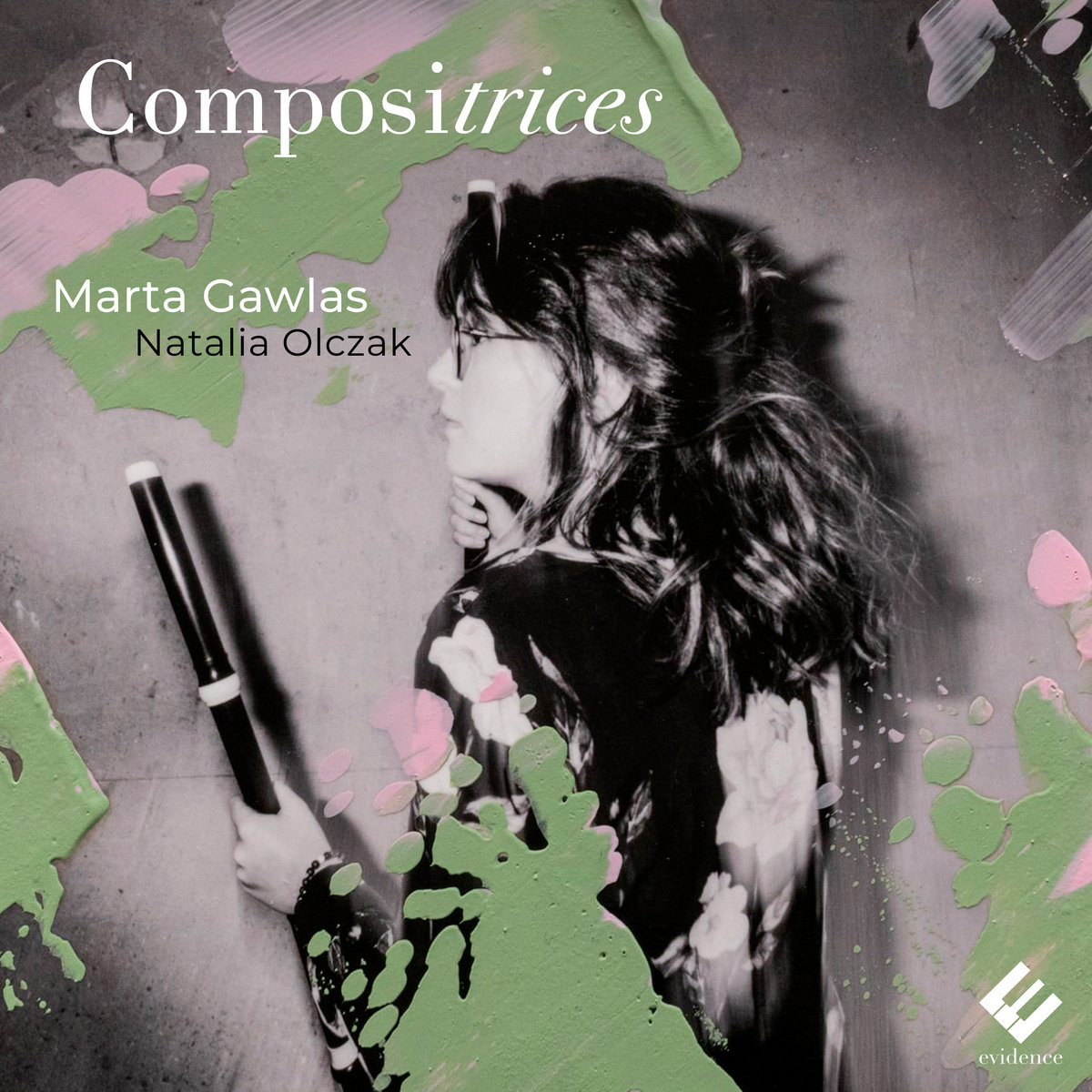
Released on Evidence Classics, Compositrices (“Women composers”) is the first solo album by the Polish flautist Marta Gawlas, accompanied by Natalia Olczak on harpsichord. The programme brings together five sonatas: two violin sonatas by Élisabeth Jacquet de La Guerre, transcribed for flute and harpsichord by Marta Gawlas, two flute sonatas by Anna Bon di Venezia, and one flute sonata by Wilhelmine von Bayreuth. The choice is coherent without being uniform: on the one hand, the French world of Jacquet de La Guerre, whose sonatas struck the court of Louis XIV by their originality; on the other, the Germanic world of Bayreuth, where Anna Bon and Wilhelmine von Bayreuth devoted a significant part of their output to the flute.
The interest of the album lies in the way Marta Gawlas refuses to reduce this programme to a simple act of patrimonial redress. These works are not important only because they were written by women: they matter because of their character, their taste for sinuous lines, their harmonic surprises and their sense of instrumental conversation. The transcriptions of Jacquet de La Guerre’s sonatas transfer writing conceived for the violin to the flute, without erasing its tension or mobility. In Anna Bon and Wilhelmine von Bayreuth, by contrast, the flute becomes the natural vehicle for a supple, sometimes audacious discourse, in which elegance never excludes invention.
The success of the recording rests, finally, on the balance between Marta Gawlas’s flute and Natalia Olczak’s harpsichord. The former offers a clear, agile sound, attentive to the inflections of the musical discourse; the latter supports without fixing things in place, gives fresh impetus without overemphasis. The duo gives these sonatas the breathing space of chamber music, in which one hears dance as much as song, construction as much as the immediacy of the moment. An album that does not place these women composers in a display case, but restores them to the living fabric of the Baroque repertoire. One to pass from hand to hand.

You must be logged in to be able to post comments.
Sign in