


 Trained in his native city of San Miguel de Tucumán in Argentina, then at the theatre school in Buenos Aires, countertenor Franco Fagioli now lives in Madrid. He speaks about his favourite opera houses, the unexpected discovery of his voice, and that persistent childhood dream: to become Mozart’s friend!
  By
By 


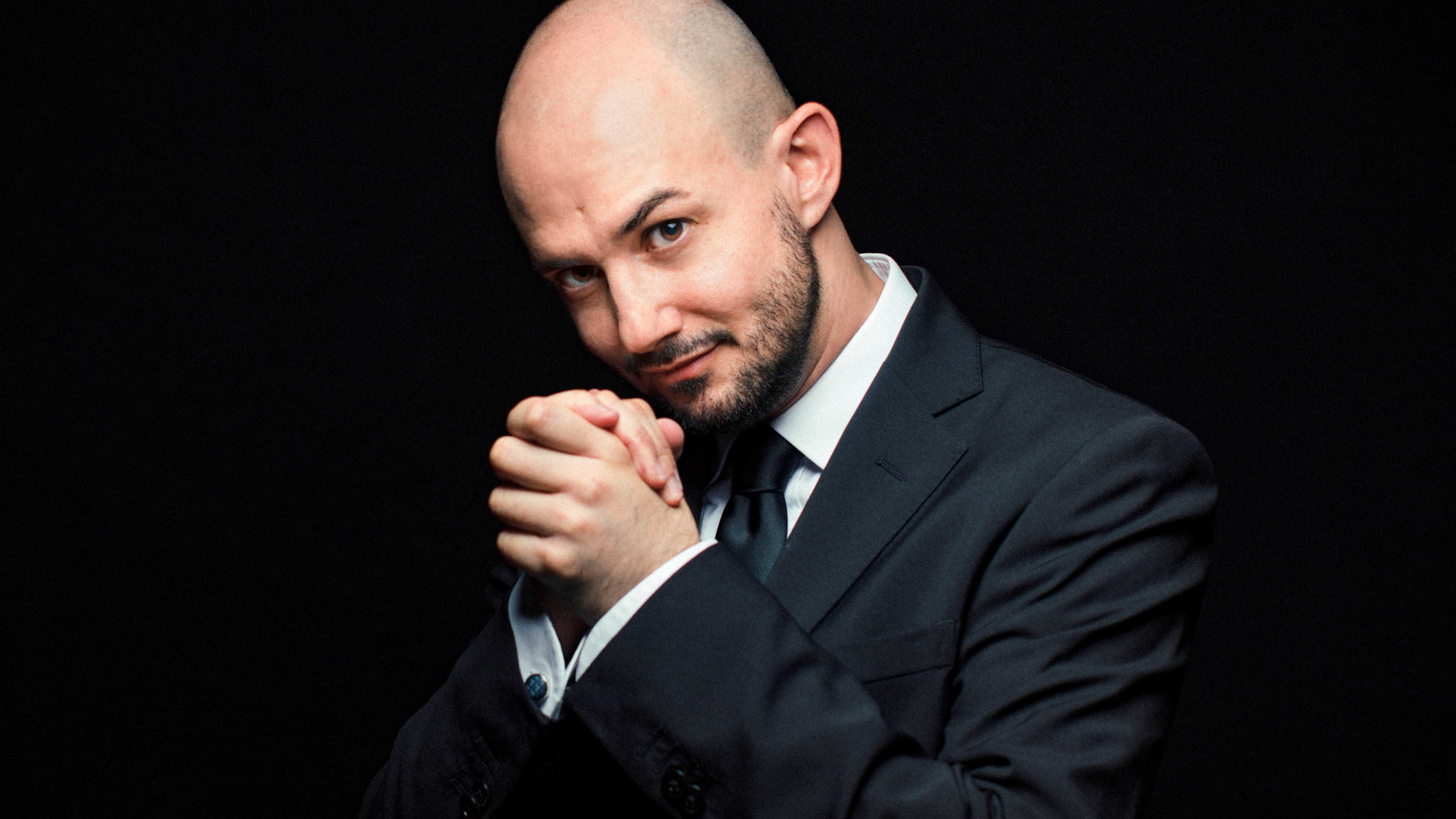
Born in 1981 in San Miguel de Tucumán, Argentina, Franco Fagioli was the first countertenor admitted to the Instituto Superior de Arte of the Teatro Colón. He commands a three-octave range and displays a remarkable bel canto technique in recordings as varied as Mozart and Rossini arias, Handel’s Agrippina and Gluck’s Orfeo ed Euridice. His most recent release, Arias for Velluti : The last castrato, is devoted to the last of the castrati. A passionate and accomplished actor, he has appeared on opera stages around the world and took part in the groundbreaking 2012 production of Vinci’s Artaserse, performed with an all-male cast and awarded the Preis der deutschen Schallplattenkritik in 2013. Here, he retraces a musical journey that began with his mother’s lullabies and led him to Madrid, via the theatre school in Buenos Aires.
My musical beginnings
My family is musical. My father’s mother was a music teacher for young children. She played the piano, though not professionally. At home, my mother has a very beautiful soprano voice; she sang a great deal to me and at family gatherings. My first contact with music was therefore her lullabies. There was a very beautiful one about a nightingale, and another about a cow being milked. I remember my grandmother at the piano and myself, approaching to try to play melodies in turn. I sang in my primary school choir, in church, then in another choir attached to the University of Tucumán. Those were my first steps in music.
My musical training
I learned the piano. As a child, when I began my musical journey, I hoped in some way to meet Mozart: I loved him so much that I felt the need to be his friend, as small children do with their favourite characters from films, series or books! When I went to the bookshop in my home town and asked where to start, I was given a collection entitled My First Mozart… and that is how it all began. I remember that book very clearly (the cover was orange) and I believe my mother still keeps my copy somewhere at home!
I played every Mozart piece I could read, beginning with little minuets he had probably written at the age of three, and I eventually tackled my first complete sonata, K. 545. Once I had mastered it, I must admit I went around saying everywhere: “I am the reincarnation of Mozart!” – but I suppose we have all done embarrassing things as children! I wanted to become a pianist, so I worked very hard and travelled to Buenos Aires to study with Carmen Scalcione. Later, I had the opportunity to perform the Piano Concerto No. 20 in D minor with orchestra in my city, and of course I explored the rest of the sonatas.
Passionate about early music and want to read this subscriber-only article?
If you are not a subscriber, join the international Total Baroque community. Subscribe here from 5.00€.
I subscribe
If you are already a subscriber, sign in.
I sign in 

You must be logged in to be able to post comments.
Sign in