


 Trained in Uruguay and then in Italy, countertenor Maximiliano Danta explores early music as both singer and multi-instrumentalist, while continuing, whenever possible, his commitment to working with underprivileged children.
  By
By 


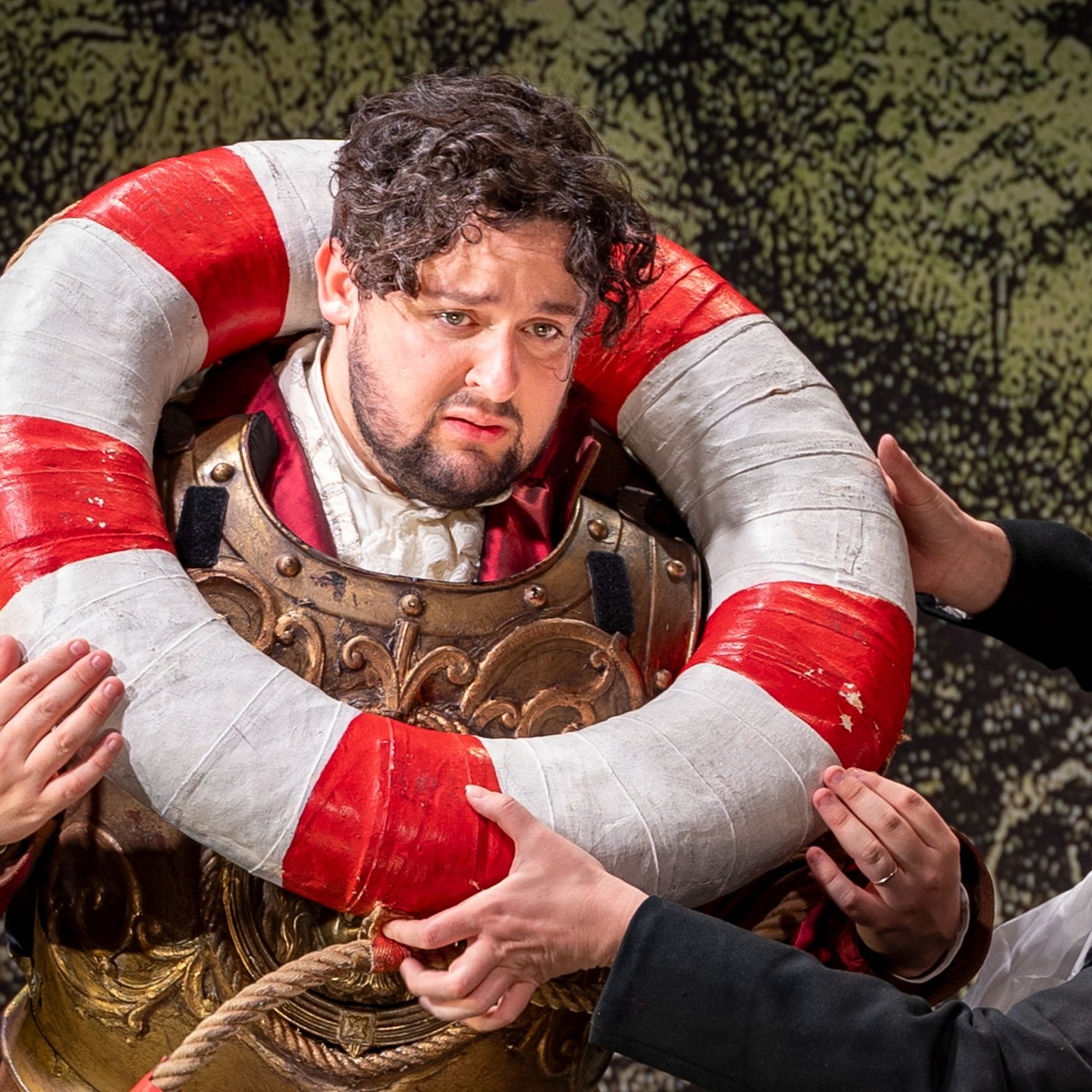
Trained in Uruguay and then in Italy, winner of the 2024 Cesti Competition for Baroque Singers and the 2025 Renata Tebaldi International Voice Competition, Maximiliano Danta, known as “Max”, has already recorded the role of Amore in La Flora by Marco da Gagliano and taken part in the recording Vespro per San Contardo d’Este by Giovanni Battista Vitali with the Madrigalisti Estensi. He is also the founder of the early music ensemble L’Humana Fragilità, with which he performs regularly. After studying at the Escuela Nacional de Arte Lírico in Montevideo (Uruguay) and earning a degree in Renaissance and Baroque singing at the G. Cantelli Conservatory in Novara (Italy), he is currently pursuing advanced studies in chamber music for historical instruments and voice at the Giuseppe Verdi Conservatory in Turin. A portrait of a music lover, equally at ease as a soloist or in ensemble, with his voice as much as with the lirone or the cornett.
How it all began
I don’t come from a family of musicians. My family is very religious—especially on my mother’s side—and I grew up within a Lutheran community where choral music played a central role: every church had a harmonium rather than a pipe organ (I used to watch the woman playing it pump the pedals to send air into this wonderful instrument…!) as well as its own music school, where musicians, choir directors and conductors were trained. The choirs were made up of members of the community itself.
My mother sang in the choir, so my childhood unfolded amid rehearsals, listening to hymns, polyphony, voices learning to work together. I remember very clearly the first time I heard the Hallelujah from Handel’s Messiah from the gallery: I said to myself, “I like this music.” As a teenager, I never liked pop; only classical music attracted me.
My musical training
Between the ages of six and thirteen, I sang in choirs, at church and at school. I was a very restless child, always looking for free activities in my neighbourhood; for a while I even joined a youth theatre troupe. I may have had some musical aptitude, but I didn’t stand out for a particularly remarkable voice.
At sixteen, I decided to study the flute. I can’t really say why: I liked the instrument. The choir director at my high school encouraged me to apply to a music training institution. She helped me get in touch, I passed the entrance exam, and little by little my interest in music deepened. Even though at first I wanted to study veterinary medicine, music was already taking up most of my time. I studied for five years at the National Opera School of Uruguay, in Montevideo.
One experience marked me deeply. Our conductor invited us to attend a concert by a Hungarian male choir. I believe it was the first time I had ever heard a countertenor. I asked her, “How does he manage to sing so high?” Her answer has stayed with me ever since: “By working.” Shortly afterwards, I decided to begin vocal studies alongside the flute. I had already given up veterinary medicine, which caused some concern in my family: “How are you going to make a living?”, “Music is beautiful, but it’s just a hobby.”

Passionate about early music and want to read this subscriber-only article?
If you are not a subscriber, join the international Total Baroque community. Subscribe here from 5.00€.
I subscribe
If you are already a subscriber, sign in.
I sign in 

You must be logged in to be able to post comments.
Sign in