


 The French ensemble Doulce Mémoire, specializing in Renaissance music, pays tribute to its founder Denis Raisin Dadre, who passed away last October, and opens a new chapter under the leadership of Elsa Frank and Jérémie Papasergio, long-standing collaborators of the founder. A concert at the Opéra de Tours on March 17 will mark both this tribute and the rebirth of the ensemble.
  By
By 


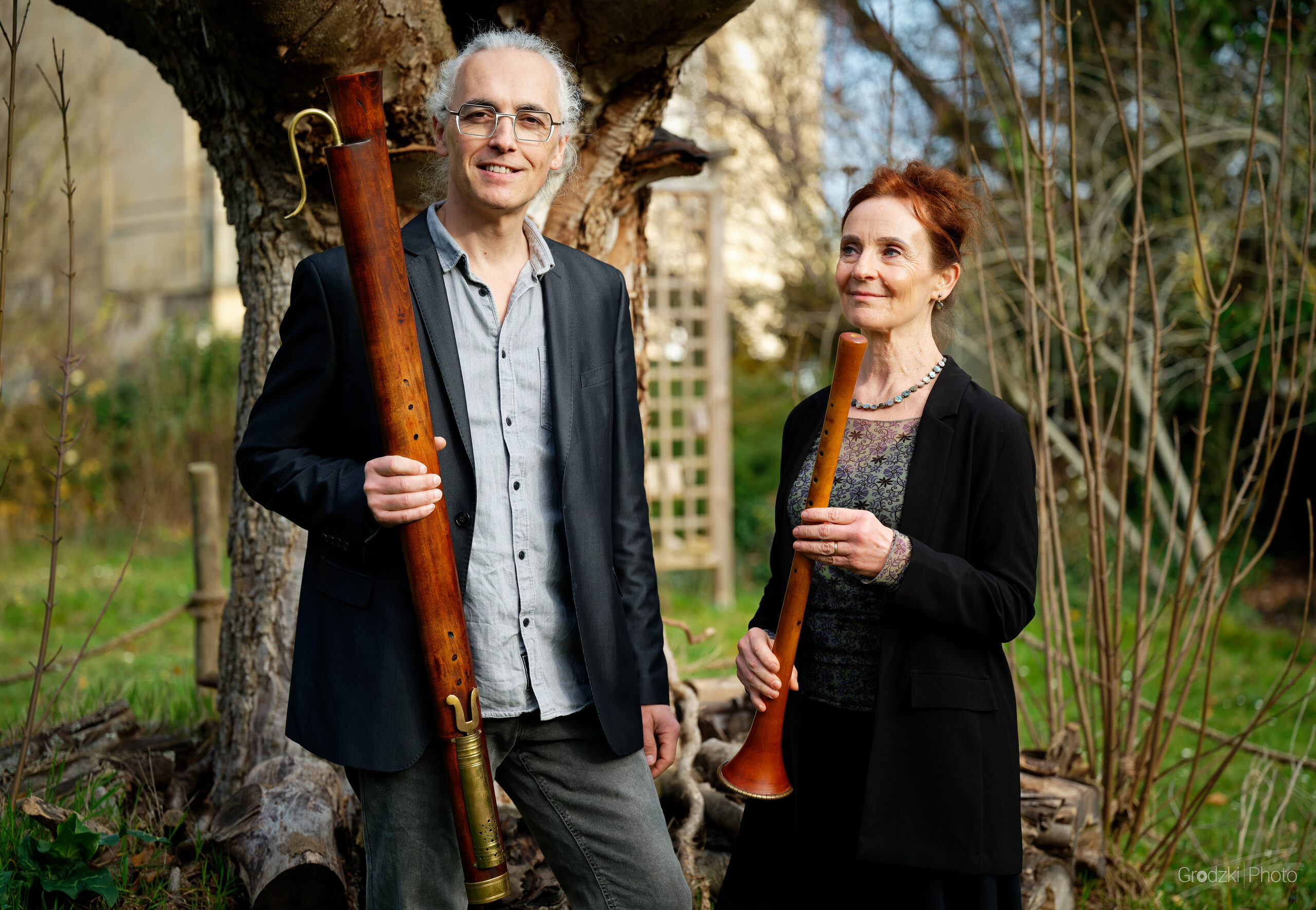
After the death of its founder Denis Raisin Dadre in October 2025, the ensemble Doulce Mémoire could have fallen silent. It chose to continue. Heirs to an artistic adventure that began more than thirty years ago, Elsa Frank and Jérémie Papasergio have been entrusted with a delicate transition: to transmit without freezing, to carry forward without imitating. Rooted in the Loire Valley and faithful to the Renaissance repertoire, the ensemble is opening a new chapter in its history, poised between tribute, creation, and reinvention. On the occasion of the testimonial concert given on March 17 at the Opéra de Tours, the two musicians reflect on this new beginning.
What happened during this suspended period between the passing of Denis Raisin Dadre and today?
Doulce Mémoire: First there was a time of shock. Denis was already guiding us in a reflection on transmission, on the future of the ensemble, but his sudden death naturally accelerated events and upended all possible scenarios. Very quickly, a question arose for many of us: what would become of this entire movement? For Doulce Mémoire is not merely an ensemble; it is a way of approaching Renaissance music, a way of conceiving programmes, of creating intersections, of thinking about the stage and the relationship with audiences. And within the French or European landscape, there is no real equivalent in these specific characteristics.
Quite rapidly, we understood that all this could not simply come to an end. The question was not only: should we continue? but: who can continue? And, almost naturally, eyes turned toward the two of us. We had been there from the beginning; we had gone through all the stages of the ensemble; we knew its intimate history, its artistic foundations, its demands. It happened without calculation, with a sense of obviousness mixed with responsibility.
Your personal connection with Doulce Mémoire goes back more than thirty years…
Doulce Mémoire: Yes, to the 1990s. We met during our studies, at summer courses, as often happens in the early music world. Denis then came from a background as a recorder player, before turning to reed instruments. The very first core of Doulce Mémoire was formed around decisive encounters: that between Denis and the lutenist Pascale Boquet, then very soon with the soprano Anne Delafosse-Quentin, who took part in the first recordings. At that time, Denis was still teaching music in middle and high schools in the Lyon area, but he was already deeply driven by research and by the exploration of the Renaissance repertoire. Looking back, what is striking is the coherence of the path taken. Like many early music ensembles, Doulce Mémoire was born from a shared desire during the years of training, then was patiently built through work, curiosity, and fidelity to a repertoire that, at the time, still remained marginal.

Passionate about early music and want to read this subscriber-only article?
If you are not a subscriber, join the international Total Baroque community. Subscribe here from 5.00€.
I subscribe
If you are already a subscriber, sign in.
I sign in 

You must be logged in to be able to post comments.
Sign in