


 With “Crosswinds”, Into the Winds and Les Corps Éloquents explore the dances of the early Renaissance through the spirit of alta capella (a ceremonial instrumental form), the expertise of dance masters, and the Neoplatonic imagery of the seven classical planets. A performance that blends historical reconstruction, theatrical invention, and a contemporary perspective, Into the Winds will be back on 18 September in Waha, Belgium, with “Le Grand Embrasement”.
  By
By 


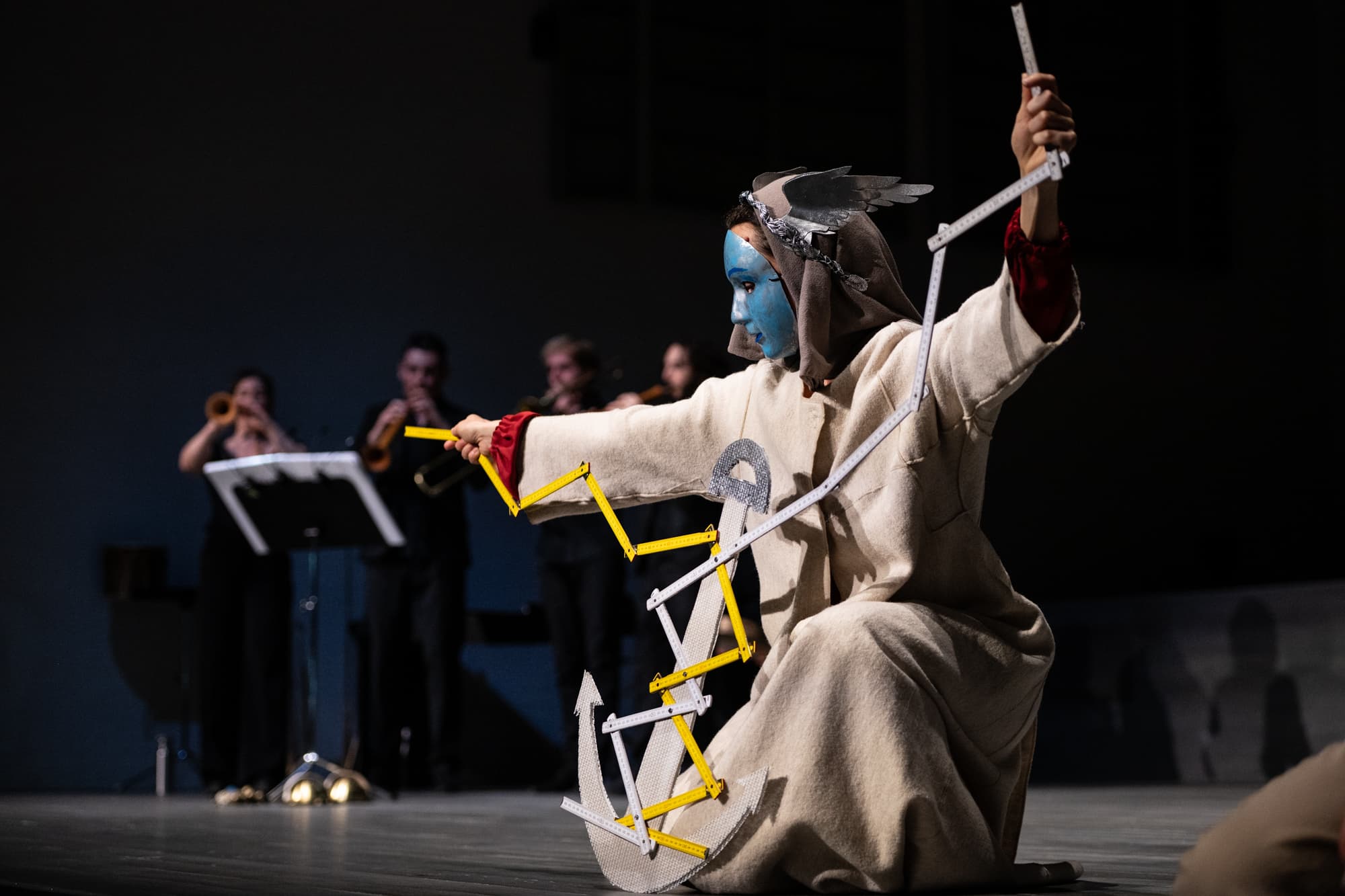
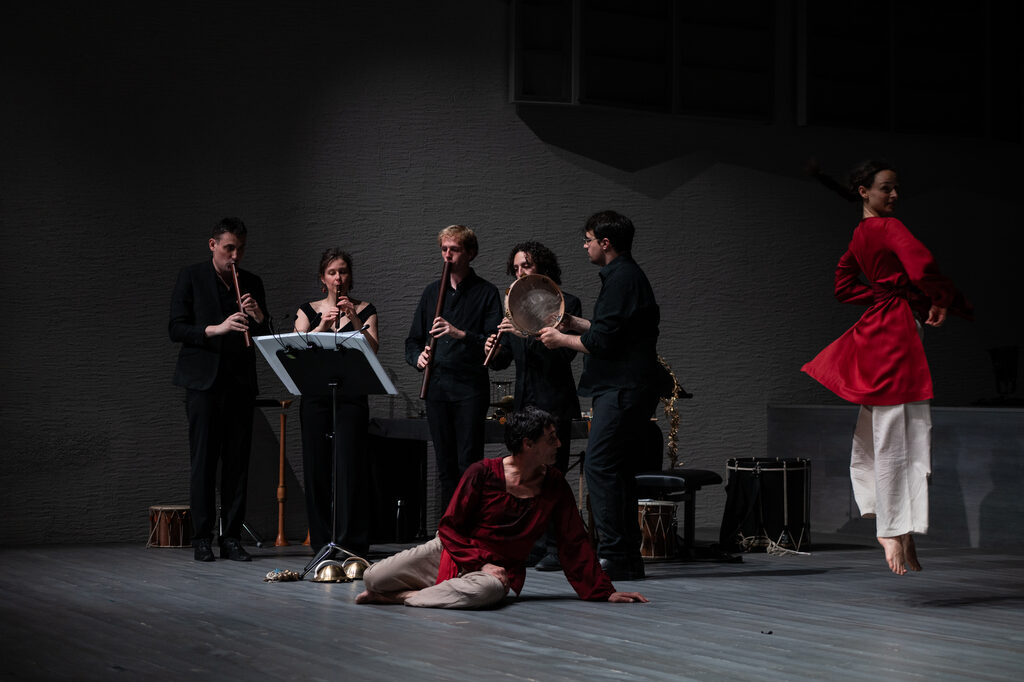
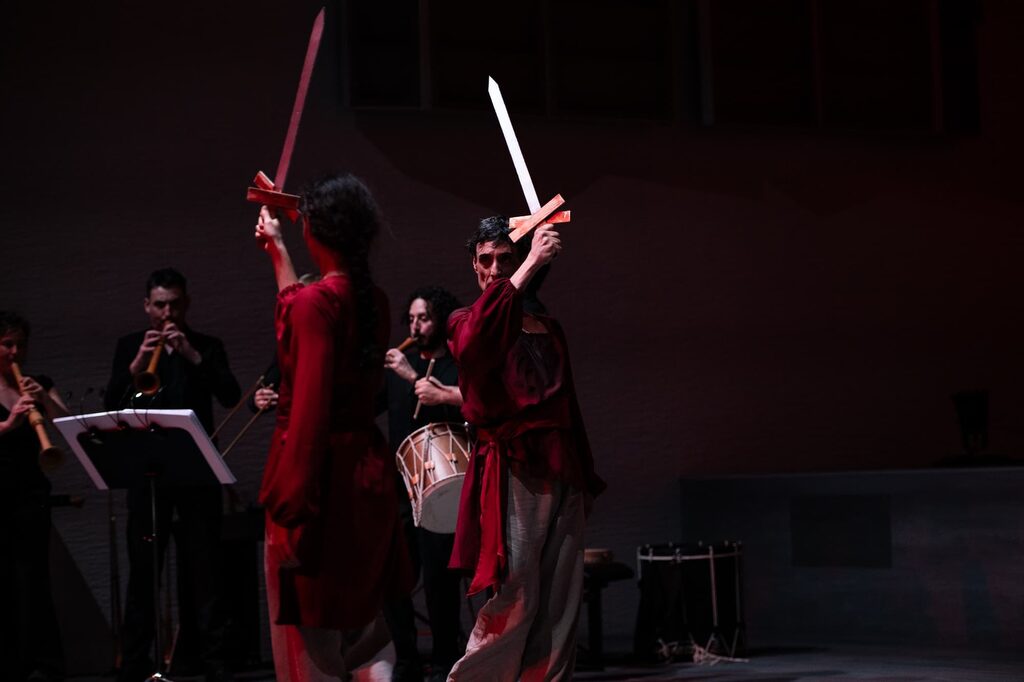
Introduction: With Crosswinds, Into the Winds, an ensemble specialising in historical wind instruments directed by Adrien Reboisson, joins forces with Les Corps Éloquents, a company devoted to historical dance and led by choreographer, dancer, and researcher Hubert Hazebroucq. Commissioned by the Freunde Alter Musik Basel Festival for its 2026 season, the production brings together the alta capella of the early Renaissance—a ceremonial and festive instrumental ensemble associated with courtly dances—and the choreographic knowledge of dance masters from the Italian, French, and Burgundian courts. Drawing on the seven great principles of Renaissance dance, linked to the classical planets and the Neoplatonic imagination of the period, the two artists have devised a form that is neither historical re-enactment nor simply a concert with dance. In this interview, Adrien Reboisson and Hubert Hazebroucq discuss the genesis of the project, the patient work carried out on often fragmentary sources, the balance between reconstruction, invention, and abstraction, and their refusal to reduce the Renaissance to an image of courtly life or historical costume.
Could you explain the origins of this project and define it in a few words?
Adrien Reboisson: Hubert and I have known each other since 2015. We first collaborated on a production by the ensemble Doulce Mémoire. At the time, we had already considered working together, but it was the Freunde Alter Musik Basel Festival that gave us the opportunity in 2025 by inviting us to create a joint project. We chose to focus on the repertories of the early Renaissance, between 1450 and 1550. During this period, dance masters at the Italian, French, and Burgundian courts theorised their practice, leaving behind musical works that are closely connected to the choreographic repertoire. This era also corresponds to a golden age of the alta capella, the ceremonial and festive ensemble combining shawms and early brass instruments (Into the Winds specialises in wind instruments), which was widely used to accompany dance and frequently depicted in iconography. With this production, we want to offer audiences an immersion into the spirit of the Renaissance. It is almost a “concept performance,” drawing inspiration from texts such as those of Marsilio Ficino, a major figure of the humanist movement.
Hubert Hazebroucq: This historical period is indeed foundational, since it marks the moment when dance attained the status of an art form. For the first time, it became the subject of theoretical inquiry. The dance masters of the period therefore transmitted not only choreographies, but also writings that opened up broader reflections on dance, some of which set out its fundamental principles. With Crosswinds, our aim was not to create a repertory production, but rather to develop a dramaturgy that speaks to a contemporary audience while drawing on period dances and techniques.
What are these “fundamental principles” on which you based the production?
H. H.: These seven principles are measure, memory, spatial disposition, air, manner, diversity of things, and movement understood as a totality of body and music. To understand these seven principles, one must immerse oneself in the analogical and Neoplatonic thinking of the period. We associated each of them with one of the seven classical planets, which in turn correspond to metals, humours, colours, and more. These associations are found in the quasi-magical speculations of Marsilio Ficino, as well as in the writings of alchemists. We use them to generate imagery and associations. For Saturn, for example, which is linked to melancholy and black bile in the human body, I wanted to draw inspiration from Dürer’s engraving of the same name.
A. R.: We must remember that during the Renaissance, the universe was imagined as a great harmony. The planets, human passions, bodily movements, and even the theory of humours were all interconnected. It was believed that the seven planets governed human destiny. Our project draws on these analogies to unfold an imaginative world around each piece.
Passionate about early music and want to read this subscriber-only article?
If you are not a subscriber, join the international Total Baroque community. Subscribe here from 5.00€.
I subscribe
If you are already a subscriber, sign in.
I sign in 
You must be logged in to be able to post comments.
Sign in