


 A pioneer of historically informed performance, Andrew Parrott reflects on sixty years of early music, championing an approach that is both vibrant and rigorous — and never dogmatic.
  By
By 


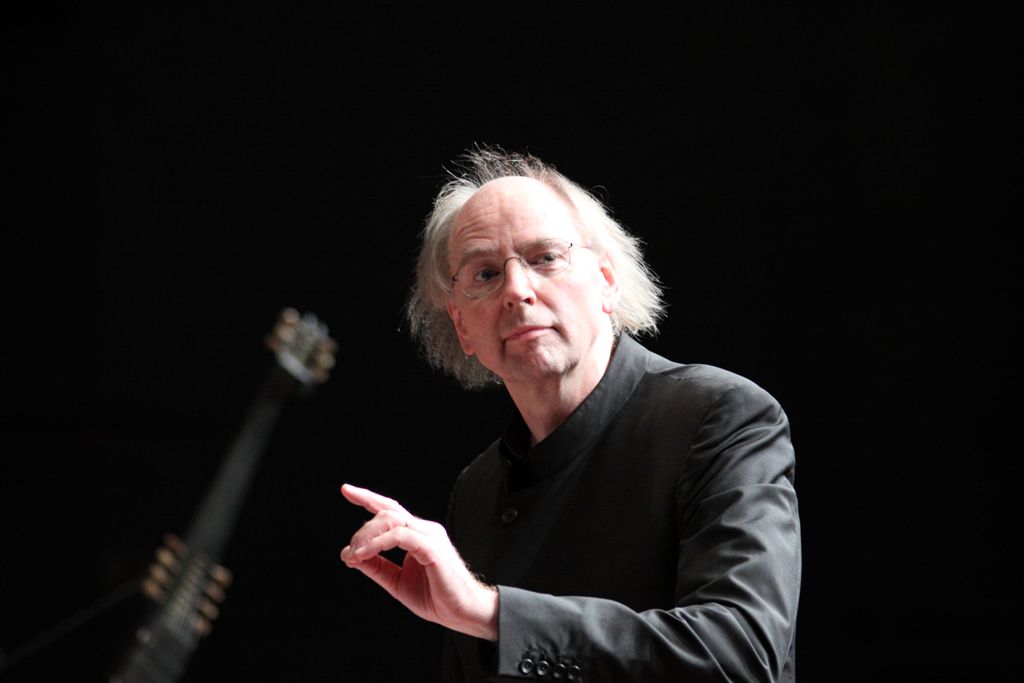
Conductor and founder of the Taverner Choir, Consort and Players, Andrew Parrott has played a key role in reshaping the way we approach and listen to music of the past. In this first part of our interview, he offers a candid overview of the early music scene today: the rise of Baroque, the quieter presence of earlier repertoires, and the sometimes fragile ties between scholarship and performance. With clarity and wit, he challenges received ideas, questions ingrained habits, and urges us to rethink the established musical hierarchy.
Andrew, looking back on the past 60 years or so that you’ve been immersed in early music, what would you say are the greatest achievements of historical performance practice?
Andrew Parrott: Well, to begin with: it has certainly opened things up—in an oral sense, I mean. Musicologists were always aware of the repertoire from the Middle Ages through the Renaissance and up to the Baroque. But in academic circles (universities and even music colleges), music before Bach was essentially just a matter of names. There was no real understanding. Of course, there was a genuine love for certain repertoires: in Germany, for instance, everyone knew of Schütz through the church tradition in particular. Similarly, in England, we were familiar with William Byrd and Thomas Tallis and others. But these were disconnected from the broader musical landscape—certainly in England. One major achievement has been a deeper understanding of (I was about to say Baroque music generally), but I think I really mean 18th-century music in particular, and even music beyond the Baroque, into the Classical era, which is a very healthy development. In one sense, that’s bad news for conventional symphony orchestras and perhaps large choirs, as this repertoire is now more naturally, more healthily performed by different, smaller ensembles—though by no means small in Baroque or 18th-century terms. So, that’s certainly a positive development. So, that is good.
The downside is that earlier music has somewhat suffered…
A. P.: Many of my contemporaries or predecessors—the Harnoncourts and Leonhardts of the world—were chiefly interested in 18th-century music. That era has been well served, though perhaps not as well served in certain specifics as I think it could have been—but that’s another conversation. The 17th century, however, is less well understood in practical terms, and that often results in performances that are less convincing than they might be. And there’s a barrier when it comes to vocal music of the 16th century and earlier, even though the greatest surviving music from that time is predominantly vocal. It’s hard to gauge the impact of this repertoire because it doesn’t translate as naturally to the concert platform. Baroque music (large-scale works) gets performed because we have concert halls. Lute recitals and lute songs don’t have a natural home except on recordings. People do buy plenty of recordings of early music, but we don’t know how many are listening in the same engaged way you might, for instance. The success of Baroque music can be measured in public terms, on stage. Thus, there is still a schism, if I may put it bluntly, between what we now consider mainstream music, which extends to the Baroque, and the rest of early music. There’s real music and early music.
Yes, that’s right. I also see this distinction in the programs of many major festivals and organizers …
A. P.: To illustrate this, let me share an anecdote: I received a Gramophone Award once, for a 16th-century programme. What struck me was the order of the ceremony and the geography of the hall: music for young performers came first, early music followed, and then, as the evening progressed, we moved up the ladder to “real music” and the big starry names. I’m not saying I wanted to be one of those stars; it was just rather strange. But it spoke volumes about the existing hierarchy. That frustrates me. My own view is that there’s been great music, and terrible music, at every point in musical history, and everything in between. I happen to be interested in all of it, not necessarily equally, but I’m aware of that. And I still think many musicians are trapped.
Passionate about early music and want to read this subscriber-only article?
If you are not a subscriber, join the international Total Baroque community. Subscribe here from 5.00€.
I subscribe
If you are already a subscriber, sign in.
I sign in 

You must be logged in to be able to post comments.
Sign in