


Young talents
They are the future of the Baroque scene! Discover the promising young musicians and ensembles supported by Total Baroque in this section!
-
-
 Young Talents
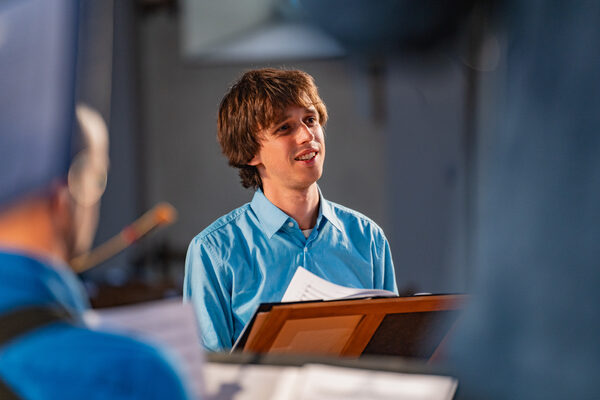
Beniamino Paganini: for the Glory of Music
Founder of Musica Gloria, a baroque ensemble born out of his early years of training, Belgian flutist and harpsichordist Beniamino Paganini, 31, has cultivated an intimate and devoted approach to music since discovering Monteverdi in Bruges at the age of 7.
-
 Young Talents
Ensemble Théodora: French Baroque Finds a Home in London
Four women, making every decision together, embracing a quartet that combines artistic freedom with uncompromising rigour. Founded in London around French music, Ensemble Théodora has made friendship, source materials, and long-term collaboration the foundations of a shared sound, refined with meticulous care. Lucie Chabard and Mariamielle Lamagat speak about the intimate process behind their collective.
-
 Young Talents
Olivier Bergeron: A Year in Charpentier’s Company
In love with the French language and with voices that inhabit the space in between, Olivier Bergeron finds in Charpentier an ideal terrain. At 29, the Quebec baritone has made the composer one of the central themes of his 2026 season. A laureate of Le Jardin des Voix, trained in Montreal and Paris, he will reunite this summer with Les Arts Florissants and William Christie for a North American tour, before singing his first Papageno in Montreal.
-
 Young Talents
Marie Nadeau-Tremblay: Where Violin Meets Vocation
Marie Nadeau-Tremblay’s name has risen like a rocket through Quebec’s Baroque music scene in recent years. The colourful violinist, who has built a series of recording projects far off the beaten path, reflects on her journey, her artistic convictions, and the place of art in North American society today.
-
 Young Talents
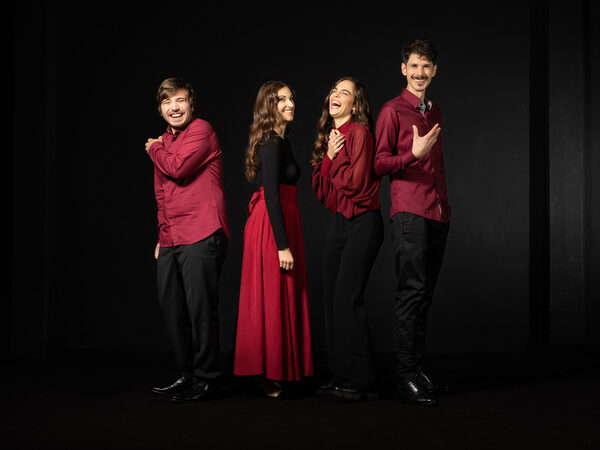
PassiSparsi, the Morescas and a Black Cat at the Window
PassiSparsi are Italian and unapologetically unconventional. This vocal quartet has chosen a little-known Renaissance polyphonic repertoire: the morescas, irreverent secular songs that composer Orlando di Lasso wrote following a stay in Naples. Discover the mystery of PassiSparsi’s black cat in this many-voiced interview.
-
 Young Talents
Manon Papasergio, the musical triathlete
At 23, the French musician Manon Papasergio is already pursuing a distinctive path between the viola da gamba and early harps, placing them at the service of rarely explored repertoires, from the Renaissance to the threshold of the Baroque. Invited by ensembles such as Les Musiciens de Saint-Julien and Il Caravaggio, and the author of a much-noticed first recording, she moves forward with insatiable musical curiosity and a firmly embraced refusal of boundaries.
-
 Young Talents
Inside the Kapsber’girls’ Workshop
For over a decade, the French quartet Kapsber’girls have been reclaiming overlooked pages of the Baroque repertoire. Driven by in-depth research and creative work, the ensemble develops original programmes conceived for the stage and shaped by a strong taste for experimentation. Their journey also sheds light on the practical realities of production and touring today, balancing artistic ambition, collective organisation and a changing sector.
-
 Young Talents
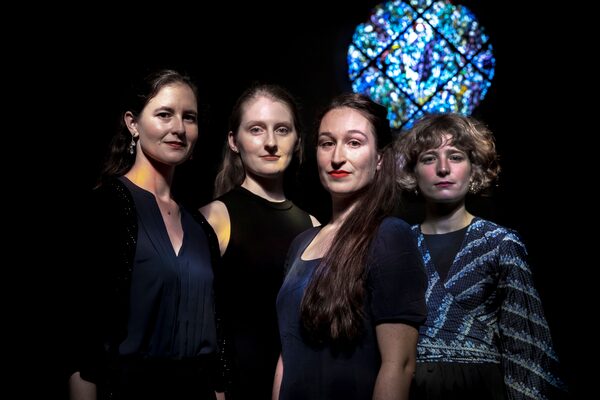
Contre le Temps: Reclaiming the Middle Ages
Created in Basel (Switzerland), in the vibrant atmosphere of the Schola Cantorum Basiliensis, the female vocal quartet Contre le Temps brings medieval music to life in a renewed form. Four singers—two French, two American—and four individual paths converging in a shared sound, always in search of itself.
-
 Young Talents
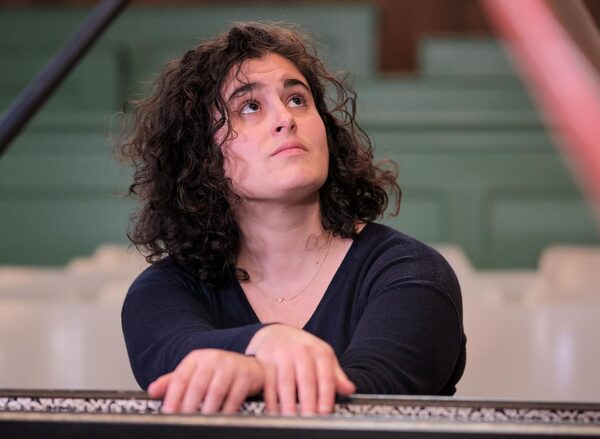
Lillian Gordis: the harpsichord from Bach to contemporary repertoire
A Franco-American harpsichordist born in Berkeley and based in Paris since adolescence, Lillian Gordis has established herself as a leading figure of her generation on the international stage. Acclaimed for the expressive power of her playing and her intellectual engagement, the “Martha Argerich of the harpsichord” is regularly invited to major festivals across Europe and the United States, while also pursuing a highly regarded recording career.
-
 Young Talents
The BanXhies: Baroque, Celtic and (soon) Viennese!
They are four: Roxana and Yaoré on violins, Suzanne on cello and Louise on harpsichord. Behind the Celtic myth of the “banshee”, they reinvent the concert experience with a freedom shaped as much by Baroque aesthetics as by the spirit of an Irish pub. Their album, to be released in September on Alpha Classics, will explore Venetian and Viennese repertoire.
-

