


 What might life have been like for a violin consort in sixteenth-century Venice? For its debut album, La Capriola imagines an evening around St Mark’s Square, from the basilica to the palaces and then on to the taverns. Willaert, Rore, Gabrieli and Bendusi punctuate a journey in which sacred music, madrigals, dances and songs reveal the many faces of what was still a relatively new instrument.
  By
By 


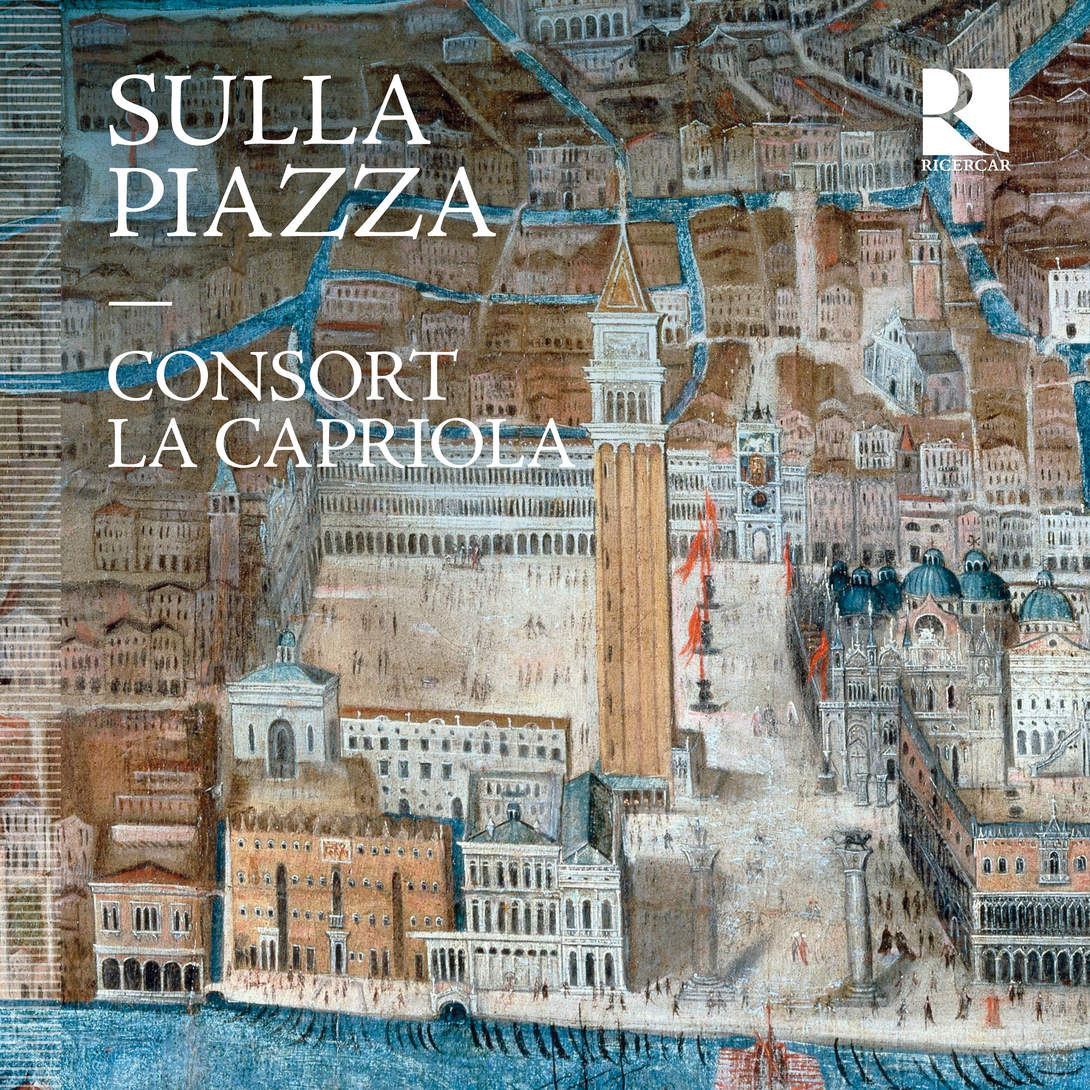
With Sulla Piazza, its debut album, La Capriola takes the violin as its guide through sixteenth-century Venice. Charlotte Gerbitz, Dorine Lepeltier-Kovács and Manon Papasergio, joined by singer Camille Fritsch and, on occasion, violinist Odile Édouard, trace an imaginary evening around St Mark’s Square in music. Released by Ricercar, the album brings together works by Adrian Willaert, Cipriano de Rore, Andrea and Giovanni Gabrieli, Giovanni Bassano, Francesco Bendusi and Giovanni Croce, among others, in a programme built around the many different roles of the Renaissance violin consort.
La Capriola’s starting point is precisely this type of ensemble, far less familiar today than the string quartet, which would inherit part of its legacy several centuries later. Developing in Italy from the 1530s onwards, the violin consort accompanied sacred music as readily as political festivities, banquets and balls, as well as life in the streets and taverns. Long overlooked, partly because of confusion with the viol family and the relative scarcity of surviving iconography, its importance in Renaissance musical life has been reassessed by recent research.
It was around this practice that La Capriola was founded in 2021. The musicians have made the consort as much a field of research as of performance: playing standing up, experimenting with different bow holds and tunings, and exploring temperament, pitch, intonation and collective diminution all form part of their work. The aim is not to freeze a supposedly rediscovered practice, but to experiment from the sources and restore some of the mobility and variety of the Renaissance violin.
From St Mark’s to the taverns
Sulla Piazza turns this approach into a journey. The album imagines the movements of a group of violinists over the course of a Venetian evening: beneath the arcades come the dances of Francesco Bendusi; St Mark’s Basilica brings the music of its maestro di cappella, Adrian Willaert; once Mass is over, the musicians move on to the salons where Cipriano de Rore’s madrigals circulate, before the night ends in the taverns amid villanelles and dances.
This progression accounts for the programme’s deliberate eclecticism. Willaert occupies a central place, from Cingari simo to Conditor alme syderum, but his music sits alongside Rore’s Io canterei d’amor and Regina Cœli, Bendusi’s instrumental pieces, ricercari and canzoni, and works by Andrea and Giovanni Gabrieli, Giovanni Bassano and Giovanni Croce. The journey moves from sacred to secular, from learned to popular styles, and from vocal polyphony to dance.
The changing forces contribute to this sense of movement. Camille Fritsch’s voice sometimes joins a consort of three or four violins, while Manon Papasergio’s triple harp blends with the strings or enters into dialogue with them in several pieces. Elsewhere, the violins play alone, revealing different combinations within the same instrumental family. The programme therefore does more than simply juxtapose Venetian works: through them, it recreates the versatility of musicians who might move in a single day from church to palace and then out into the street.
Seven violins to recreate a family
The project takes on an added dimension through the instruments themselves. Since 2025, La Capriola has played on a family of seven violins specially made for the ensemble by luthier Jean-Paul Boury. Their design draws in particular on instruments by the three generations of the Amati family and seeks to recover the coherence of a consort conceived as a whole, rather than as a collection of independent instruments.
Bare gut strings throughout, equal tension, research into proportions, bridges and the structure of the instruments themselves: the reconstruction is the result of a close dialogue between violin making, historical sources and practical experimentation. The fact that all seven instruments were made by the same hand is equally important to the musicians, who describe their relationship as that of “a single voice with many faces”.
This is perhaps where Sulla Piazza finds its real unity. Behind its imaginary journey through Venice, the album seeks above all to place the violin back in a world in which it had not yet become the solo instrument later centuries would celebrate. It accompanies the liturgy, sets people dancing, supports the voice, takes up a madrigal or brings a tavern evening to life. By moving its consort between all these settings, La Capriola offers more than a panorama of sixteenth-century Venetian music: it restores something of the social and musical diversity the violin possessed at the very moment its history was beginning.

You must be logged in to be able to post comments.
Sign in