


 At Winchester Cathedral in the tenth century, a monastic reform turns into a story of conspiracy and attempted poisoning. Dialogos shapes it into a carefully constructed musical narrative based on chants preserved in manuscripts and contemporary texts, blurring the boundary between reconstruction and improvisation.
 By
 2 minutes


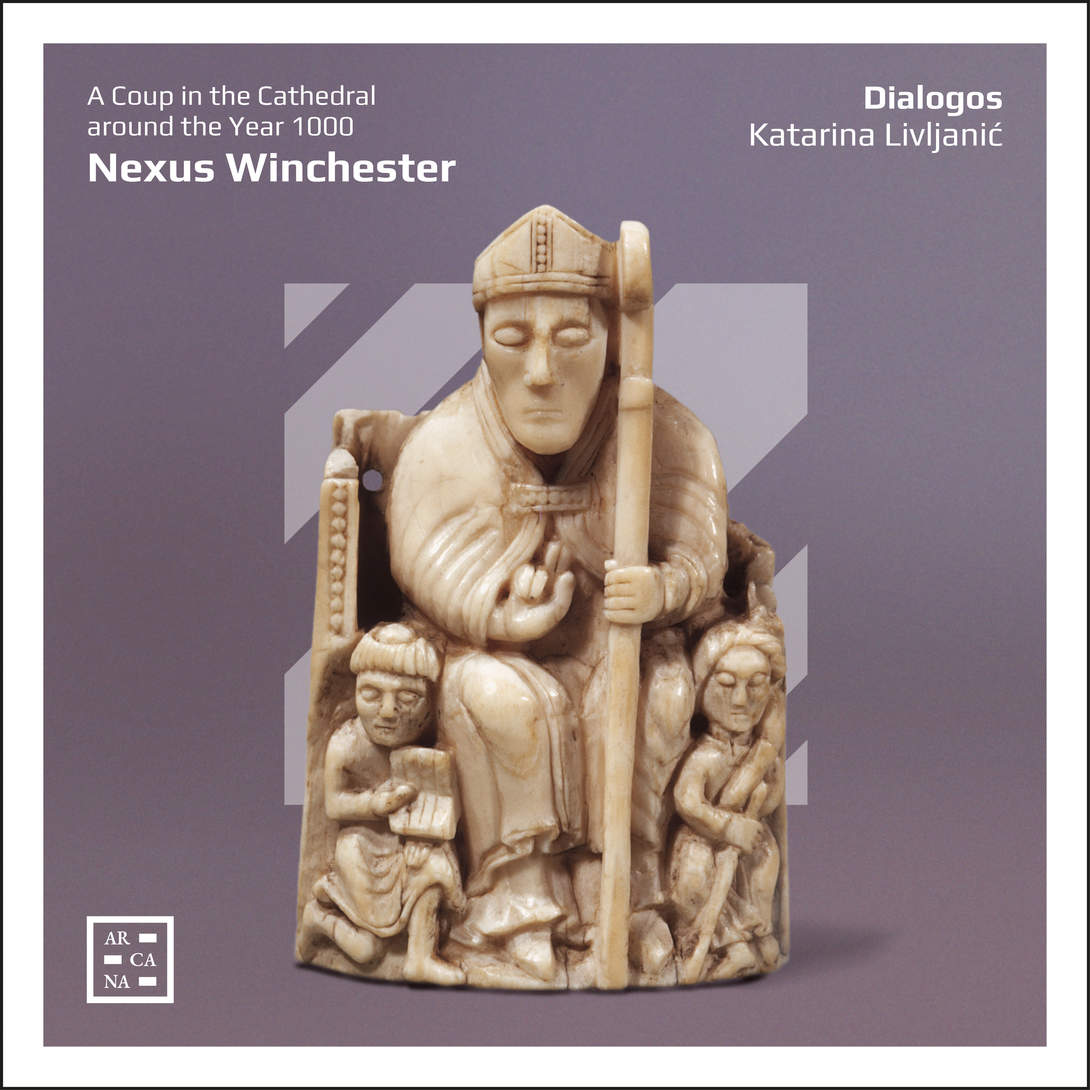
Released by Arcana on October 23, Nexus Winchester. A Coup in the Cathedral Around the Year 1000 brings together four members of the Dialogos ensemble: Katarina Livljanić and Clara Coutouly on vocals, Albrecht Maurer on fiddle and rebec, and Norbert Rodenkirchen on flutes. The recording takes us back to Winchester in 964: Bishop Æthelwold expels the canons of his cathedral and replaces them with monks from Abingdon; the ousted canons are then said to have plotted to regain their positions, going so far as to attempt to poison him. Dialogos turns the affair into a striking musical drama.
Wulfstan and the Winchester Troper
Wulfstan’s Life of Saint Æthelwold, written by the Winchester cantor and biographer of the bishop, provides the narrative thread. Some passages, preserved without music, have been newly set by Katarina Livljanić in a musical language inspired by the practices of the period.
The programme also draws extensively on the Winchester Troper, one of the earliest surviving collections of notated polyphony in the West. Because its unheighted neumes do not always make it possible to determine pitches precisely, some pieces have had to be reconstructed with the help of manuscripts and medieval theoretical treatises. Other chants, transmitted in more precise notation, complete the programme.
Two voices, a fiddle and flutes
Among the most striking moments, “Deus, Deus meus” occupies a central place. This organum tractus, lasting more than twelve minutes, is recorded here in its polyphonic version for the first time since the tenth century. Positioned at the moment when Æthelwold has just swallowed the poison, it almost completely suspends the action and provides one of the album’s most singular passages.
Katarina Livljanić and Clara Coutouly give each episode a very distinct character. Their strength lies above all in their ability to retain the clarity and restraint of liturgical chant while allowing the tensions of the narrative to come through. Attacks, shifts in vocal colour, the weight given to certain words or the sudden release of a line are enough to lend the singing – or the declamation – a much more theatrical and compelling dimension.
Alongside them, Albrecht Maurer and Norbert Rodenkirchen do much more than provide accompaniment. At times closely bound to the action, extending its tension or accompanying shifts of mood, the fiddle, rebec and flutes elsewhere acquire far greater independence. Drawing on instrumental sequences preserved in the Troper, Maurer and Rodenkirchen develop genuine improvisations that create breathing spaces and unexpected changes of energy. These departures give the recording a freedom and variety that contribute greatly to its success.

You must be logged in to be able to post comments.
Sign in