


 Last summer at the Salzburg Festspiele, French mezzo-soprano Lucile Richardot performed Cornelia in Handel’s Giulio Cesare, in a staging by Dmitri Tcherniakov and with Emmanuelle Haïm as musical director. Between a bike ride, a rehearsal and a quick meal, she agreed to share with us the diary she kept during this singular adventure!
  By Lucile Richardot


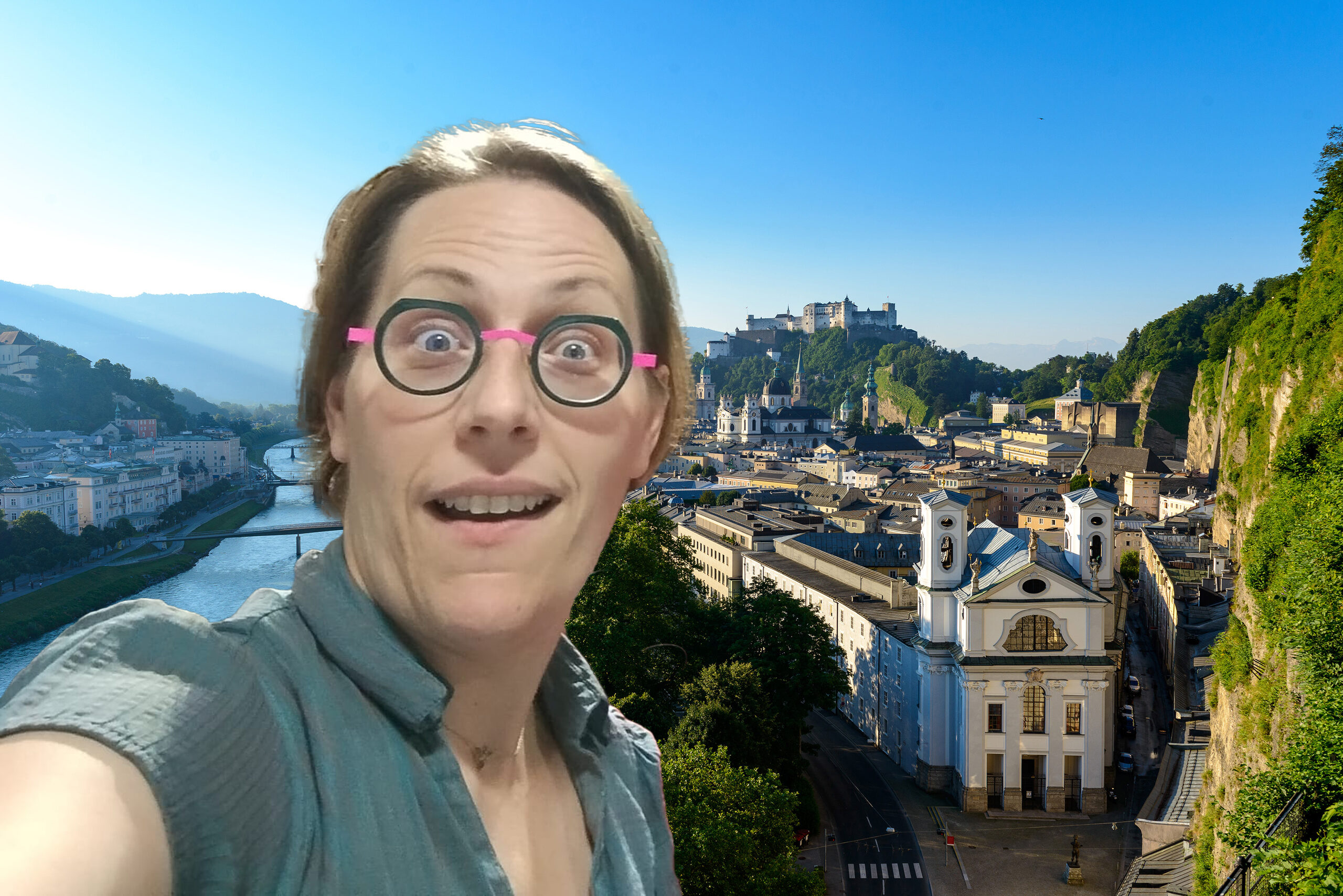
Named Lyric Artist of the Year 2025 at France’s Victoires de la musique classique [annual French classical music award], mezzo-soprano Lucile Richardot has, in just a few years, established herself as one of the most compelling voices on the Baroque and contemporary scenes. Revealed by the ensembles Correspondances and Pygmalion, she now collaborates with leading conductors, from Sébastien Daucé to Emmanuelle Haïm, with Vincent Dumestre in between. Her recent albums, Perpetual Night (2018) and Northern Light (2025), were praised for the intensity of her interpretation of 17th-century English and Germano-Swedish music. An adventurer through repertoires, she moves with ease from Monteverdi to Berio, from intimate recital (with harpsichordists Jean-Luc Ho and Philippe Grisvard, or with pianists Anne de Fornel and Adam Laloum) to major international stages. Last summer, she received critical acclaim for her portrayal of Cornelia in Giulio Cesare in Salzburg. And because a production staged by Dmitri Tcherniakov is always an eventful affair, Lucile Richardot agreed to share her diary of her Austrian adventures.
Salzburg, July 5
I begin this diary on my first day on stage. We’re at the end of the second week of rehearsals—third week, or even a bit more, for the others.
Also, it’s the first day of the Tour de France.
And the first day trying out the shared washing machine in the communal laundry room, as per German-Swiss-Austrian tradition!
Another afternoon that wasn’t easy on stage… a bit of physical pain and psychological distress. Why can’t I get the cues right, memorize the lines… sure, it’s all new, we’re discovering the staging and we have to quickly reproduce the directions, while the continuo has just arrived and everyone is waiting for me to finally get into position. There’s nothing worse than having to act on stage when you’re in a silent role, let alone having no excuse for not being able to do it when you have nothing to sing… but the thing is, I know the music of the other solos less well than my own arias.
9 p.m.: we go “debrief” with a few French people from this production and the one next door… meaning we go eat and have a drink together, to unwind and avoid going back alone to brood or replay the scenes that didn’t work, in the solitude of one’s far-off accommodation…!
11:30 p.m.: a little one-hour phone call with my beau…

Passionate about early music and want to read this subscriber-only article?
If you are not a subscriber, join the international Total Baroque community. Subscribe here from 5.00€.
I subscribe
If you are already a subscriber, sign in.
I sign in 

You must be logged in to be able to post comments.
Sign in