


 A veritable compilation of Lully’s “greatest hits”: Carnaval–Mascarade royale, his final comédie-ballet, has never been revived in its entirety since its creation in 1675. Federico Maria Sardelli and Samuele Lastrucci, from the Istituto Lulli in Florence, are presenting it in its first modern-era staged version at the Teatro Comunale in Ferrara.
  By
By 


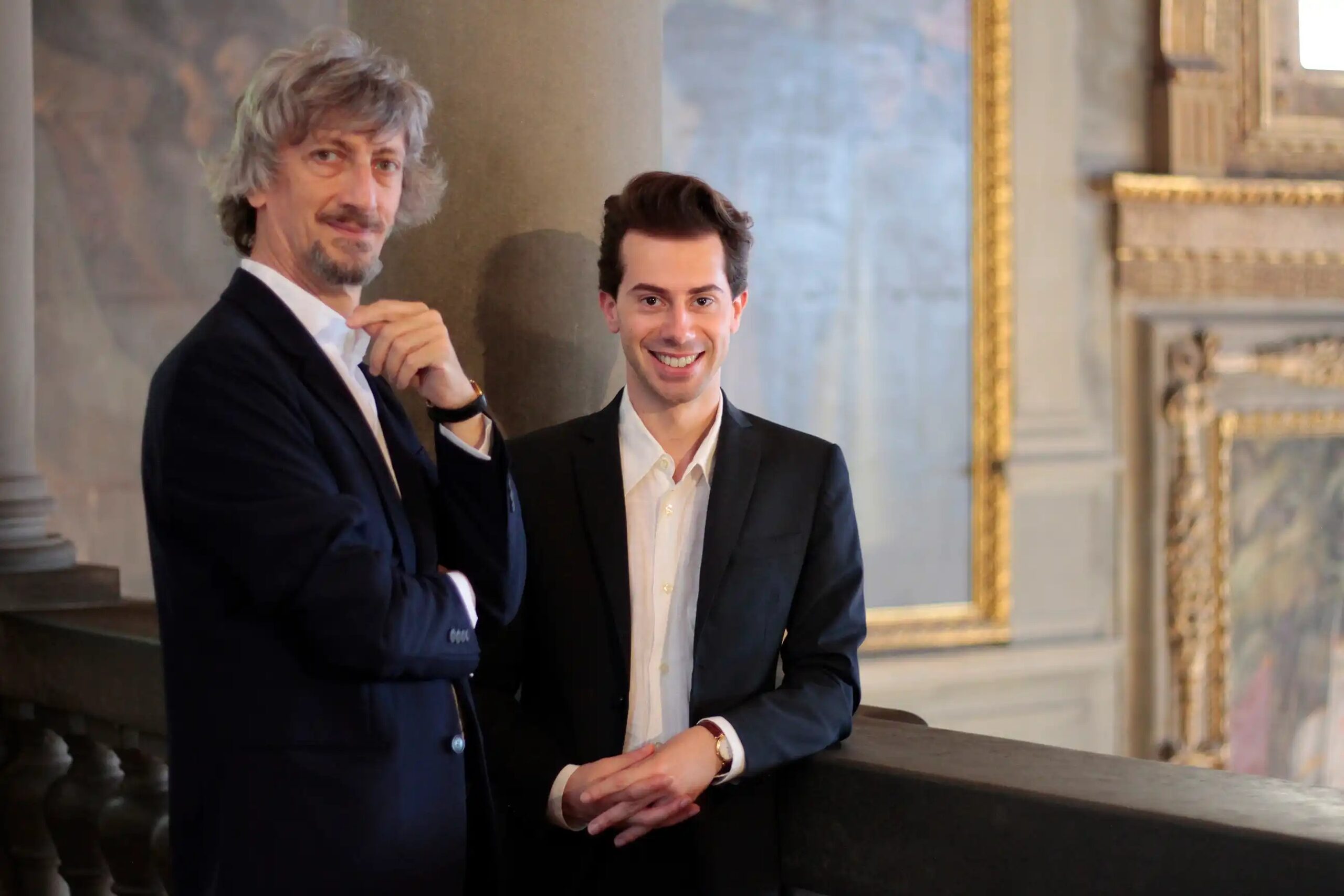
With the 1675 version of Lully’s Carnaval–Mascarade royale, Federico Maria Sardelli and Samuele Lastrucci, from the Istituto Lulli in Florence, are offering the Teatro Comunale in Ferrara a genuine playlist compiled by Lully himself: never previously performed in full, this masquerade—presented here in a staged version—makes it possible to appreciate the finest musical tableaux drawn from the celebrated comédies-ballets, the fruit of the collaboration between the Italian-born, naturalized French composer and the famous playwright Molière. In Ferrara, Mascarade will be performed by Valeria La Grotta, Giuseppina Bridelli, Philippe Talbot, Cyril Auvity, Biagio Pizzuti and Alexandre Baldo, accompanied by the orchestra Modo Antiquo and the choir I Musici del Gran Principe, in a production by Emiliano Pellisari and his No Gravity ballet company. Sardelli and Lastrucci founded the Giovanni Battista Lulli Institute in Florence in 2022, and Le Carnaval–Mascarade royale is the Trojan horse with which they are attempting to win the favour of institutions and audiences for this emblematic figure of French Baroque music, who remains little known in his country of birth.
When did you first think of performing this work by Lully, which until now had never been played in its entirety?
Samuele Lastrucci: Lulli’s output has been studied in depth and largely recorded—Christophe Rousset has just released Cadmus et Hermione, the final instalment of his complete recording of the tragédies lyriques—but this work was missing, and in my view it deserves to be heard, because it is a stroke of genius in the Lulli manner. I would say that this was a “commercial” production that was unprecedented at the time. There have indeed been a few partial performances, but the version we are staging for the first time in Ferrara this February 2026 is the complete Carnaval–Mascarade of 1675.
You refer to the complete 1675 version, because a few years earlier Lully had already presented a masquerade bearing the same title.
Federico Maria Sardelli: Yes, Le Carnaval–Mascarade royale had been created in 1668 at the Louvre in Paris, with an oversized ensemble of 54 musicians and sets by Vigarani; it was therefore something magnificent. But the version that has come down to us as the principal musical source, and to which we are referring, is the definitive 1675 version, in ten entries, which was later reworked for the wider public of the Paris Opéra, and it is this version that was published by Ballard, the King’s principal printer.
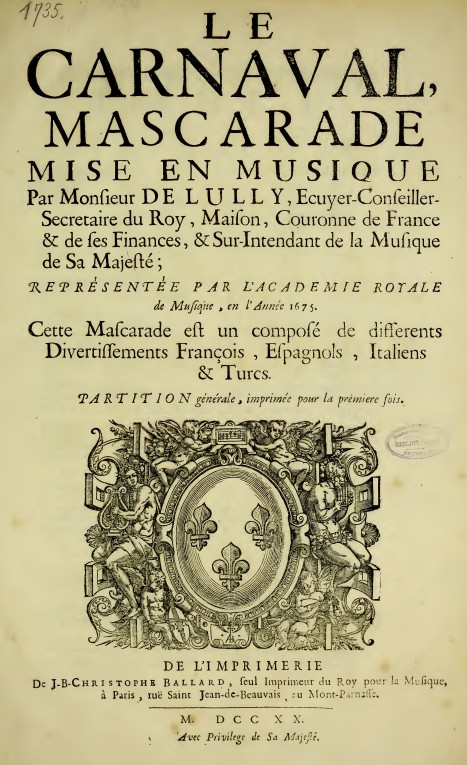
Is this an anthology, or a compilation, of music from comedy ballets and other court entertainments? Are they reproduced as they were originally written, or have they been adapted?
Sardelli: Lulli is gifted, astute and intelligent on both musical and dramaturgical levels. But he did not simply copy and paste what he had already done, even when dealing with pieces that had already proved successful. He has, in a way, gone back to basics: even the excerpts taken from, for example, Le Bourgeois gentilhomme or Monsieur de Pourceaugnac have been reworked to suit the needs of this production, shortened and redesigned.
Passionate about early music and want to read this subscriber-only article?
If you are not a subscriber, join the international Total Baroque community. Subscribe here from 5.00€.
I subscribe
If you are already a subscriber, sign in.
I sign in 

You must be logged in to be able to post comments.
Sign in