


 In the beginning, it was a family affair: when sisters Claudia and Livia Caffagni and sisters Elisabetta and Raffaella de Mircovich founded laReverdie in the 1980s, medieval music was still almost uncharted territory: rarely taught and seldom programmed, it required performers to delve into manuscripts, treatises, images, and texts to discover how to recover a vanished sound. Forty years later, the musicians have lost none of their taste for unexplored paths.
 By
 10 minutes


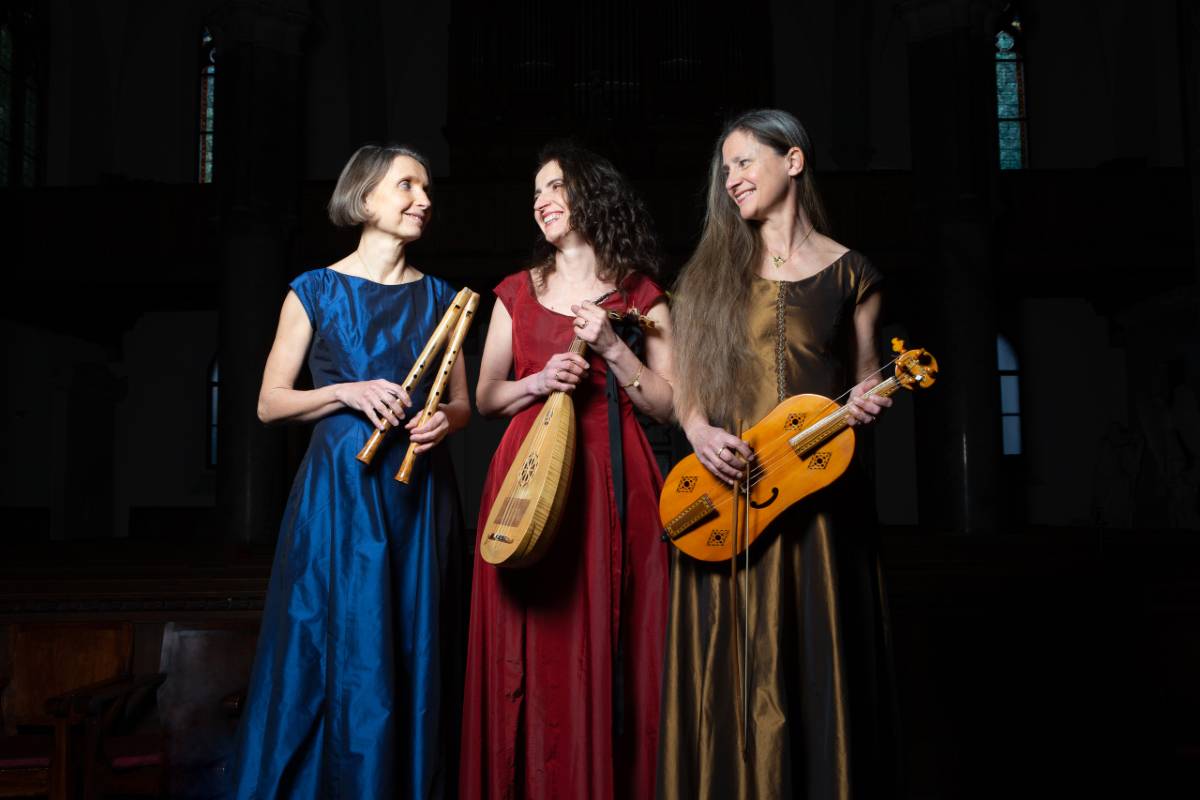
They were pioneers without really setting out to be. Founded in 1986 by Claudia and Livia Caffagni and sisters Elisabetta and Raffaella de Mircovich, the Italian ensemble laReverdie belongs to the generation that brought medieval music out of libraries and specialist circles and back into the concert hall. At a time when almost everything remained to be explored, four women (an exceptional occurrence at the time) chose to sing while playing several instruments themselves, to delve into manuscripts, and to blend musicology with experimentation. From the Italian Ars nova to laude, from Dufay to Hildegard of Bingen, over forty years they have forged an instantly recognisable sound and an extensive discography. At a time when early music is now taught in conservatoires and included in major concert seasons, Claudia and Livia Caffagni and Elisabetta de Mircovich—who remain the heart and soul of the ensemble—recall those pioneering days, their “mad and desperate studies,” the freedom that must be rediscovered behind the scores – and why, after forty years, the Ars nova still fits them “like a tailor-made suit.”
When and where did you meet, and how was laReverdie born?
Elisabetta de Mircovich: Claudia, Livia, my sister Raffaella—Ella1 —and I began to love and practise early music when we were very young. In the de Mircovich family, the spark that ignited our interest in medieval music actually goes back to the 1970s, particularly thanks to my sister’s literary interest in Germanic mythology and the Teutonic chivalric cycles. Later, we joined those “pioneering” groups that were beginning to emerge at the time between Veneto and Lombardy. We were drawn to all that pre-Bach repertoire that was hardly taught at all in conservatoires and was not heard in concert halls. It was in one of these groups, in Belluno, in the Veneto region, that my sister Ella and I met Livia and Claudia. Their father, Mirco Caffagni, was an important musicologist and lutenist, and they too had grown up in this world. In 1986, a very tangible opportunity came along: a ten-concert tour of castles in southern Italy as part of a project by actor Giorgio Albertazzi devoted to Frederick II of Swabia. And so laReverdie was born. A busy schedule of concerts and recordings soon followed. Since then, we have devoted ourselves exclusively to medieval repertoire, up to the beginnings of the Renaissance.
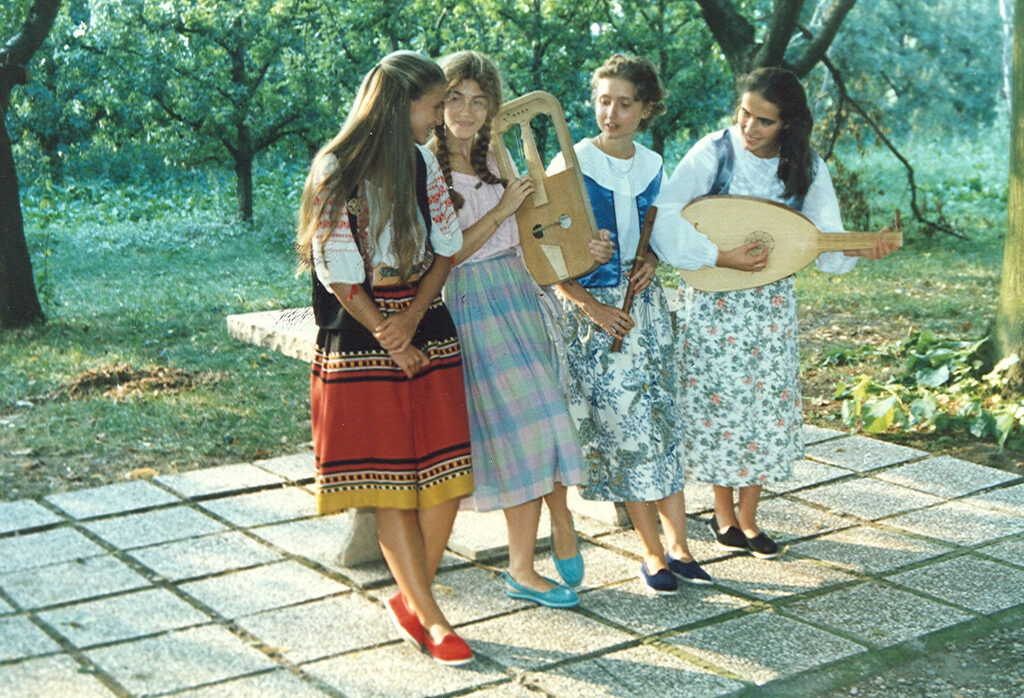
The ensemble’s very name refers to the Middle Ages…
E. M.: Yes. The “reverdie” is a medieval poetic genre celebrating the return of spring. It suited, and still suits, our approach quite well: bringing something back to life, but also looking at it each time with fresh eyes.
In those pioneering years, were there any ensembles that served as models for you?
E. M.: To be honest, we never really had a model. In the 1980s, for example, there were virtually no all-female ensembles comparable to ours. We obviously listened to a great deal of music, and certain musicians had a profound influence on us. I am thinking in particular of the mezzo-soprano Andrea von Ramm and Ensemble Sequentia, founded by Benjamin Bagby and Barbara Thornton. The experiences we had with them were extremely formative and gave us many ideas. But it was never about imitation.
Livia Caffagni: For my part, I had begun studying Gregorian semiology, in particular by attending summer courses for several years with the International Association for the Study of Gregorian Chant. From the outset, our approach was to deepen our knowledge and give ourselves our own research tools.
Passionate about early music and want to read this subscriber-only article?
If you are not a subscriber, join the international Total Baroque community. Subscribe here from 5.00€.
I subscribe
If you are already a subscriber, sign in.
I sign in 

You must be logged in to be able to post comments.
Sign in