


 With “La Passione di Gesù”, Leonardo García-Alarcón signs his first major oratorio published under his own name. Inspired by Borges, Bach, Pasolini and the Gospel of Judas, the work creates a spiritual and musical labyrinth in which Judas, Mary Magdalene and the risen Christ become the figures of an inner Passion.
  By
By 


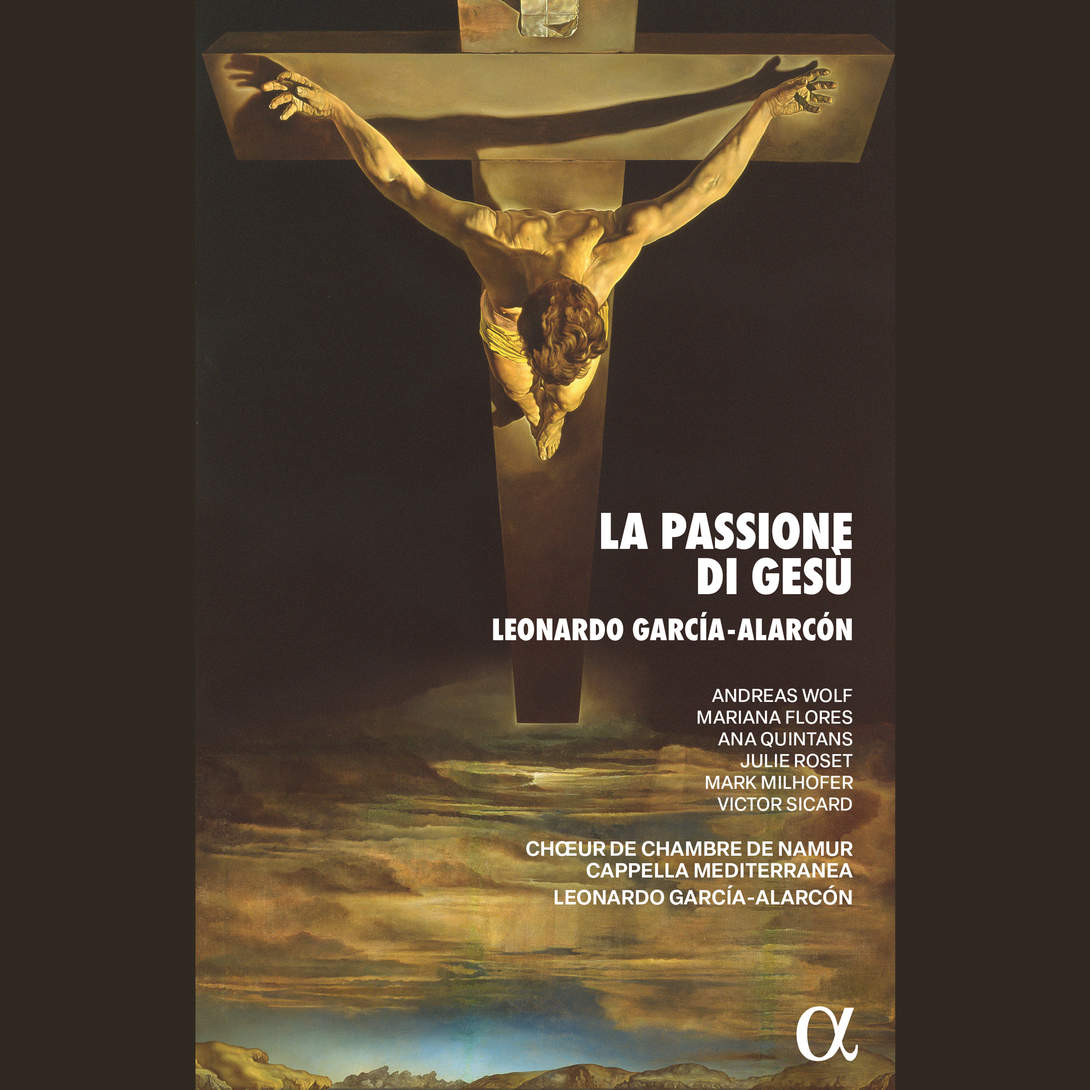
With La Passione di Gesù overo il Vangelo di Giuda, released by Alpha Classics, Leonardo García-Alarcón crosses a singular threshold: that of a personal work, conceived not as a simple return to the sacred genre, but as a journey through an entire musical memory. The subtitle already states its ambition: labirinto canonico in musica sotto forma di oratorio (“a canonical labyrinth in music in the form of an oratorio”). Built around a libretto by Marco Sabbatini, the oratorio rereads the Passion in the light of the Gospel of Judas, an apocryphal text, but also of the Gospel of Mary, the Book of Job, the Song of Songs, other extra-canonical texts and gnostic writings. Judas no longer appears merely as the traitor, but as the one who accepts, out of love for Christ, the most thankless role: enabling the fulfilment of the Scriptures.
The work was born from a constellation of images and signs that the composer links to an evening in 2016 at the Bibliotheca Bodmeriana in Geneva, during a commemoration of Jorge Luis Borges. The manuscript of the Gospel of Judas, the Argentine writer’s short stories, the figure of Bach and the idea of an inverted Divina commedia come together in a deliberately intricate form. García-Alarcón pays tribute here to what he calls his natural language since childhood: the fugue, extended through canon, counterpoint and a musical thought in which codes become so many enigmas offered to the listener. From this material emerges a Passion that does not seek to illustrate a familiar narrative, but to displace it, turn it back on itself and reveal its zones of uncertainty.
Gathered around Cappella Mediterranea, the Chœur de Chambre de Namur and Les Pastoureaux, the soloists give body to a fresco in which languages, styles and temporalities intersect. Andreas Wolf embodies Jesus, Mariana Flores Mary Magdalene, Ana Quintans Marie, Julie Roset the Angel, Mark Milhofer Judas et Victor Sicard Peter. The bandoneon, which opens the oratorio alone, rubs shoulders with period and modern instruments, while Lutheran chorales, the Dies irae, the shadow of Monteverdi, that of Bach’s Passions, Pasolini’s poetry and forms drawn from tango or gospel create a shifting sonic substance.
This recording does not merely place references side by side: it organises a dramaturgy of revelation. Mary Magdalene assumes a central, almost evangelical role, carrying the word that the apostles dispute; Judas becomes a figure of dilemma, not simple condemnation; the risen Christ no longer appears only as the end-point of the narrative, but as a call to intimate transformation. García-Alarcón’s direction gives this teeming architecture a powerful theatrical clarity, between contrapuntal tension, choral brilliance, the sensuality of the vocal lines and instrumental irruptions. An oratorio into which one should plunge headlong, without looking too quickly for the way out, but accepting, at every turn, the shadow of the unexpected.


You must be logged in to be able to post comments.
Sign in