


 From Paris’s Sainte-Chapelle to the Globe Theater in Neuss, from Kotor Cathedral to a concert reached by canoe along the Vienne: this week, early music takes over chapels, castles, theatres and landscapes across Europe. Charpentier, Shakespeare, Schütz and medieval laude are all on the programme.
 By
 4 minutes


In Knechtsteden (Germany), Shakespeare in music at the Globe Theater in Neuss
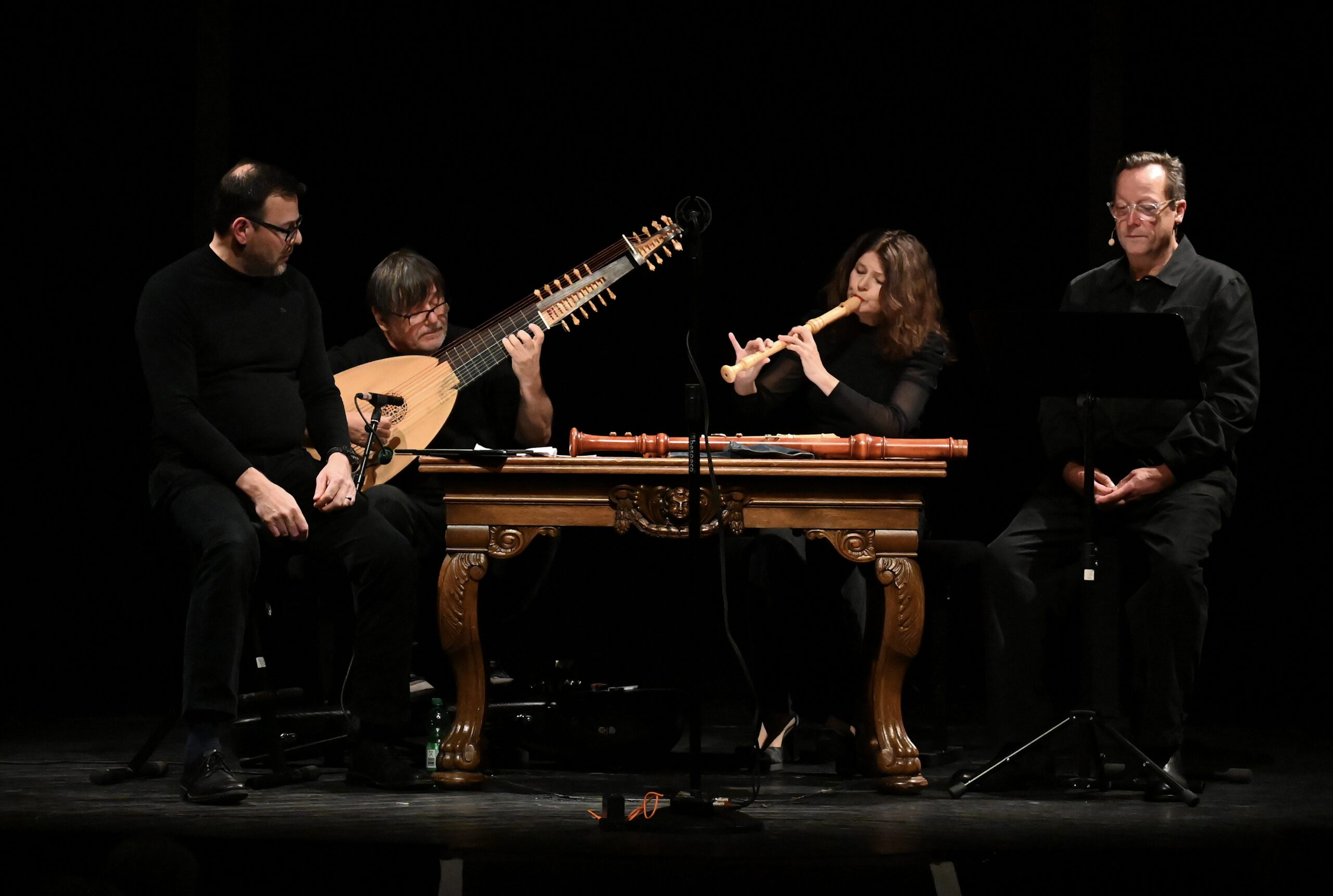
At the Knechtsteden Festival, near Cologne, William Shakespeare found a theatre worthy of his work: the Globe Theater in Neuss, newly reopened after three years of renovation. In “Traumstoff”, Dorothee Oberlinger, the festival’s Artist in Residence, brought together countertenor Andreas Scholl, actor Matthias Brandt and lutenist Edin Karamazov for a musical and literary journey through Shakespeare’s world.
Sonnet 23 and monologues from The Tempest and As You Like It alternated with John Dowland’s lute songs, Purcell’s Music for a While, works by Vivaldi and even Luciano Berio’s Gesti. Spoken voice, countertenor, recorders and lute responded to one another around Shakespeare’s heroes, lovers, fools and monsters. A way of reconnecting with the theatre’s original purpose: built in 1991, it was modelled on Shakespeare’s Elizabethan theatre in London.
With Dorothee Oberlinger, Andreas Scholl, Matthias Brandt and Edin Karamazov.
In Paris, Correspondances brings music back to the Sainte-Chapelle
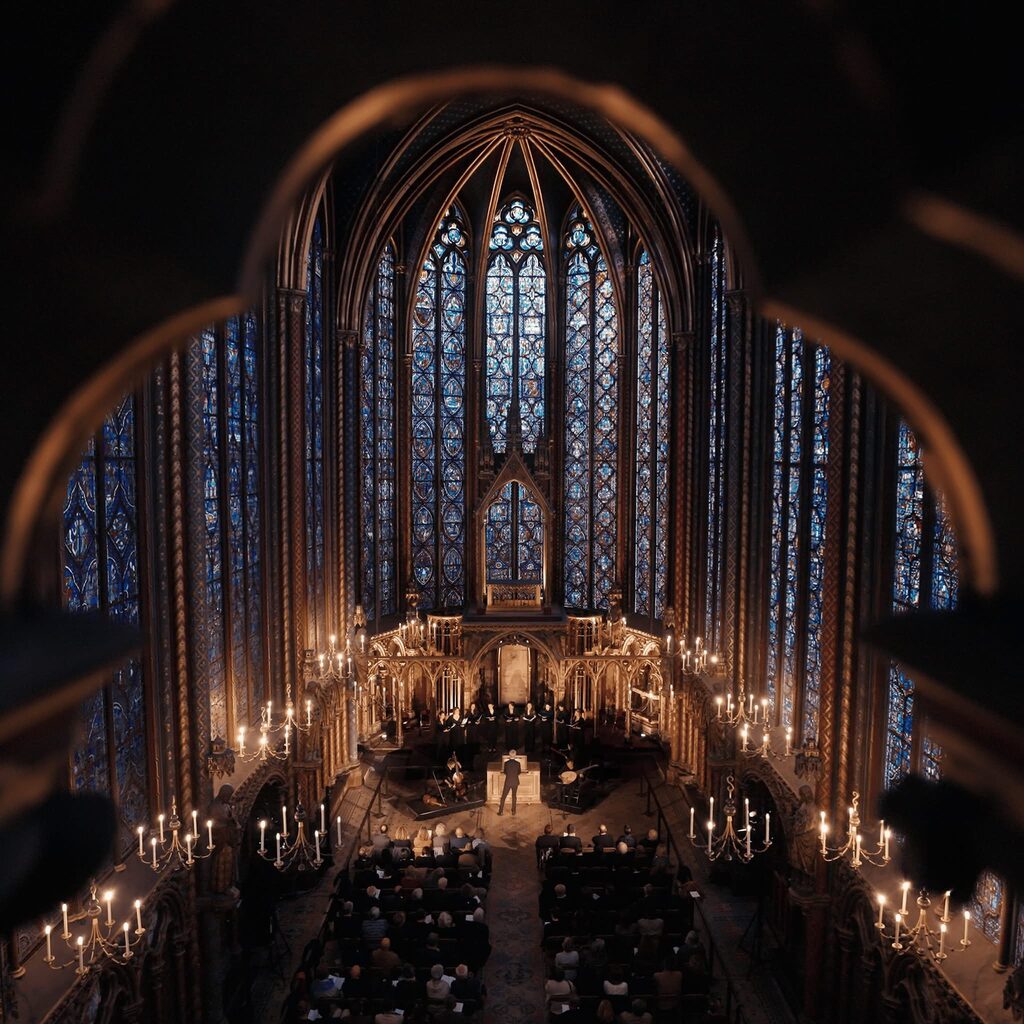
For three days, from 2 to 4 October, Correspondances and Sébastien Daucé restored something of the Sainte-Chapelle’s musical vocation with four concerts devoted to the French Grand Siècle. At the heart of this third edition of the “Heures musicales” was Marc-Antoine Charpentier, who served as music master at the Sainte-Chapelle from 1698 to 1704.
His spectacular Messe à quatre chœurs H.4, performed twice on 2 October, regained its full spatial dimension: four vocal and instrumental groups positioned around the building answered one another, alongside excerpts from Francesco Beretta’s Missa Mirabiles elationes maris. The following day, Une couronne de roses brought together the more intimate Marian motets Charpentier composed in the circle of Marie de Guise. Finally, Lucile Richardot closed the weekend with “Northern Light”, an exploration of music at the seventeenth-century Swedish court, from Tunder and Pohle to Albrici, Geist and Johann Christoph Bach. Three facets of seventeenth-century Europe in one of the very places where this music once came alive.
With Les Correspondances and Sébastien Daucé.
In Kotor (Montenegro), a Laudarium with laReverdie
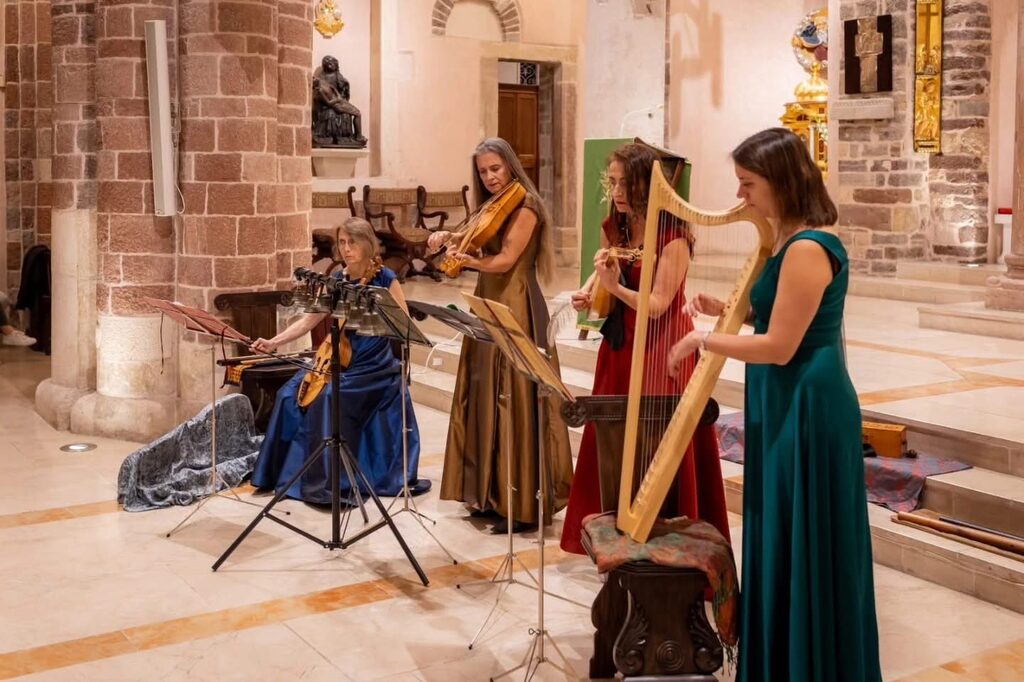
The vaults of St Tryphon’s Cathedral in Kotor, Montenegro, provided a particularly fitting setting for the voices and instruments of laReverdie. Invited by the Tollite Portas Festival, the Italian ensemble presented Laudarium, a programme devoted to popular devotional songs in fourteenth-century Italy.
laReverdie was thus returning to one of its favoured territories: a Middle Ages in which sacred music, collective devotion and popular expression remain closely intertwined. In this Romanesque cathedral, consecrated in the twelfth century in the heart of Kotor’s old town, the dialogue between repertoire and architecture took on a particular resonance. An Adriatic stop for the ensemble as it celebrates its fortieth anniversary this year.
With laReverdie.
In Ascona (Switzerland), I Barocchisti celebrate thirty years
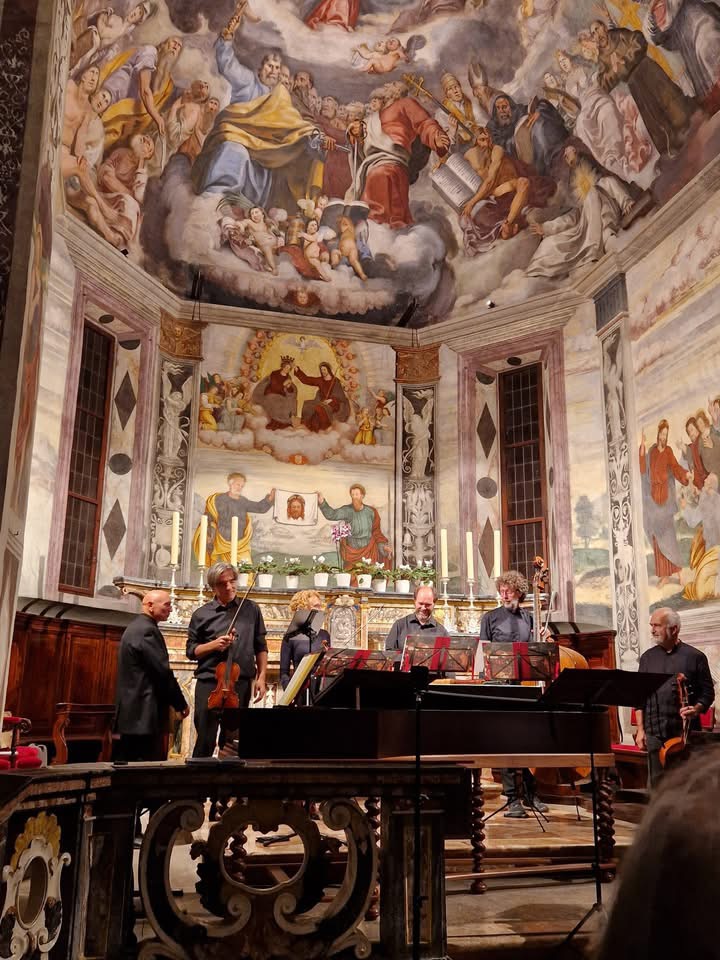
Diego Fasolis and I Barocchisti celebrated the ensemble’s thirtieth anniversary at the Chiesa dei Santi Pietro e Paolo in Ascona as part of the Settimane Musicali. Founded in 1996 and directed by Diego Fasolis, the Ticino-based ensemble chose a programme entitled “Affetti & Plaisirs” for the occasion, with recorder player Maurice Steger as soloist.
From Telemann to Vivaldi, the programme placed particular emphasis on the recorder: Telemann’s Ouverture-Suite in A minor, Giovanni Battista Sammartini’s concerto for flautino and Vivaldi’s Concerto RV 436. Bach’s Brandenburg Concerto No. 5 also stood at the heart of the programme, alongside Vivaldi’s Concerto RV 153. A symbolic return to Ticino, and to Ascona in particular, for I Barocchisti after a nine-year absence from the festival.
With Maurice Steger, I Barocchisti and Diego Fasolis.
In Pszczyna (Poland), Beethoven on an 1839 Érard before the Baroque returns
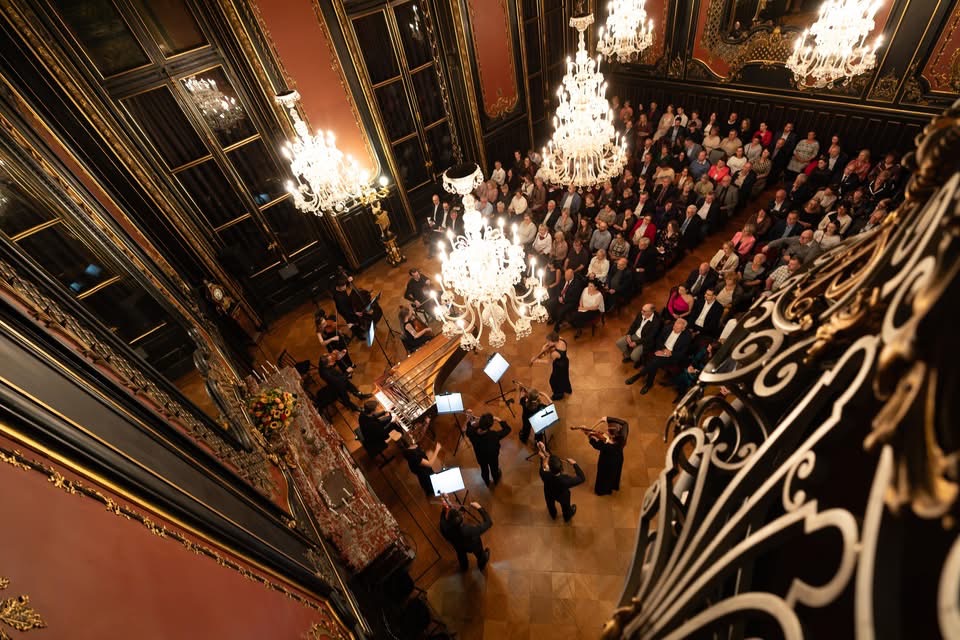
The Hall of Mirrors at Pszczyna Castle in Poland welcomed {oh!} Orkiestra and its founder Martyna Pastuszka for the opening of the 47th edition of “Wieczory u Telemanna” (“Evenings with Telemann”). Alongside them, Tomasz Ritter performed on an 1839 Érard belonging to the museum in a programme ranging from Mendelssohn and Chopin to Franchomme and Beethoven.
The festival continues in October with several concerts devoted to early music. Baroque violinist Zefira Valova and harpsichordist Krzysztof Garstka will perform Vivaldi, Veracini, Leclair, Locatelli and Telemann, while ART’N’VOICES and Anna Firlus will set Telemann alongside Polish folk traditions. Marco Ambrosini and his partners will bring Europe and South America into dialogue, from Cabezón and Ortiz to Kapsberger and Santiago de Murcia. For the closing concert, Dorothee Oberlinger, Philipp Mathmann, Martyna Pastuszka and {oh!} Orkiestra will conclude the festival with Pergolesi, Handel, Telemann, Vinci, Sarri and Mancini.
With Tomasz Ritter, {oh!} Orkiestra and Martyna Pastuszka.
In Dresden (Germany), Heinrich Schütz brought into the present for the festival opening
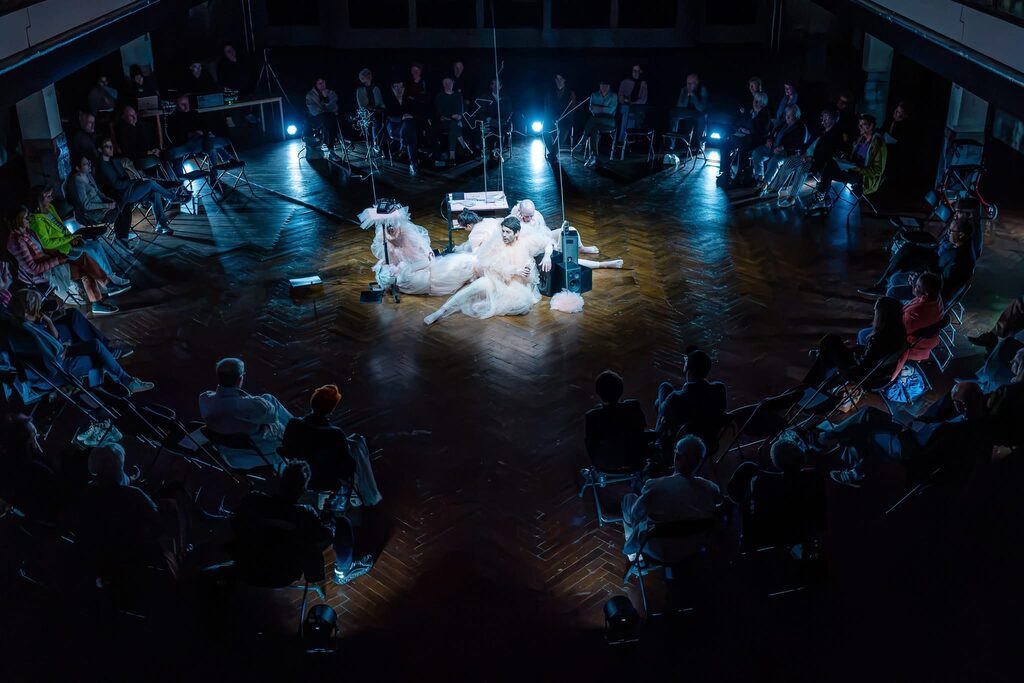
The 2026 Heinrich Schütz Musikfest opened on 2 October at Dresden’s Zentralwerk with THE PRESENT, the vocal ensemble in residence for this year’s edition. Hanna Herfurtner, Olivia Stahn and Amélie Saadia, joined by Tim Karweick and Florian Hille, set works by Heinrich Schütz alongside a new piece by American composer Laura Steenberge, with Lisa Fütterer and Leonhard Albach.
From the outset, the programme established one of the guiding threads of this year’s festival: not simply to rediscover Schütz, but to explore how his music can continue to nourish contemporary creation. This “search for traces” continues until 11 October in Dresden, Gera, Bad Köstritz, Weißenfels and Zeitz, with performers including the Thomanerchor Leipzig, Le Nuove Musiche, the Dresdner Kammerchor and lautten compagney BERLIN.
With The Present Ensemble.
In Châtellerault (France), Baroque by canoe with L’Assemblée
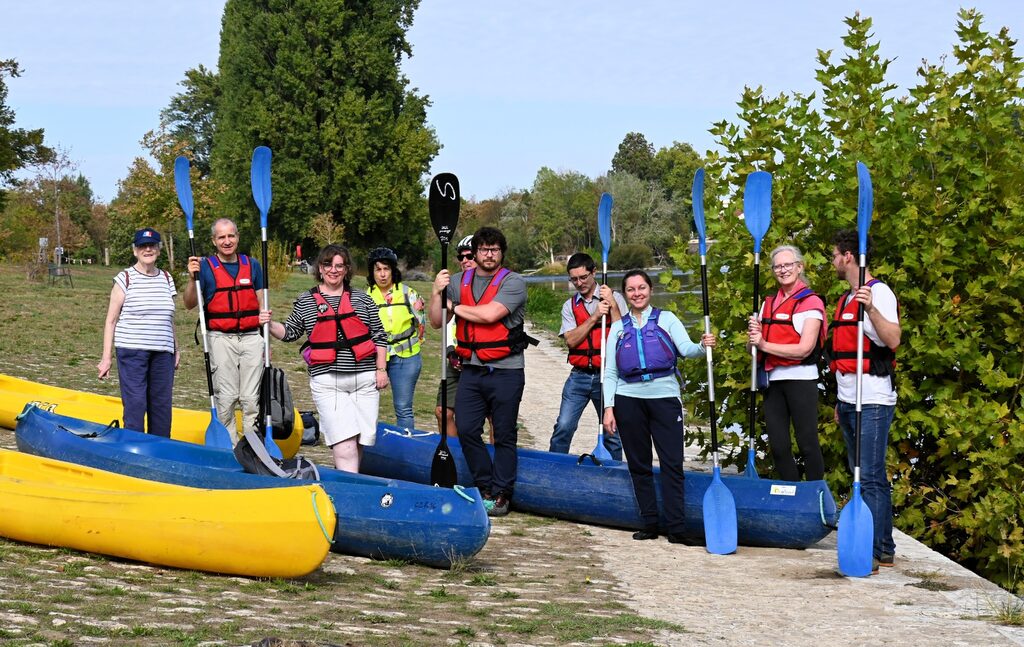
Reaching a Baroque concert by paddling down the Vienne in a canoe: that was the unusual proposition of the Festival Automne Musical Grand Châtellerault on 4 October. Setting off from Châtellerault — with the journey also possible by bicycle or on foot — audiences made their way to the church of Saint-Hilaire in Antran, where L’Assemblée presented the concert “Au fil de l’eau”.
Around harpsichordist Marie van Rhijn, the ensemble’s founder, tenor Cyril Auvity, Olivier Riehl on recorders and Eleanor Lewis on viols explored seventeenth-century French airs de cour. Water and nature became mirrors of human passions: streams, winds and tears evoked, in turn, absent love, melancholy and exile. A very tangible way of experiencing the landscape that inspired this Baroque poetry before hearing it in music.
With L’Assemblée.

You must be logged in to be able to post comments.
Sign in