


 Music director of the Coro e Orchestra Ghislieri and a tireless seeker of Baroque treasures, Giulio Prandi is the architect of a unique ecosystem in Pavia (Italy). He opens 2026 with the revival of Pelopida, an opera by the Franco-Maltese composer Girolamo Abos (1715–1760), at the Valletta Baroque Festival in Malta. Several ambitious projects will follow, from Neapolitan opera to sacred polyphonies, not to mention collaborations with the cultural institutions of his home city.
  By
By 


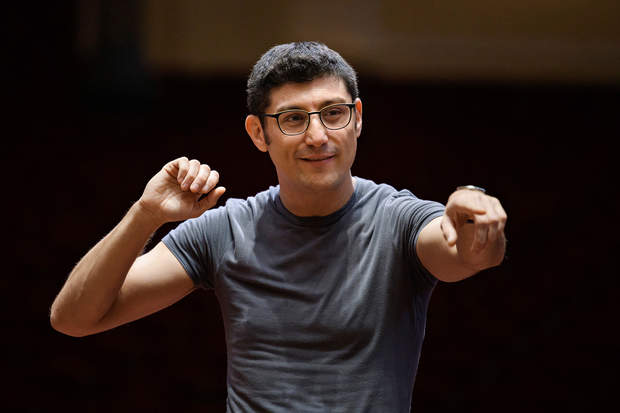
Giulio Prandi is the founder and director of the Ghislieri Choir and Orchestra, which he has shaped over twenty years of patient work in his home city of Pavia. Together with his ensemble, he occupies today a singular place in the European musical landscape. Trained as a mathematician before becoming a conductor, he has given voice once again to an entire swathe of eighteenth-century Italian sacred music, revealing Perez, Jommelli, Galuppi or Scarlatti with rare rigour. In Pavia, his ensemble benefits from the support of the Collegio Ghislieri, a centuries-old institution that has become a genuine musical and social laboratory. At 48, Prandi is now embracing opera, bringing his analytical and sensitive eye to opera as well as oratorio. Between rediscoveries, contemporary creations, and community projects, he champions, from Pavia, a vision of music as a force for cohesion and collective imagination.
You are opening 2026 with a rare opera, Pelopida by Girolamo Abos, at the Valletta Baroque Festival. How did this adventure come about?
Giulio Prandi: Valletta is one of the most profoundly Baroque cities in Europe, and Kenneth Zammit Tabona, the festival’s artistic director, has an unfailing instinct for bringing forgotten composers back into the light. Girolamo Abos is an interesting case: Franco-Maltese by birth, he died young at 45, but was musically trained in Naples under Leonardo Leo and Francesco Durante. He is therefore a fully Neapolitan composer, steeped in that demanding, taut, sometimes severe writing, yet of extraordinary refinement. When Kenneth handed me the score, he joked that Pelopida sounded like the name of a skin disease… but once you open the score, it’s a shock: a monumental, heroic three-act opera with astonishing vocal virtuosity. Some of the soprano pages reach heights I had never encountered. The title role itself demands agility and endurance that are almost superhuman. You find there the entire legacy of the Neapolitan school: contrapuntal rigour, a keen sense of dramatic construction, but also a melodicism of incredible imagination and a very inventive harmony, full of timbral play. On paper, it’s a work that promises a great deal, and I already feel that we are going to make a real discovery!
You place great importance on dramaturgy in these revivals of rare operas.
G. P.: Yes, because an old work needs a genuine theatrical breath to speak to modern audiences. Kenneth found a young Australian stage director, Brett Brown, who made his operatic debut with me last November in Valletta in a Gluck diptych: Il Parnaso confuso and La Corona. He managed to make an eighteenth-century court dramaturgy feel deeply contemporary, respecting it while making it lively, funny, and surprising. The show made people laugh from beginning to end, without sacrificing anything of the music: a small revolution. And that momentum continues: after Pelopida, I will conduct L’Olimpiade by Vivaldi in Verona for the Fondazione Arena, after having presented L’Olimpiade by Pergolesi last November in Jesi, Italy, with my orchestra, the Ghislieri—before embarking on a world that will be new to me in April: Madama Butterfly in Trieste, my first Puccini.

Passionate about early music and want to read this subscriber-only article?
If you are not a subscriber, join the international Total Baroque community. Subscribe here from 5.00€.
I subscribe
If you are already a subscriber, sign in.
I sign in 


You must be logged in to be able to post comments.
Sign in