


 A sopranist since childhood, Bruno de Sá first stepped onto the stage at the age of two. He now tells us how, by defying gender stereotypes, he designs his own stage outfits and became the first man to sing many roles traditionally assigned to women.
  By
By 


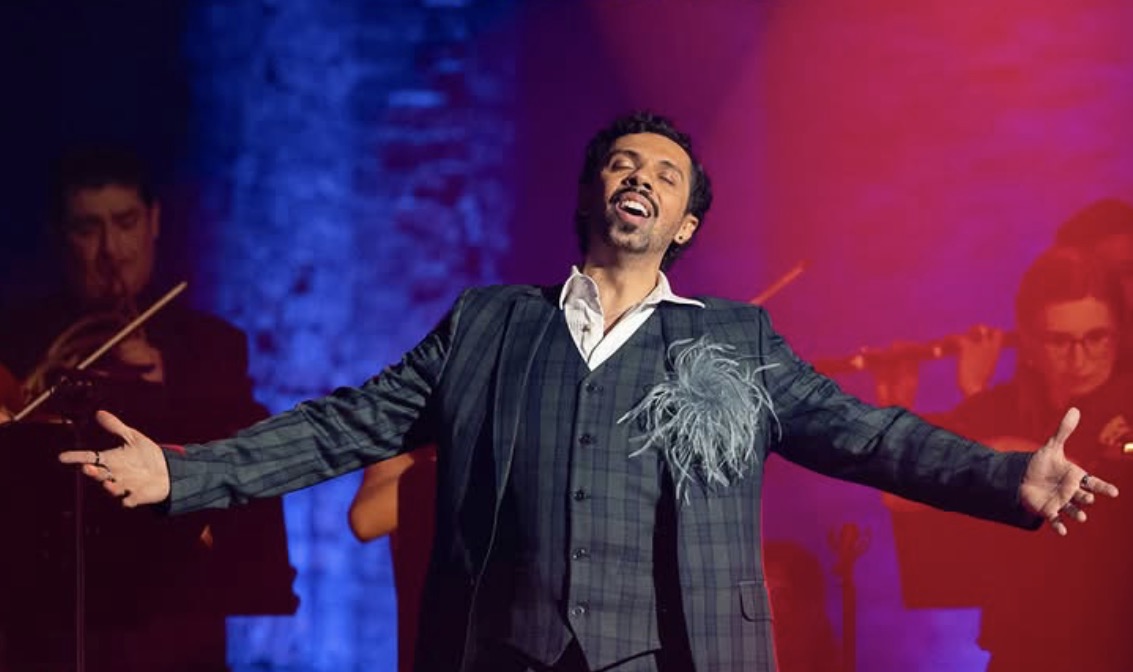
From Brazil to the greatest European stages, Bruno de Sá has sung as a soprano since early childhood. Born in 1989 in Santo André, in the state of São Paulo (Brazil), he trained at the Universidade Federal de São Carlos and the Universidade de São Paulo, where he began his career while still a student, before joining the Hochschule für Musik in Basel and then the Studio of Theater Basel. Winner of the Oper! Award 2020 and the ForumOpéra Trophy 2022 in the “Newcomer of the Year” category, he has released two albums, Roma Travestita and Mille Affetti. Famous for his flamboyant concert attire, he is forging a pioneering path, overturning expectations, breaking stereotypes, and acting as both costume designer and architect of an unprecedented career.
My musical beginnings
In my family, everyone sings. My parents met in the church choir as teenagers and sang in the same choir for thirty years. I went on stage at the age of two, microphone in hand, to sing a solo. No one can take that experience of the stage away from you—whether you are a professional or not does not matter. I never had that moment of discovering I was a sopranist. I have sung in the high register since I was two years old. I led a double life: everyone at church knew I sang, and no one at school did. I was a top student, a real “nerd.” One day, as I was singing while copying from the blackboard, the whole class suddenly fell silent to listen to me: that was the end of my double life. When I told them I was thinking of devoting myself to music, the reaction was: “Go for it!” I was invited to sing at the graduation party and people went crazy. I was a star!
My musical training
I wanted to become a music teacher, and singing was only a hobby until I was twenty. I first earned a bachelor’s degree in music education; I played the flute. Halfway through, I switched to singing and began taking lessons. I realized my technique was not sufficient and enrolled in a second degree in singing, but with the aim of becoming a better teacher rather than pursuing a performing career. Of course, I was still singing in the high register, but I was not particularly attached to it as a vocal identity; my teacher treated me like any other student: we simply focused on basic technique—support, breathing—and let things develop.
At the end of the second semester, Nicolau de Figueiredo [the Brazilian harpsichordist, conductor, and pedagogue] came from France to give a masterclass and, even though I was still a very raw singer, almost a beginner, my teacher encouraged me to take part. I had no idea how important Nicolau was (otherwise I would never have dared!), and I arrived to sing Amarilli, mia bella by Caccini… Nicolau was at the harpsichord and, when I finished, he was in tears: he told me he had never heard anything like it, and it was he who introduced me to the term “sopranist.”

Passionate about early music and want to read this subscriber-only article?
If you are not a subscriber, join the international Total Baroque community. Subscribe here from 5.00€.
I subscribe
If you are already a subscriber, sign in.
I sign in 

You must be logged in to be able to post comments.
Sign in