


 By candlelight in St Georgen Church, as part of the Bayreuth Baroque Festival, Sandrine Piau, Christophe Rousset and Les Talens Lyriques explore the secular passions of Baroque Rome. From Handel to Domenico Scarlatti and Montéclair, three heroines — Agrippina, Dido and Lucretia — give voice to betrayed love, fury and despair in cantatas where drama emerges without scenery or staging.
  By
By 


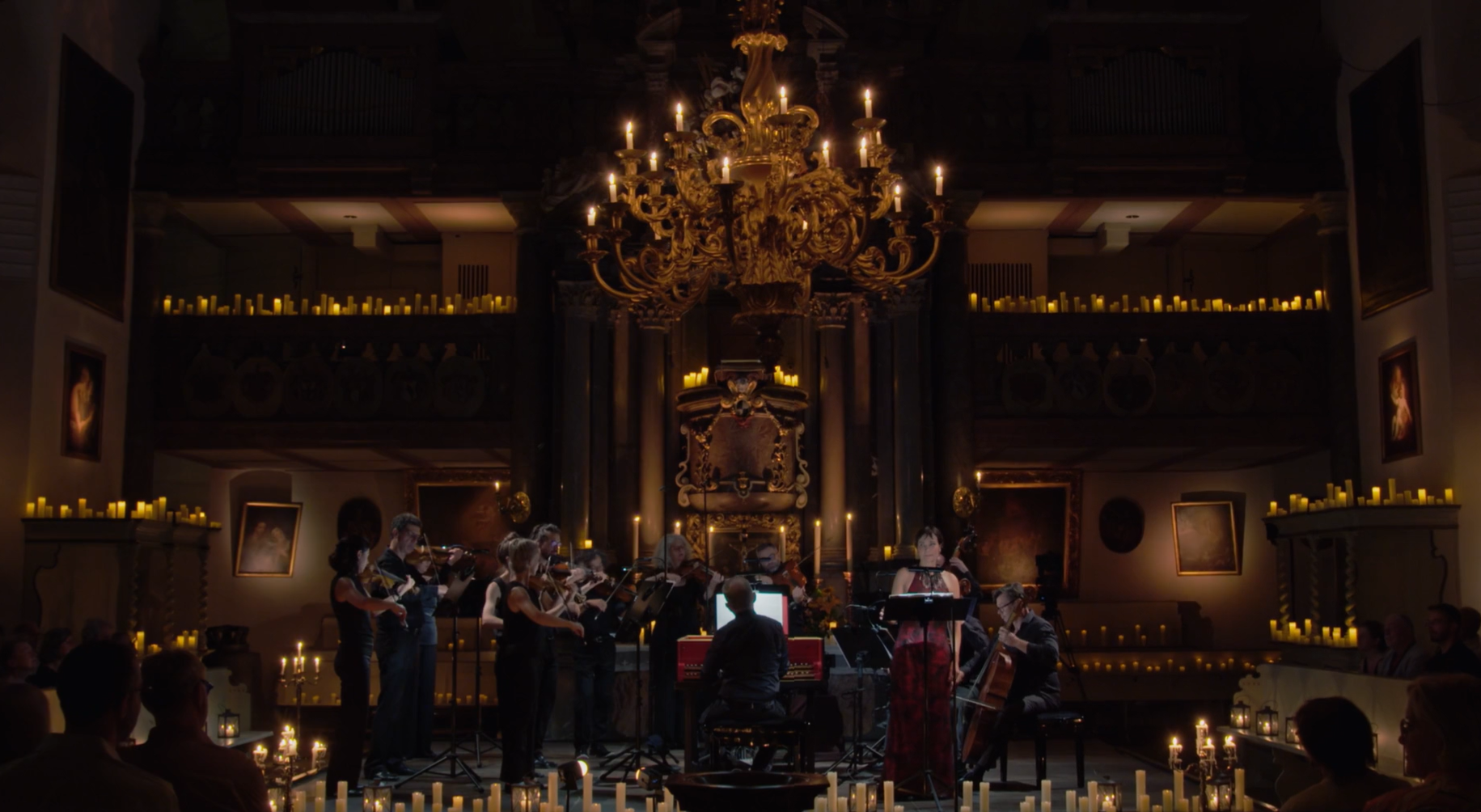
Filmed in September 2024 at the Bayreuth Baroque Festival, Aroma di Roma takes us far from the image of the Eternal City as a place devoted solely to sacred music. In seventeenth- and eighteenth-century Rome, where women were barred from appearing on public stages, the secular cantata became a genuine dramatic laboratory: chamber theatre for aristocratic palaces, capable of concentrating all the intensity of an opera into a handful of recitatives and arias.
Rome: theatre without a stage
The paradox is striking. While theatrical and operatic performances were regularly banned or tightly controlled in the Papal States, Rome attracted composers, virtuosos and patrons from across Europe. Deprived of a public stage, theatre moved into salons and princely residences. The cantata found particularly fertile ground there: one singer, a few instruments and, within minutes, an entire drama could unfold.
Aroma di Roma brings together three works centred on women confronted with loss, betrayal or death. In Agrippina condotta a morire, the young Handel turns Agrippina’s final moments into a succession of psychological reversals. Domenico Scarlatti plunges Dido into an almost hallucinatory grief in Tinte a note di sangue. Michel Pignolet de Montéclair, meanwhile, adopts the Italian language and style to voice Lucretia’s final torments.
Sandrine Piau and Christophe Rousset
Aroma di Roma continues a collaboration spanning several decades between Sandrine Piau, Christophe Rousset and Les Talens Lyriques. Here, the harpsichordist and conductor follows the singer closely, attentive to every word and breath, while the ensemble turns its reduced forces into a true sound stage. The instrumental lines comment on, provoke or prolong the heroine’s emotions, never merely accompanying her.
In the nocturnal, candlelit atmosphere of St Georgen Church, this intimacy takes on particular force. With no costumes or stage machinery, the music alone conjures palaces, chambers, tombs and battlefields. A journey into the most intimate, sensual and tragic side of Baroque Rome.

Passionate about early music and want to read this subscriber-only article?
If you are not a subscriber, join the international Total Baroque community. Subscribe here from 5.00€.
I subscribe
If you are already a subscriber, sign in.
I sign in 

You must be logged in to be able to post comments.
Sign in