


 Thirty years after his debut, Andreas Scholl views the evolution of early music with a degree of concern: once a niche field, it has conquered the major concert halls and become far more demanding, perhaps at the cost of some of its adventurous spirit. Now approaching sixty, the German countertenor looks back on a career built on patience, knowing when to turn down offers and how to protect his voice — while still dreaming, perhaps, of a duet with the Pet Shop Boys or Sting.
 By
 13 minutes


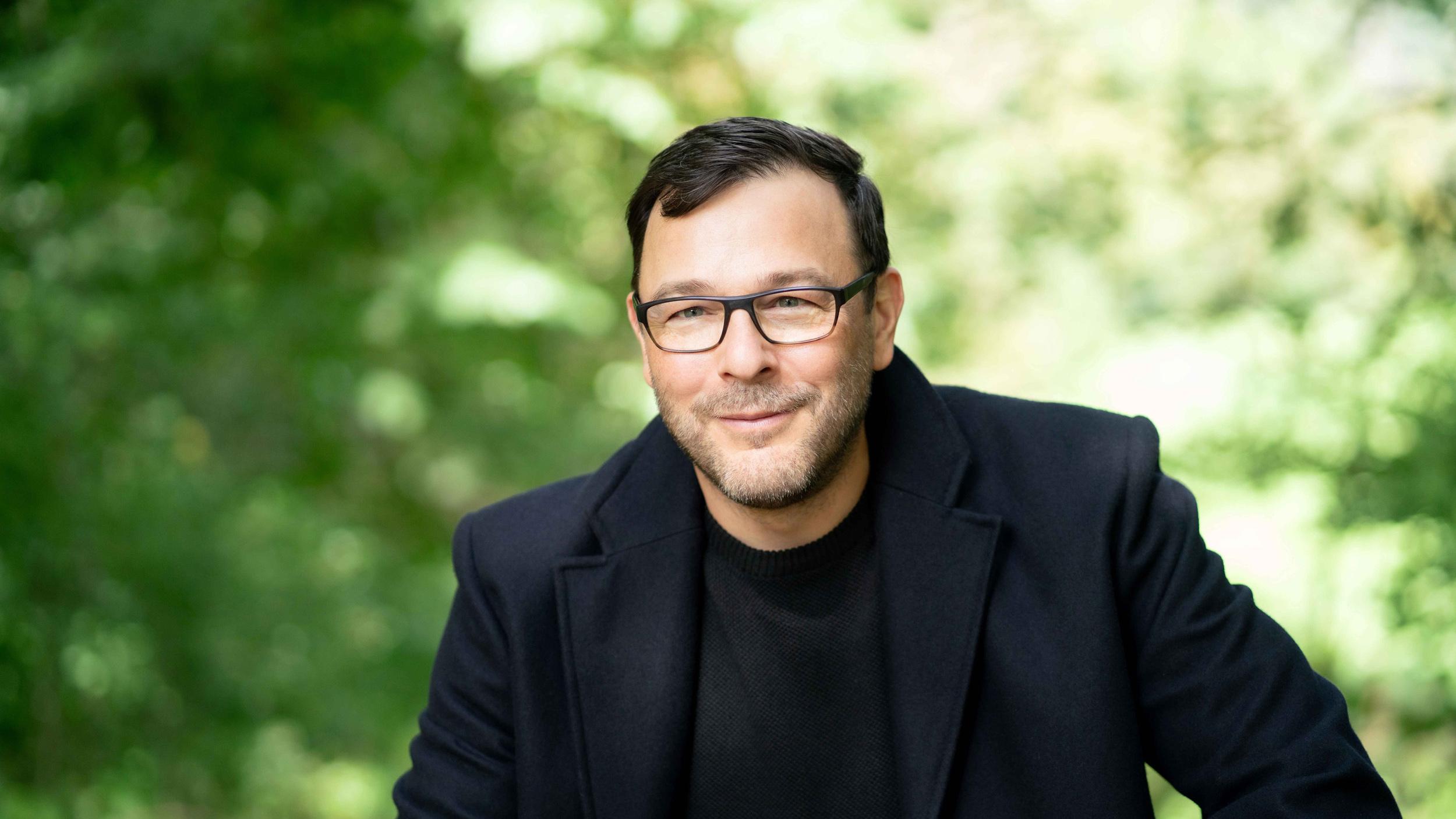
He belongs to this second generation which, following in the footsteps of the pioneers of the 1970s, firmly established early music at the heart of the international music scene. Over three decades, Andreas Scholl has witnessed the transformation of the countertenor, once an almost exotic figure, into a singer now expected to meet the same standards of virtuosity as other voices. But his own career tells another story as well: a refusal to rush things, a measured approach to opera, the need to preserve a family life, and an undiminished curiosity about other musical worlds, including pop music and composition. A teacher and mentor, the German countertenor is also involved in local government in Kiedrich, a town of 4,000 inhabitants in the Rhine Valley where he lives. He champions a vision of the artist as someone who remains engaged with society and democratic debate—and emphasizes how, in his view, culture remains essential to the development of citizens capable of navigating the complexities of the world.
You have been part of the early music scene for more than thirty years. How have you seen it evolve?
Andreas Scholl: I don’t quite belong to the founding generation, but rather to the second generation. I sang with Franz Brüggen, Harnoncourt, René Jacobs, William Christie, Philippe Herreweghe, Ton Koopman… When I arrived at the Schola Cantorum in Basel, early music was still a niche. That was both an advantage and a disadvantage. We wanted recognition, to perform in major concert halls, reach a wider audience, and enjoy the same standing as other classical musicians. But we didn’t yet know what we would have to give up to achieve that. The classical music world was highly ritualized. Early music still had something alternative about it, sometimes even to the point of caricature: Birkenstock sandals, woolen socks, long hair… (laughs) But that was precisely why it also attracted people who found classical music too elitist, too far removed from reality. They saw young musicians experimenting with a repertoire that was still being rediscovered. We didn’t know exactly how this music was supposed to sound: we were searching. Today, we perform in major concert halls and at major festivals. That’s obviously a success! But I sometimes feel we’ve lost some of that spontaneity, that taste for experimentation, that alternative spirit. I think that’s a shame…
So early music has become institutionalized?
A. S.: Yes. Take a concert today: a major venue, an €80 ticket to hear a great artist… That has nothing to do with the conditions in which Baroque music was performed in its own time. We’ve become part of that system ourselves, and of course it has its advantages. A purely alternative scene wouldn’t necessarily allow artists to earn a decent living. So I don’t want to set two models against each other, saying one is good and the other bad. But early music has established itself within major institutions by also adopting some of the rituals and behaviors of an entirely different musical world. It’s a development we need to look at with clear eyes.
The evolution has been even more spectacular for countertenors. When you started out, there were far fewer of them.
A. S.: Absolutely. At the Schola Cantorum in Basel, there were two of us studying as countertenors. It was still something rather exotic. Before us, of course, there had been Alfred Deller, James Bowman, Paul Esswood, and, in Germany, David Cordier. Then came my generation, with Robin Blaze, David Daniels, Brian Asawa, Gérard Lesne in France… René Jacobs had practically stopped singing when I started. Just listen to Alfred Deller. I love his voice, his interpretations of English folk songs and the arias he sang. But I don’t think he could have sung Giulio Cesare today in the way it is expected on international opera stages. His voice wasn’t powerful enough. Each generation has pushed the boundaries further. René Jacobs was already an extraordinary virtuoso, capable of impressive coloratura. And now, when I hear some young countertenors, what they can do is spectacular. Countertenor singing has become much more athletic. Technical demands have increased considerably, and audiences themselves have become much more demanding. In the past, when a Bach cantata or a Handel oratorio was being performed, every singer had to audition except the countertenor: people were simply happy to have found one! The mere fact that a man could sing in that range made him seem exotic. Some singers could make a very good living from that distinction. Today, that would be nowhere near enough.
Passionate about early music and want to read this subscriber-only article?
If you are not a subscriber, join the international Total Baroque community. Subscribe here from 5.00€.
I subscribe
If you are already a subscriber, sign in.
I sign in 

You must be logged in to be able to post comments.
Sign in