


 By
By 


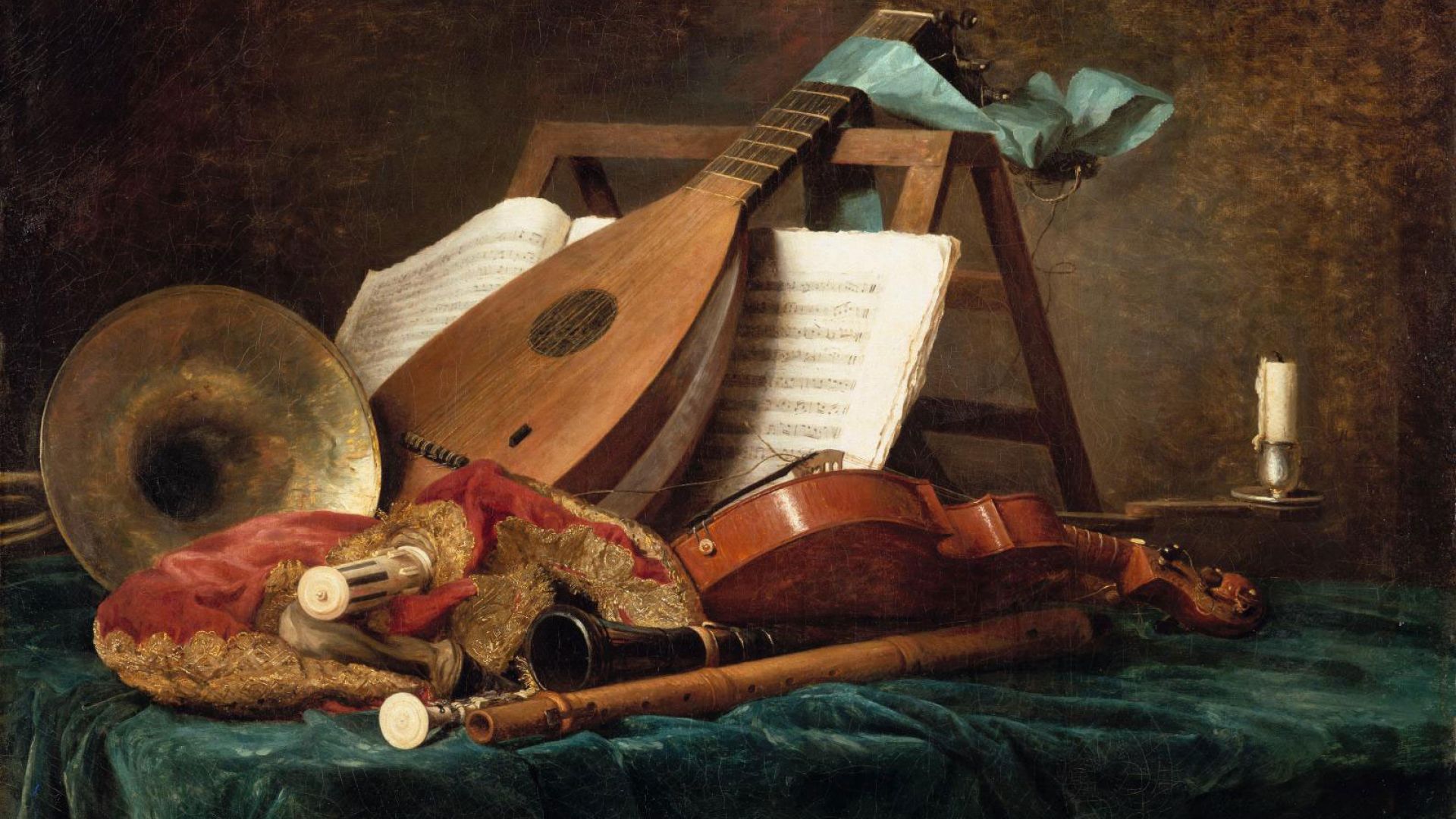
In the turning point of the 1960s, a time of freedom, Early Music fully embraces the spirit of its era. According to Daniel Leech-Wilkinson, « trying to define itself as different from some kind of mainstream » rebellious, hippie, or revolutionary. Far from the paths traced by orchestras or opera, which convey a sense of power and order, Early Music is off the beaten track, questions, disturbs the status quo, and shows new sensible approaches to music. It is then essentially subversive.
“Early Music was an alternative because it was saying ‘look, there are other ways of making convincing music’. And some of those ways were by using old scores and some of them were by playing scores differently, on different instruments and with different kinds of musical performance styles. And Early Music has been fantastically inventive in creating new performance styles, which is the one thing that classical music always tries to prevent. The last thing you want is a new performance style: you are always trying to recover the correct one. So Early Music has created a load of new performance styles in the process, while believing that these were old performance styles, that it was correctly recreated. Of course they aren’t, but it has been, by accident, incredibly inventive. And in that process it showed that it is possible to create new performance styles and to play scores in quite different ways. And to me that is its greatest contribution, that we could be playing all sorts of scores – not just Early Music scores, all sorts of scores –very differently.”
Daniel LEECH-WILKINSON
Singularity remains an essential component of Early Music, encouraging artists to cultivate their own interpretation, their own vision. María del Ser takes the example of Giovanni Antonini and his interpretation of the Four Seasons: “It was an actual shock for all of us. It was a point of view of the reading of the treatises, of the interpretations, of the parameters of interpretations as an ornament as a trill, as a comma, as a respiration, as the silence. They make their own vision. And it is something very artistic.”
This variability from one interpretation to another seems inherent in the instrument itself, from its conception.
“In bow making, at a critical point in time, it was decided that the models developed during the 19th century become the standard models for classical music. It is taken for granted that they should be copied: these are the canons to which we refer with variations but overall enormous homogeneity.
In 19thcentury bows, you can see some tiny differences but overall, visually, it is very homogeneous. In contrast, before the 19th century, there was an astonishing proliferation of shapes, textures, possibilities, lengths, weights: variability and heterogeneity were the rule, to serve each period and style of music. You don’t need the same bow if you are playing early 17th-century Italian diminutions or if you are playing mid-18th-century German music.
As a result, we observe a multitude of differences. Just look at iconography, which constitutes for us a huge repertoire of forms, to realise that what matters then is to make a tool adapted to the intended use. This is work that has nothing to do with copying. It gives me immense freedom in craftsmanship, and that’s also why Baroque bow makers all create different things, and a musician looking for a particular sound, a particular grain, a particular relationship with their bow will inevitably find their family of instrumental craftsmanship.”
The fascination of a never-ending quest
For several of our guests, this quest is not just about bringing ancient repertoires to life; it also pertains to the sound. In this case, the encounter is not fortuitous; it is the result of a deliberate and sometimes fervent search.
“I am still looking for within the lute world, instruments and resonances and repertoires that are unknown and interesting.
But if you think of the sound of the lute as resonating somehow within you – and I call this the musical soul, which is a little bit hard to define, but it is better that you can’t really define it. But this is what draws me to a certain resonance, let’s say, and the types of instruments I play.”
A quest that is undoubtedly shared by the early pioneers of Early Music, and the Estonian harpsichordist Imbi Tarum is undoubtedly one such pioneer, who can look back on the journey with a legitimate sense of accomplishment.
“It has been a long life already together with Early Music, I was still in the conservatory when I was asked to join the group Hortus Musicus, in 1978. Since then, I have performed with them all over the world, and at famous festivals. Then in the year 1992, I resigned from this group and I started another epoch of my life, teaching and playing in other projects, […]
So I am the first one in Estonia, one of the first ones, but the first who really specialised in harpsichord. And now I am teaching the students on this path.”
Imbi TARUM
Embarking on such a quest can also coincide with the beginning of a fascination, one that does not diminish over time because it is linked to the very spirit of discovery.
“People always ask us, but we also ask ourselves: why did you get into ‘this niche’? And some even say: ‘Why did we lock ourselves into this niche?’ For me, it is more of an opening. The day I discovered Early Music, it is not that it changed my life, but it changed my listening, my approach, my feelings.
And I was a child, in a choir in my homeplace, a choir school, the Petits Chanteurs de la Croix de Lorraine […], and I discovered William Byrd, Orlando di Lasso, Palestrina, Charpentier […] When you sing that, it opens your ears, it opens up perspectives.”
This initial fascination appears to have been preserved by harpsichordist Dmytro Kokoshynskyy, who began his musical studies learning the piano and then discovered the harpsichord at the age of 17 during a recital by a professor at the Kiev Academy of Music:
“And then I realised I was really into the sound of the instrument, and I was discovering a lot of repertoire. I was very excited.”
Dmytro KOKOSHYNSKYY
Everything unfolded in two years: studying under fellow harpsichordist Elena Zukhova, he one day heard an ensemble from the renowned Schola Cantorum in Basel at the Academy, eventually joining the School at the dawn of his twenties. He has been studying there with Francesco Corti ever since.
“What did it bring? Well, it brought me, first of all knowledge of a huge repertoire of which I had no idea. And the more I was getting to know it, the more excited I have been. Fascinating music!”
Dmytro KOKOSHYNSKYY
- The complete REMA 2023 study: Early Music – The art in movement, art in Motion

You must be logged in to be able to post comments.
Sign in