


 After the “Missa Tu es Petrus” in 2023 and the “Missa Benevola” in 2024, I Fagiolini and Robert Hollingworth bring their wide-ranging rediscovery of Orazio Benevoli, master of the spectacular Roman polychoral style of the seventeenth century, to a close with this third album. Two further world-premiere recordings, for three and four choirs respectively, on a release already shortlisted for the 2026 Gramophone Awards.
  By
By 


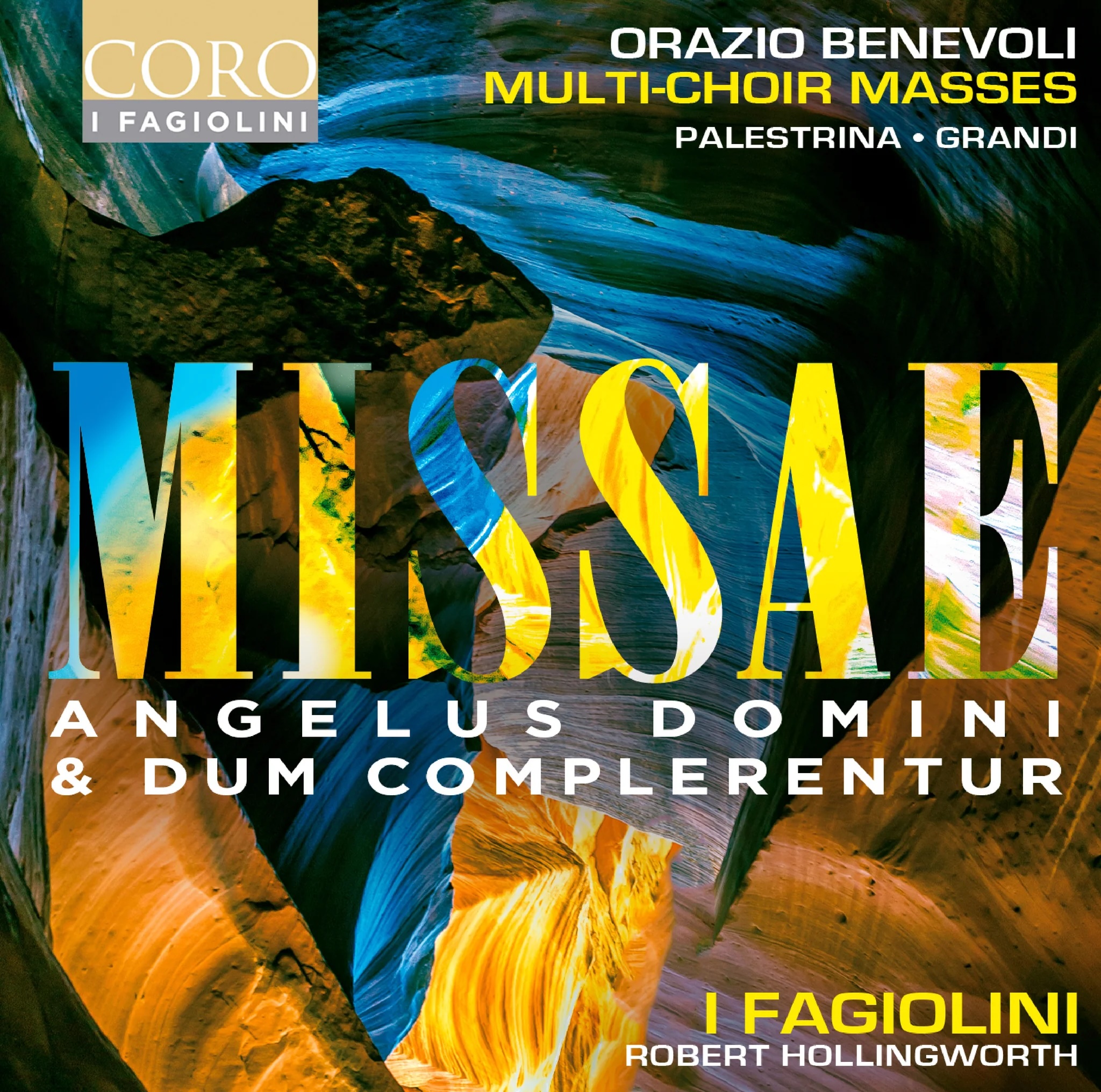
With Missae Angelus Domini & Dum complerentur, released on CORO, I Fagiolini and Robert Hollingworth conclude a project begun three years ago around a composer who remains surprisingly little recorded: Orazio Benevoli (1605–1672). Master of the Cappella Giulia at St Peter’s in Rome, he brought the sixteenth- and seventeenth-century art of multi-choir masses (cori spezzati) to remarkable heights, with voices answering, joining and overlapping one another until they filled the vast spaces of Rome’s churches.
The project began in 2023 with the Missa Tu es Petrus, an expansive four-choir mass based on Palestrina’s celebrated motet and recorded here for the first time. A year later came the Missa Benevola, likewise written for four choirs. These first two instalments established the project’s guiding principle: to bring back to light this Roman ‘Colossal Baroque’, in which sheer sonic scale never excludes fluid vocal lines or the play of rhythm and contrast between the different groups. Both recordings had already attracted attention: the first was a finalist in the 2023 Presto Recordings of the Year, the second in the 2024 edition.
The final instalment broadens the picture further with two markedly different works. Intended for Easter, the Missa Angelus Domini unfolds across three choirs; the four-choir Missa Dum complerentur takes as its model Palestrina’s six-part motet Dum complerentur dies Pentecostes, which is also heard on the album. Together with Alessandro Grandi’s Plorabo die ac nocte, the programme traces a liturgical journey from Easter to Pentecost.
This polychoral principle lies at the very heart of Benevoli’s musical language. At major Roman celebrations, choirs could be positioned around the church, or even doubled or tripled on specially constructed platforms; assistant conductors would then relay the maestro’s beat from one group to another. Some works even make use of the technique known as tenere la mula: the upper voices of the different choirs sustain a slow-moving line while the lower parts become more animated beneath them.
The rediscovery appears to have paid off. Released on 3 April 2026, the album was named an Editor’s Choice by Gramophone in May, then Record of the Week on BBC Radio 3’s Record Review in June, before being shortlisted in the Choral category of the 2026 Gramophone Awards. It is fitting recognition for a project conceived less as an archaeological curiosity than as an attempt to return a still largely neglected chapter of Roman Baroque music to the repertoire.



You must be logged in to be able to post comments.
Sign in