


 Polish violinist and conductor Stefan Plewniak champions a deeply embodied approach to music, shaped by improvisation and a love of collective music-making. Associate conductor at the Opéra Royal de Versailles since 2019, he seeks on stage that tipping point between control and spontaneity where everything catches fire, in an ever-renewed relationship with the musicians and the audience. Following several European engagements in the autumn, including appearances at festivals in Brindisi, Italy, and Bydgoszcz, Poland, he will travel to Hanoi, Vietnam, on 18 October as part of the “Opéra de Versailles Asia Tour”.
  By
By 


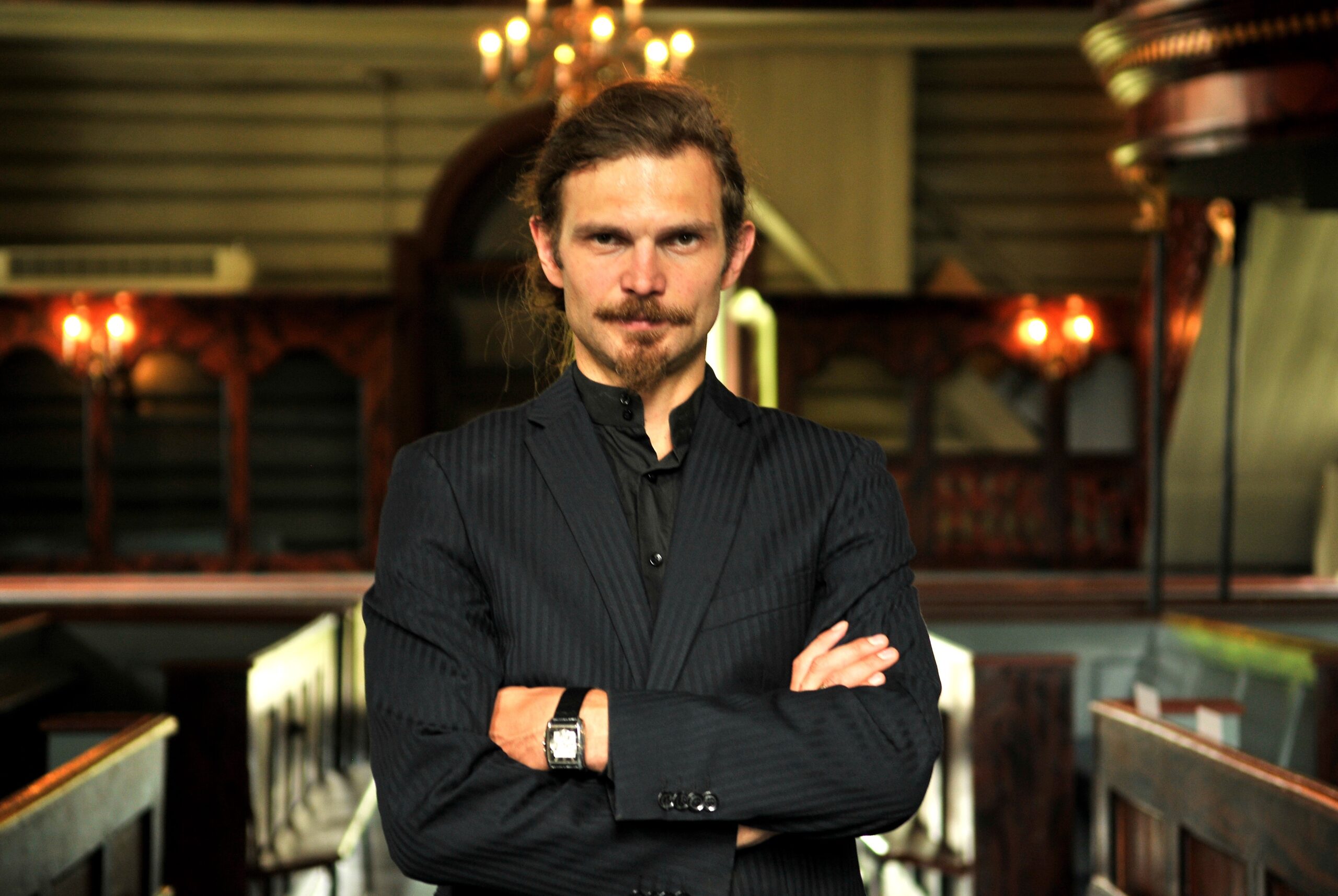
Introduction: After studying music in Poland, Stefan Plewniak discovered Baroque music in the Netherlands at the turn of the 2000s—a decisive revelation. Trained notably in Maastricht and later at the Conservatoire National Supérieur de Musique et de Danse de Paris, he founded the ensemble Il Giardino d’Amore in 2011, with which he quickly established himself on the European scene. His career as both a violinist and conductor has led him to work with figures such as Jordi Savall, shaping an approach founded on energy, spontaneity, and a refusal of overly rigid frameworks. Since 2019, he has served as Associate Conductor at the Royal Opera of Versailles, where he has developed a repertoire of operas and ballets conceived for both the stage and touring. At the same time, he is committed to passing on his knowledge, particularly in Norway at the NOR59 institute, where he has developed forms of teaching based on listening and shared experience. Balancing international projects with family life rooted in Kraków, he advocates a deeply embodied way of making music, staying as close as possible to the moment and to the audience. Here, he offers an unfiltered perspective on the life of a musician.
In the Beginning Was Music
I come from a family of musicians. My mother was an opera singer, and I grew up in theatres. I began my musical training at the age of seven. At first, I wanted to become a pianist because I heard my mother practising at home, but she steered me toward the violin! I was fortunate to have a luthier in the family, my uncle. As a result, I had access to very fine instruments from a young age, and I played between thirty and forty different violins. My progress was rapid—I attended a music school with an adapted academic schedule and learned easily—but my teachers were uninspiring, and several times I wanted to quit. I loved football, and all I wanted was to go outside and play with my friends! I found the conservatory world profoundly boring.
By the end of my musical studies, I knew nothing about the possibilities of arts management, and I had no idea how auditions worked. I moved to the Netherlands for two years, to Maastricht, to complete a Master’s degree. While I was there, a friend needed a Baroque violinist—that was how I first began playing Baroque music. It was a revelation; in that remote church in the Netherlands, the sound was magical. I experienced an immensely poetic moment.
I then entered the Paris Conservatoire (CNSM) to pursue a third Master’s degree, this time in Baroque music. At the same time, for about a year, I had been playing traditional music in Warsaw with a group that improvised extensively. It truly set me free: what energy, what joy, and what spontaneity within the ensemble! It opened my eyes and helped me better understand how the classical music system could function in terms of expressiveness and freedom. After completing my studies in 2011, I founded my ensemble, Il Giardino d’Amore.
From Warsaw to Versailles
In 2019, my manager, Jean-Christophe Cassagnes, introduced me to Laurent Brunner so that I could lead projects with the Royal Opera of Versailles, where I have now been a conductor for seven years. It represents a large part of my time and my work. Thanks to a permanent orchestra of around fifty musicians, we have succeeded in creating a distinctive sound and giving this orchestra its own identity, both in terms of its energy and its musical approach. That’s important because it takes a great deal of time to shape the sound of an orchestra. The quality of the ensemble has also been strengthened thanks to my colleagues, as well as Gaétan Jarry, whom I have known since our days at the CNSM, and Victor Jakob.

Passionate about early music and want to read this subscriber-only article?
If you are not a subscriber, join the international Total Baroque community. Subscribe here from 5.00€.
I subscribe
If you are already a subscriber, sign in.
I sign in 

You must be logged in to be able to post comments.
Sign in