


 In Rome in 1685, the young Scarlatti turns Mary Magdalene’s conversion into a veritable theatrical duel between Youth and Penitence. For its new recording, the French ensemble Céladon returns to the oratorio’s original version, as close as possible to what its first audiences would have heard: a way of rediscovering, before the versions that emerged from its many revivals, the initial creative impulse of a 25-year-old composer.
 By
 6 minutes


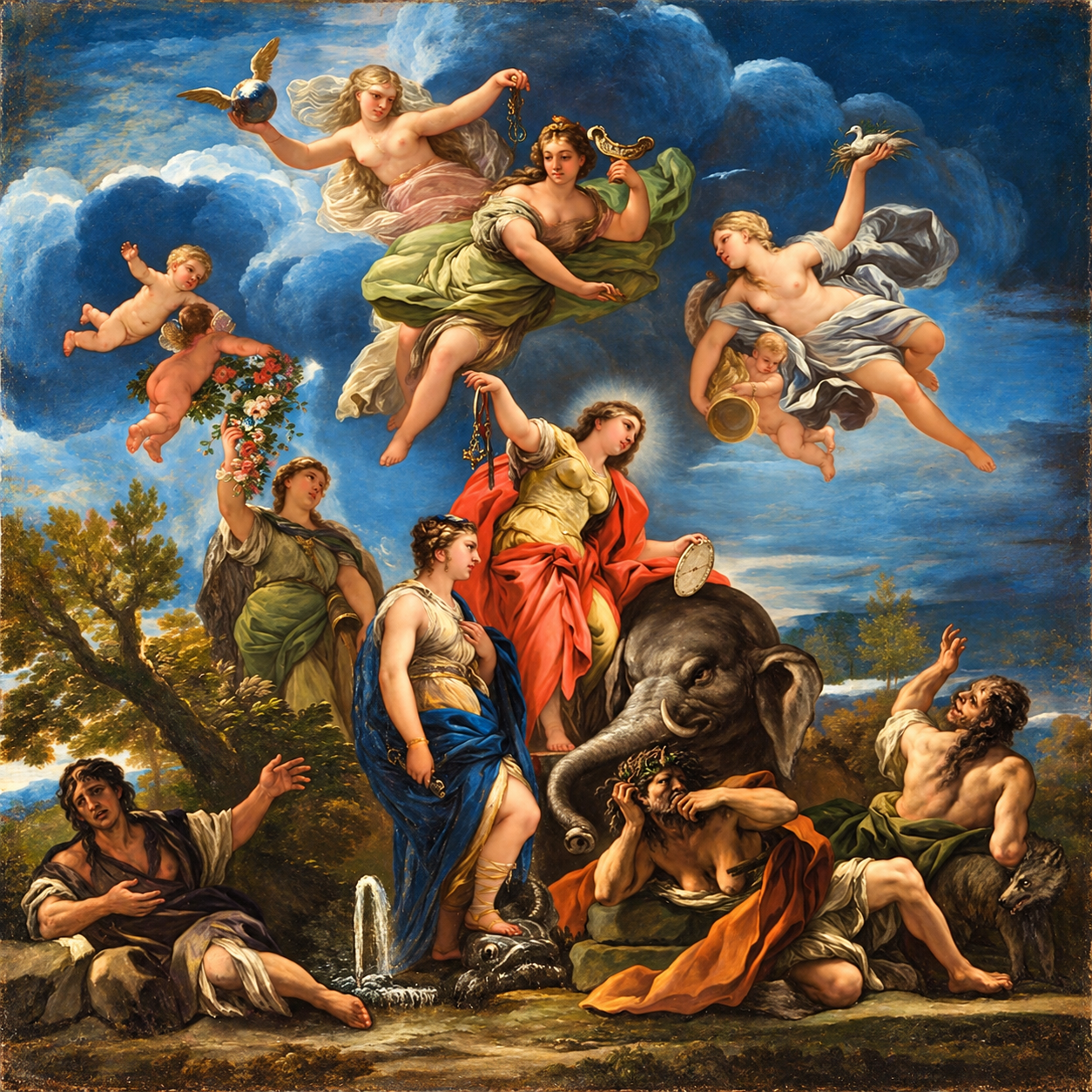
Released this September 2026 on Ricercar (Outhere), Il Trionfo della Grazia features the Ensemble Céladon alongside sopranos Marie-Frédérique Girod and Lise Viricel, and countertenor Paulin Bündgen, who also directs. Premiered in Rome in 1685 to a libretto by Cardinal Benedetto Pamphili, the oratorio pits Mary Magdalene, Youth, and Penitence against one another in a debate in which earthly pleasures, fear of the passing of time, and spiritual aspiration all become dramatic forces. For this recording, Céladon returns to the Roman version of the work, setting aside the later revisions preserved in the Modena and Dresden manuscripts.
Scarlatti was not yet 25 when Il Trionfo della Grazia was performed at the theatre of the Roman Seminary on March 18, 1685. Its success was immediate: six cardinals attended the performance, and the work would subsequently be revived from Modena to Vienna for more than 20 years. Behind its edifying subject lies, above all, a particularly effective theatrical mechanism. Magdalene hesitates between two voices: that of Youth, which urges her to enjoy life’s pleasures before they disappear, and that of Penitence, which reveals their vanity to her. Far more than a narrative, Pamphili (who would later write the libretto of Il Trionfo del Tempo for Handel) constructs a genuine inner struggle, from which Scarlatti draws the full extent of its dramatic power in music.
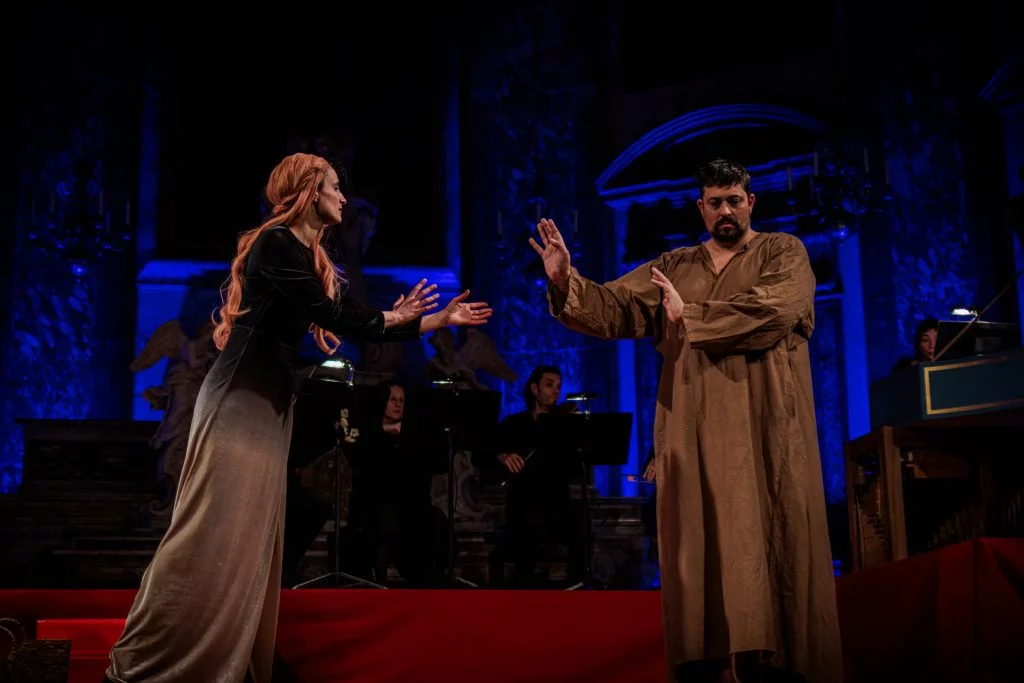
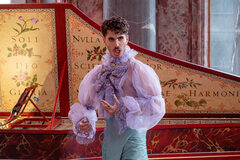
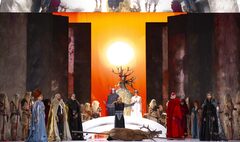
Founded in Lyon in 1999 by Paulin Bündgen, Céladon has built its identity around music from the Middle Ages, Renaissance, and Baroque, with a marked taste for seldom-heard repertoire and concert formats with a distinctly theatrical dimension. In 2024, Il Trionfo della Grazia became the final instalment of “Oratorios retrouvés” (“Rediscovered Oratorios”), a three-year cycle presented with Les Grands Concerts de Lyon, following Legrenzi and Giannettini. On February 11, at the Chapelle de la Trinité, the work was performed in a staged version, with costumes and lighting.
Two years later, that stage experience has become a recording. Recorded in Lyon in February 2026 with the same three voices—Marie-Frédérique Girod, Lise Viricel, and Paulin Bündgen—it retains the approach adopted from the outset in 2024: to come as close as possible to what might have been heard at the Roman premiere in 1685, without incorporating the changes made to the work over the course of its many subsequent revivals. In the meantime, the performances allowed Céladon to let the work mature, refining its rhetoric, pacing, and dramatic contrasts. For Bündgen, who had dreamed of performing this score for nearly 20 years, the recording thus seems less the culmination of a single project than the record of a long engagement with the work, which he discusses today with Total Baroque Magazine.
You discovered Il Trionfo della Grazia nearly 20 years ago. What was it about the work that appealed to you then, and that continues to appeal to you today?
Paulin Bündgen: Beyond the obvious quality and beauty of Alessandro Scarlatti’s music and the work’s libretto, I was drawn to the proportions of this oratorio. It is a concise, effective, well-balanced work that brings together all the principles of late 17th-century Baroque music: rhetoric, theatricality, inventiveness, dramatic instinct, and musical expressiveness. The work’s structure, conceived in two mirroring parts, its relatively substantial forces, and the three roles written for high voices also played a major part in my interest in the piece. These elements corresponded perfectly to the aesthetic I wanted to develop with Céladon.
Why did you wait so long before bringing it to audiences? What ultimately made the project possible?
P. B.: When I discovered this work, Ensemble Céladon was still young, and a production involving around ten musicians was not feasible. I myself was very busy as a performer with many of Europe’s early music ensembles, with less time than I have today to devote to the ensemble. That allowed me to gain experience as a singer before tackling such a work with my own ensemble. In the meantime, other equally exciting projects took precedence with Céladon: medieval programmes devoted to courtly love, Cazzati’s cantatas, and Natale Monferrato’s motets. I naturally returned to this work during our residency with Les Grands Concerts de Lyon, where we were invited to perform three Italian oratorios in staged versions. After Legrenzi and Giannettini, Scarlatti thus brought this trilogy to a close.
What was Rome like when this oratorio was born in 1685? And what place did the genre occupy at the time, between theatre and religion?
P. B.: Rome in 1685 was a mixture of splendour and poverty. This immense cultural centre brought together the ancient remains of the Roman Empire and the masterpieces of Bernini or the French painter Nicolas Poussin, who loved the city so much that he settled there. The oratorio genre emerged in Rome in the 1600s and continued to evolve up to the creation of Il Trionfo della Grazia, before continuing its development over the centuries. Under the pontificate of Innocent XI (1676–1689), opera and theatre performances were severely restricted or prohibited, particularly during Lent. The oratorio therefore became the great “permitted” musical entertainment: as in opera, it offered the drama and virtuosity that already captivated audiences of the period. Indeed, the same composers were at work, and the same artists appeared on stage; apart from the religious nature of its subject matter, therefore, the oratorio differed very little from opera.
Behind the religious discourse of the period, what human story do you think Il Trionfo della Grazia tells?
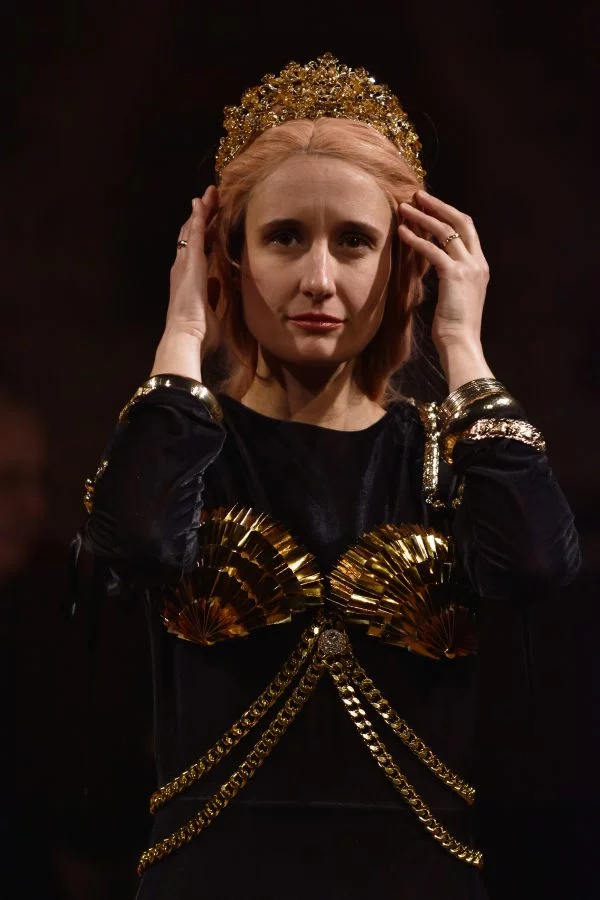
P. B.: Cardinal Benedetto Pamphili’s libretto depicts Mary Magdalene’s renunciation of pleasures, represented by Youth, and her sincere repentance, inspired by the character of Penitence. Pamphili, who had himself experienced a worldly youth before turning towards a more scrupulous piety, may have projected something deeply personal into this debate. His libretto speaks of a timeless human experience: that moment when we look at ourselves in the mirror, hear two voices within us, and have to choose which one to follow. Behind the religious language of the 17th century lie themes of striking modernity: the universal conflict between desire and renunciation, the fear of growing old and losing what defines us (such as beauty, pleasure, the power of seduction, and youth).
After the 2024 performance, what allowed the album to be heard in a different light in 2026? How has your perception of the work evolved over these two years of hard work?
P. B.: I always make a point of recording programmes only after we have performed them extensively on stage and tested them before audiences. The two years following the 2024 premiere were essential. They allowed us to take full possession of Scarlatti’s work, no longer simply interpreting it, but making it our own, imbuing it with our own stamp, sensibility, and perspective. Every performance became a living laboratory. Over the course of the concerts, we were able to refine the details, clarify the dramatic intentions, enrich the timbres, and play with the pauses, silences, and nuances of character among the three figures (Maddalena, Penitenza, and Gioventù). This process of gradual maturation transformed our relationship with the work, allowing us to inhabit it as fully as possible. I am thinking in particular of the recitatives, true models of rhetoric, which we were able to make increasingly our own over time and through repeated performances.

Upcoming
- October 2 – Purcell: An Evening Hymn, Saint-Hilaire Church, Pesmes, France
- October 3 – Scarlatti: Il Trionfo della Grazia (excerpts), “Génération France Musique, le live,” Maison de la Radio, Paris, France
- November 29 – “Devozioni Veneziane,” AMUZ – Flanders Festival Antwerp, Antwerp, Belgium
- December 12 – “L’Amour au loin,” with Cie Hallet Eghayan, Le Galet, Reyrieux, France
- December 20 – Scarlatti: Il Trionfo della Grazia, Church of Saint Bruno les Chartreux, Lyon, France


You must be logged in to be able to post comments.
Sign in