


 In a castle in the Apennines, the chirping of crickets mingles with Purcell and Handel. For its first release, La Maddalena Records brings together soprano Laura Baldassari and Ensemble Sezione Aurea in six works where myths, identities and transformations take shape within a very real soundscape. Here, the recording venue becomes part of the music itself.
 By
 2 minutes


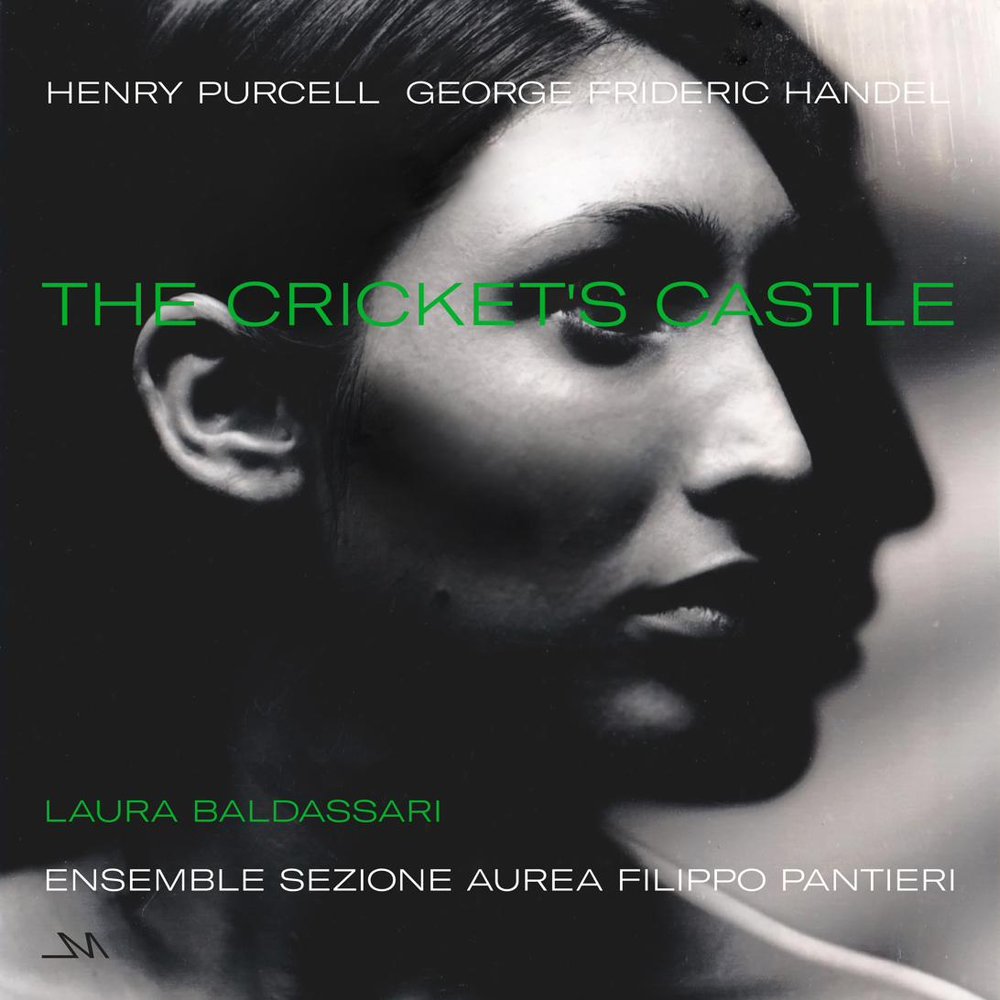
The first release from the young Italian label La Maddalena Records, The Cricket’s Castle brings together six arias and scenes by Henry Purcell and George Frideric Handel. Soprano Laura Baldassari joins the Ensemble Sezione Aurea, directed from the harpsichord by Filippo Pantieri, on period instruments tuned to A = 415 Hz. Yet the project goes beyond simply bringing the two composers together: through a succession of male and female figures, it explores transformation, identity and the uncertain territory where the human world meets myth.
One voice, many identities
From one track to the next, Laura Baldassari changes persona. In Handel, she becomes the dying Acis in “Verso già l’alma col sangue”, then the imprisoned Cleopatra in “Piangerò la sorte mia”, before taking on the role of the Persian king Xerxes in the celebrated “Ombra mai fu”. Theodora brings another change of world: “With Darkness Deep, as Is My Woe” gives voice to the young Christian woman imprisoned and destined for martyrdom.
The album opens and closes with Purcell. “Music for a While”, from Oedipus, invokes the Fury Alecto, whom music must soothe; at the other end, “Strike the Viol”, from the ode Come Ye Sons of Art, Away, brings a far brighter and more festive conclusion. Between lament, invocation, contemplation and celebration, the programme allows the same voice to move between very different characters, genres and emotional states.
When the castle enters the music
The singularity of The Cricket’s Castle lies above all in its recording venue. The album was captured live in a castle deep in the Italian Apennines, surrounded by nature. Silence there is never entirely silent: crickets chirp, the wind moves through the trees, leaves rustle. These sounds have not been removed from the recording; on the contrary, they become part of the performance, leaving the very tangible imprint of a summer night.
The approach neatly encapsulates the identity of La Maddalena Records. The label defines itself as a research collective working at the meeting point of early music, architecture and landscape. Its projects are conceived in response to the places that host them: acoustics and environment are no longer merely the setting for a recording, but one of its constituent elements.
The album’s title therefore takes on its full meaning. This “cricket’s castle” is not a picturesque backdrop imposed on Purcell and Handel: it gives the programme its breath, depth and, at times, an additional strangeness. In “Ombra mai fu”, where Xerxes praises the benevolent shade of a plane tree, the real presence of the natural world around the musicians even creates an unexpected resonance with the text.
A Baroque brought to life
This attention to place accompanies an otherwise resolutely historically informed approach: period instruments, a pitch standard of A = 415 Hz, and a continuo group including harpsichord and theorboes. Under Filippo Pantieri’s direction, however, Ensemble Sezione Aurea avoids any stiffness: supple strings, a responsive continuo and constant attention to Laura Baldassari’s breathing give the accompaniment genuine presence without ever weighing down the vocal line. It is an approach that supports the shifts in character and affect while preserving the intimacy of the project.
With The Cricket’s Castle, La Maddalena Records makes a strikingly distinctive first statement: a recording in which fidelity to historical practices is not simply a matter of recovering instruments or pitch, but also of restoring something of the physicality and fragility of listening itself.


You must be logged in to be able to post comments.
Sign in