


 In “Spiritillo Mediterraneo”, Spanish violinist Cristina Prats Costa follows in the footsteps of a lively, mischievous little Baroque sprite, taking her violin on a journey through Mediterranean ports, courtyards, and intertwined traditions. From Falconieri to Vivaldi, from Matteis to the Spanish dances of Sanz, Murcia, and Nebra, her first solo album transforms the Mediterranean into a theatre of invention, where ornamentation becomes storytelling.
  By
By 


For her first solo recording, Cristina Prats Costa begins with a very concrete idea: to show how, during the seventeenth and eighteenth centuries, music flowed between Italy, Spain, France, and beyond, carried by the winds of the Mediterranean’s ports, courtyards, and traveling musicians. Bringing together works by Falconieri, Matteis, Biber, Rebel, and Vivaldi, she follows the traces of a European violin language in motion, nourished by Italian virtuosity, French refinement, and Iberian colours. Yet Spiritillo Mediterraneo is also a project of creative appropriation: the violinist reimagines pieces by Murcia, Sanz, and Nebra—originally written for guitar—for her instrument, transforming ornamentation into a multifaceted art form, both a reflection of this musical journey and a subtle means of storytelling and improvisation. In this interview, she reflects on this musical Mediterranean, her research process, and the degree of freedom still afforded today by the little Baroque spirit—the lively, mischievous spiritillo that gives the album its title.
Your album Spiritillo Mediterraneo presents the Mediterranean as a space of circulation, where Italian virtuosity, Spanish rhythmic fire, and French elegance intersect. How did you construct this musical itinerary between these different Baroque traditions?
Cristina Prats Costa: As a musician from Ibiza, the Mediterranean has always felt less like a border and more like a meeting place. When I began imagining Spiritillo Mediterraneo, I wanted to explore that world of exchange where musicians, ideas, and styles travelled freely between ports, courts, and cultural centres. Rather than presenting separate national traditions, I wanted to reveal a musical landscape shaped by constant interaction and dialogue. What intrigued me most was the way musical ideas moved across borders, creating a shared artistic language while still preserving distinctive local identities. Italian music brought extraordinary freedom, virtuosity, and expressive brilliance. Spanish music contributed rhythmic vitality, improvisatory energy, and distinctive harmonic colours. French music offered elegance, refinement, and a remarkable sense of gesture and character. What interested me was not what made these traditions different, but what happened when they encountered one another. I built this itinerary by following the routes through which music travelled around the Mediterranean and beyond. Rather than selecting works according to modern national categories, I chose composers whose lives and music reflected cultural exchange. Andrea Falconieri, for example, worked in Naples under Spanish rule and travelled through Italy, France, and Spain. Nicola Matteis brought the brilliance of the Italian violin style to England while absorbing French and British influences. Composers such as Biber, Rebel, and Vivaldi demonstrate how the Italian violin language spread across Europe and was adapted to local tastes. I also wanted the album to shift between different musical styles: virtuosic sonatas, dance inspired works, improvisatory variations, and lyrical arias, creating a sense of discovery similar to that experienced by the travelling musicians of the Baroque world. My own arrangements of Murcia’s Fandango, Sanz’s Españoleta, and Nebra’s Seguidillas serve as important landmarks throughout the journey, bringing the rhythmic energy and expressive colours of Iberian music into conversation with the Italian and French influences heard elsewhere on the recording. At its core, the project is also deeply personal. As a Spanish musician, I feel connected to the Mediterranean not only historically but culturally and emotionally. Spiritillo Mediterraneo is therefore both an exploration of musical exchange and a reflection of my own artistic identity. Ultimately, it is less about borders than about movement, revealing a world where creativity emerged from encounter, imagination, and dialogue.
The title is inspired by Andrea Falconieri’s Spiritillo Brando: this “spiritillo”, a lively and mischievous little sprite, almost becomes a figure of the Baroque imagination. What does it represent for you in the way you play, ornament, and bring the works into dialogue with one another?
C. P. C.: The title of the album comes from Andrea Falconieri’s Il Spiritillo Brando, and from the moment I encountered the piece I was captivated by the word spiritillo. It evokes a small, mischievous sprite, full of energy, imagination, and unpredictability. For me, it became the perfect metaphor for the essence of Baroque performance. One of the things I love most about this repertoire is that the written score is only the starting point. Baroque musicians were expected to ornament, improvise, adapt, and respond to the moment. The spiritillo represents that creative spark that allows the music to come alive beyond what is written on the page. It is the freedom to shape a phrase differently each time, to take risks with ornamentation, to explore unexpected colours, and to engage in a musical conversation with one’s fellow performers. It also reflects the way I approached the album as a whole. Rather than presenting the works as isolated masterpieces, I wanted them to speak to one another across time, geography, and style. The playful dances of Falconieri, the virtuosic brilliance of Matteis, the expressive depth of Biber, and the rhythmic vitality of the Spanish repertoire all become part of a larger dialogue. The spiritillo is the thread that connects them: a spirit of curiosity, invention, and exchange that runs throughout the programme. As performers, we are constantly balancing scholarship and spontaneity. We study the sources, treatises, and historical context, but ultimately the music must feel alive in the present moment. For me, the spiritillo represents the point where knowledge and imagination converge. It is the element that transforms historical music from something preserved into something lived, shared, and continually renewed.
You have made your own arrangements of the Spanish pieces, and ornamentation seems to lie at the heart of the project—not as mere decoration, but as a form of storytelling. How much personal freedom can one take today in this repertoire while remaining faithful to its historical spirit?
C. P. C.: I see historical performance not as a limitation on freedom, but as an understanding of the kind of freedom musicians of the time would have expected. Ornamentation is not merely decorative; it is an essential part of the musical language, shaping character, narrative, and emotion. This creative potential was one of the aspects that first drew me to Baroque music and remains a constant source of inspiration today. Performers were expected to vary repeats, improvise diminutions, and respond creatively to the affect of the music. In many cases, the written score was only a framework from which a performance could emerge. As both a performer and researcher, I am continually exploring how creativity and historical awareness can coexist. I am constantly studying treatises, manuscripts, and surviving examples of ornamentation because they provide valuable insights into the musical language of the period. In fact, my doctoral research focuses on ornamentation and improvisatory practices in Baroque performance, so these questions are central to both my academic and artistic work. However, I do not see historical sources as restrictions. Rather, they provide a vocabulary through which we can express ourselves. Just as a speaker uses language creatively while respecting its grammar, a performer can take considerable freedom while remaining faithful to the style. This approach was particularly important in my arrangements of Murcia’s Fandango, Sanz’s Españoleta, and Nebra’s Seguidillas. Rather than treating these works as fixed objects, I approached them in the spirit of Baroque musicians, who constantly adapted music for different instruments and circumstances. One of the most rewarding aspects of the process was exploring how music conceived for the guitar could be reimagined through the voice of the violin. I was fascinated by the violin’s ability to sustain a melodic line, imitate the human voice, and use ornamentation to heighten a particular affect or gesture. For me, ornamentation is not an addition to the music: it is part of how the music breathes. It allows us to engage creatively with the repertoire while remaining connected to the expressive world from which it emerged.
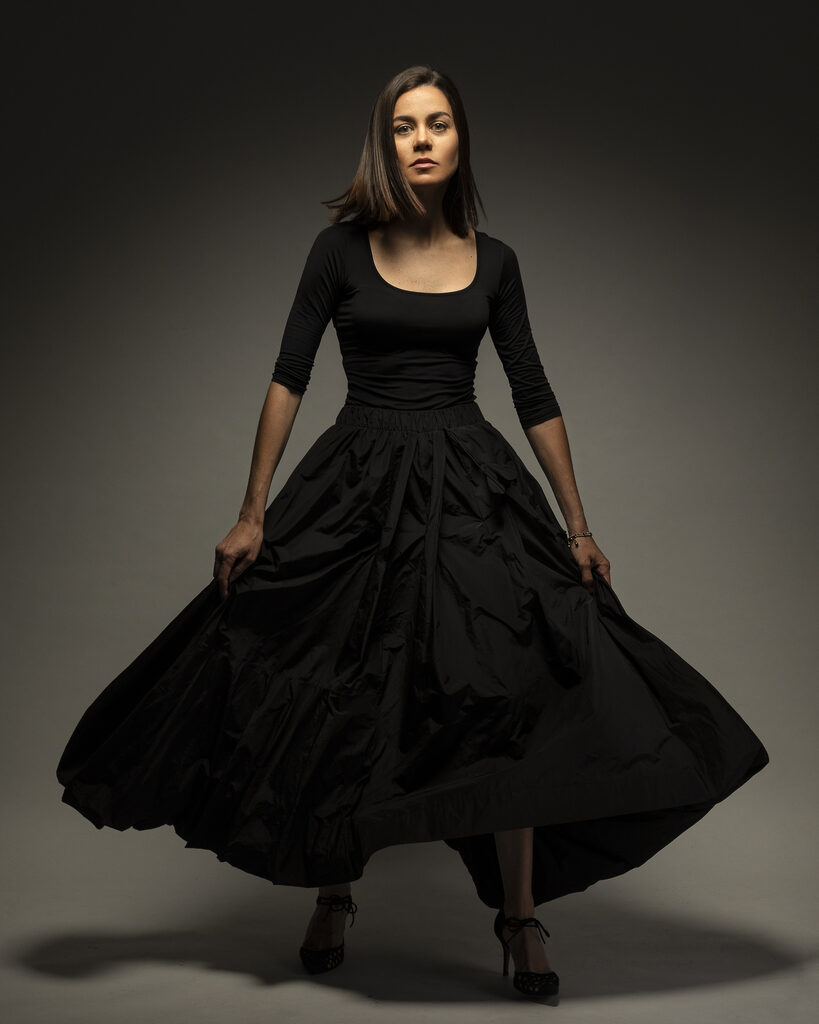
This album is your first solo recording, but also a very personal journey through these repertoires. As a Baroque violinist, what did you want to bring out about your instrument in this programme?
C. P. C.: This album gave me the opportunity to explore many different facets of the Baroque violin. What I love most about the instrument is its extraordinary range of expression. It can be virtuosic and brilliant, but also intimate, vocal, playful, rhetorical, and deeply expressive. Through this programme, I wanted to bring out those many voices and show how the same instrument can inhabit very different musical worlds. One of the aspects I find most compelling about the Baroque violin is its ability to imitate the human voice. Whether in the lyrical lines of Falconieri’s La Suave Melodia, the expressive recitative of Vivaldi’s Grosso Mogul, or the vocal qualities of Matteis’ arias, I wanted the instrument to sing, speak, and communicate a sense of rhetoric and character. For me, Baroque violin playing is deeply connected to language and storytelling. Every phrase has a direction, an intention, and an emotional meaning. Throughout the album, the violin moves between different national styles, dances, and affects. It can be elegant and refined, fiery and rhythmic, playful and mischievous, or deeply introspective. The title Spiritillo Mediterraneo reflects this sense of transformation and imagination. The violin becomes a traveller, moving through different musical landscapes and absorbing the colours of each one. Perhaps most importantly, I wanted to showcase the violin as an instrument of dialogue: dialogue with the continuo, dialogue with the traditions that shaped this repertoire, and dialogue between composition and improvisation. Through this programme, I hoped to show not only the beauty of the instrument itself, but also its capacity for expression, invention, and communication.
Finally, if you had to recommend one piece as an entry point into the album, which would it be? And which piece is your own favourite?
C. P. C.: If I had to recommend one piece as an entry point into the album, I would choose Matteis’ Preludio in A Minor and Passaggio rotto. Andamento veloce from Ayres for the Violin. Beyond being wonderful examples of Matteis’ imagination and virtuosity, they were also among the most intimate pieces to record. It was just me, the violin, and the resonance of the church. The silence of the space became part of the performance, and recording those pieces felt incredibly personal. What makes the Preludio particularly special to me is the opportunity it gave me to explore ornamentation in a very personal way. I chose to play the repeat as a fully ornamented version, allowing the music to unfold differently the second time. It became an exploration of the expressive and improvisatory possibilities within the piece. For me, it captures many of the ideas at the heart of the album: imagination, freedom, and the dialogue between what is written on the page and what emerges in performance. As for my own favourite, I would probably choose my arrangement of Sanz’s Españoleta. It was one of the most rewarding pieces to create because it invited me to think deeply about structure, variation, and storytelling. The original is built on a simple sixteen-bar ground, yet through variation, ornamentation, and repetition it grew into a work lasting more than six minutes. I loved exploring how the music could unfold organically while maintaining a sense of direction and narrative. The piece has continued to evolve beyond the recording. I have also created arrangements of the Spanish works on the album for small ensemble, and one of the things I enjoy most is discovering the different sound worlds and expressive possibilities they reveal. Españoleta in particular has become a space for experimentation and discovery, which is perhaps why it remains so close to me.

Upcoming
- July 15 – “Spiritillo Mediterraneo”, Florian Leonhard Fine Violins, London (UK)
- July 23 – Purcell: Dido and Aenas, Opera Atelier, Carleton Dominion-Chalmers Centre, Ottawa (Canada)
- August 15-16 – “Sommeils et songes de la nuit”, Cathedral of the Holy Trinity & Church of Notre-Dame-de-Latterrière, Québec (Canada)

You must be logged in to be able to post comments.
Sign in