


 With “Éclats et derniers feux”, harpsichordist Loris Barrucand returns to the French clavecin master Jacques Duphly, a discreet composer of the Enlightenment whose music has accompanied him since his student years. Conceived as a “shattered mirror”, this anthology reveals the many facets of an art at once refined, brilliant and tender, at the moment when the harpsichord, soon to be supplanted by the pianoforte, casts its final glow.
  By
By 


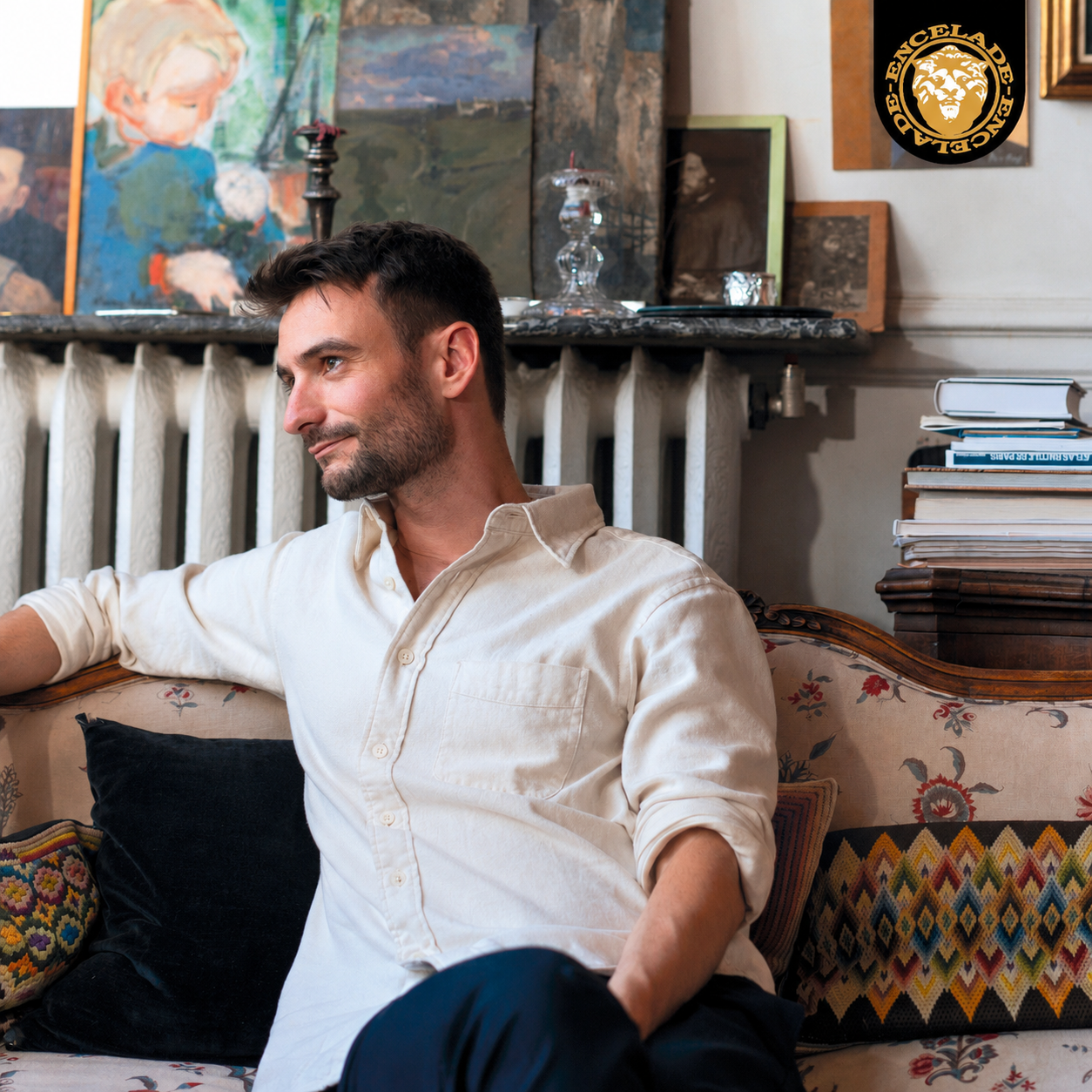
A harpsichordist from Savoy, trained at the Paris Conservatoire under Olivier Baumont and Blandine Rannou, Loris Barrucand has established himself as a musician familiar with the great Baroque stages of Europe. A collaborator with Les Talens Lyriques, Le Concert Spirituel, Le Poème Harmonique, and La Tempête, a founding member of the ensemble Sarbacanes, and the recipient of a Diapason d’or [an award given by the French magazine Diapason for exceptional classical music recordings], he has also spent several years exploring the two-harpsichord repertoire with Clément Geoffroy. In Éclats et derniers feux, he returns to Jacques Duphly, a sought-after harpsichordist in Enlightenment Paris who has now been partly erased from musical history. Conceived as a “broken mirror,” this anthology reveals the many facets of a refined, brilliant, and tender art at the moment when the harpsichord, soon to be supplanted by the fortepiano, cast its final glimmers.
Your album is entirely devoted to Jacques Duphly, a harpsichordist who remains relatively unknown today. What made you want to shine a light on this figure, and what place do you think he occupies in the history of the harpsichord?
Loris Barrucand: Duphly’s music has always been present in my life! In Annecy, my first harpsichord teacher regularly had us play easy pieces by this unknown composer. For a beginner, it was a wonderful training ground because even the simplest pieces required careful attention to touch, well-shaped ornaments, and the pursuit of that mysterious French bon goût… We were thrown straight into the deep end! As I grew older, I explored other horizons, but this music remained latent within me. Even today, when I improvise at the harpsichord, it is Duphly’s style that comes most naturally to me. Because I learned my instrument through it, I sometimes feel that this music is my second native language! As for the album, the idea came to me three years ago. My friend, the viol player Louise Bouedo, invited me to accompany her in the recording of Duphly pieces transcribed for two viols. For four days, headphones on my ears, I felt I was rediscovering this music: its refinement, its diversity… I was deeply moved! When I returned home, I furiously sight-read all my old high-school scores again. Éclats et derniers feux was born from that reunion!
In the booklet, you evoke the image of a “broken mirror,” in which each piece reflects one facet of his work. What do you mean by that, and what does this anthology reveal about Duphly’s musical personality?
L. B.: This idea was inspired by a passage from the writer Christian Bobin in which he compares truth “to a broken mirror, each fragment of which reflects the entirety of the sky.” I found it to be the perfect definition of an anthology: an assemblage of disparate pieces which, placed side by side, restore the truth of a composer’s work. I did not try to paint a portrait of Duphly. That would have seemed presumptuous, given how little we know about his character. As a harpsichord teacher and composer, his reputation was immense. Despite that, he appears to have cultivated a rather singular form of discretion in the midst of the Enlightenment. In this recording, I mainly tried to give an idea of his harpsichord oeuvre, selecting the most representative pieces, as well as those that spoke most strongly to me.
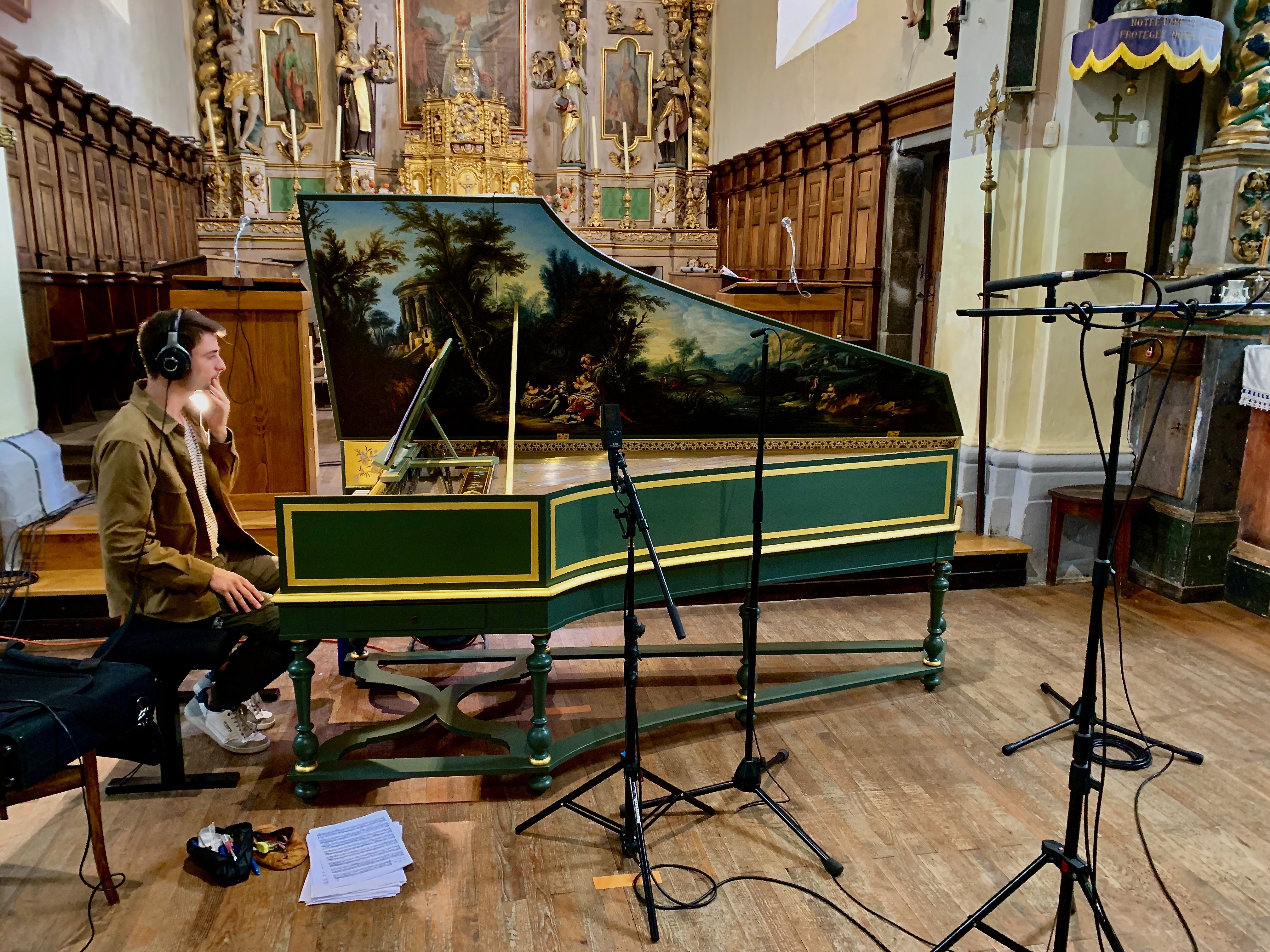
Your album explores the harpsichord’s final flowering before it gave way to the fortepiano, a moment when a musical language seems both to reach its peak and to begin transforming into something new. What attracted you to this period of transition?
L. B.: Born in 1715, the year of Louis XIV’s death, Duphly died on July 15, 1789, just one day after the Storming of the Bastille. With his death, the entire Ancien Régime disappears! In many respects, both his life and his music testify to a departure from the conventions of his time. While almost all harpsichordists secured an income through a parish position, Duphly abandoned the organ to devote himself exclusively to the harpsichord and later the fortepiano. Nor was he a musician attached to the Court. As an independent “harpsichord master,” he taught in Paris rather than Versailles. Remarkably discreet and never married, he embodies certain traits that would later become associated with the solitary Romantic artist. His harpsichord pieces are also marked by an avant-garde sensibility: take La De Drummond, for example, a veritable Rousseauian manifesto, with its “natural” melody—instantly memorable—supported by a simple accompaniment. I don’t know whether Duphly was aware of the great changes taking place around him, but aesthetically speaking, his harpsichord pieces certainly contributed to the evolution of taste.
If you had to recommend one piece as an entry point into the album’s world, which would it be? Is there a piece to which you feel particularly attached, and why?
L. B.: I think La Lanza provides a wonderful introduction to Duphly’s music! It is a highly contrasted piece, both brilliant and somewhat nostalgic… I also have a particular fondness for the Courante in D. I love its slightly Romantic energy, intense and veiled. This piece has accompanied me since my high-school years, and I must admit that I never seem to tire of it! To explore what travel meant during the Renaissance, I will first broaden the perspective a little: no, musicians were not the only people travelling across Europe, of course! This period is, after all, known as the Age of Discovery. Just think: from the beginning of the fifteenth century, the King of Portugal was sending ships to explore the coasts of West Africa. The Cape of Good Hope would be reached in 1488. A few years later, the Portuguese reached India by sailing around Africa. Meanwhile, the Spanish arrived in the Caribbean and Central America, while the Portuguese landed in Brazil. And I am speaking here only of European voyages, since many Arab and Chinese travellers were also undertaking explorations at the same time. All of this is simply to say that travel was very much in the air.

You must be logged in to be able to post comments.
Sign in