


 What if dance allowed us to hear Baroque music differently? That’s the artistic wager proposed by Leonardo García-Alarcón, who, in this interview, revisits the dialogue between music, the body, and the performing arts.
  By
By 


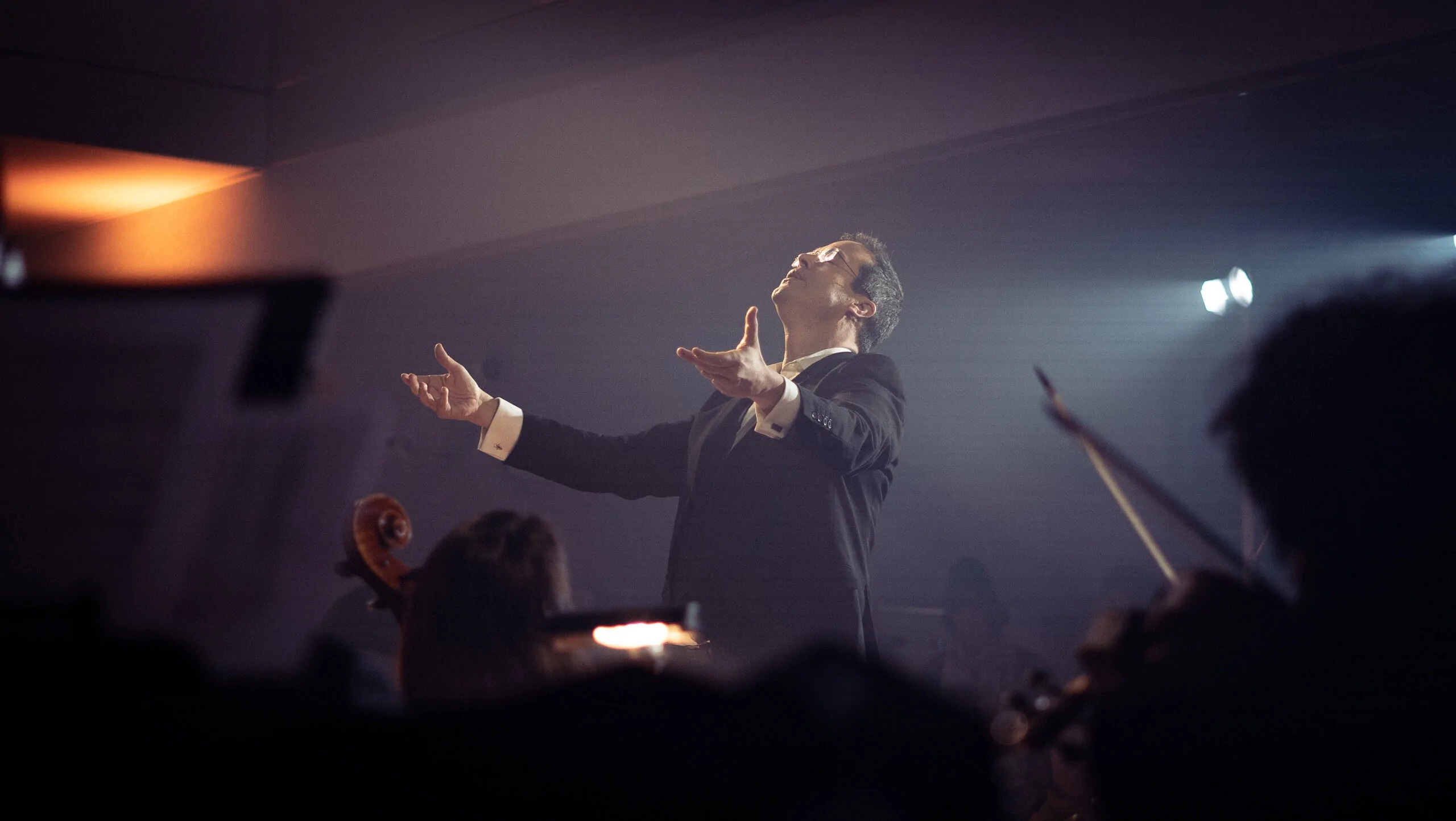
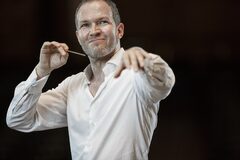
Arte is currently broadcasting a version of the St. John Passion by Johann Sebastian Bach, choreographed by Sasha Waltz and conducted by maestro Leonardo García-Alarcón. Premiered in 2024 in Salzburg and at the Opéra de Dijon, this Passion marks the second collaboration between the German choreographer and the Argentine conductor, who is now working on a new production with choreographer Bintou Dembélé around Les Indes Galantes by Rameau. A conversation about the dialogue between Baroque music and contemporary dance.
You had already collaborated with Sasha Waltz on L’Orfeo by Monteverdi in 2018. How did the idea of combining dance and Baroque music come about?
Leonardo García-Alarcón: It was the Freiburger Barockorchester who invited me, in 2018, to conduct L’Orfeo by Monteverdi in a choreography by Sasha Waltz at the Staatsoper in Berlin. It was a revelation. I had already conducted L’Orfeo many times since the early 2000s—at the Teatro Colón in Buenos Aires with Gabriel Garrido, and in Paris at the Festival de Saint-Denis in a staging by Jean Bellorini. But what Sasha proposed in Berlin was something else entirely. She managed to integrate dance at the very heart of the musical drama, daring to include danced silences—for example, the unforgettable “rape of Proserpina” with no music at all. These moments will forever remain etched in my memory. It was an artistic thunderbolt, a coup de foudre. Moreover, dance has always been a part of my life: my sister is a principal dancer, and thanks to her, I became a true enthusiast—even a connoisseur—of classical dance. It’s an art form I need in order to delve deeper into the musical expression of my emotions.
How did you approach L’Orfeo with the musicians? What kinds of questions came up in your work?
L. G.-A.: It was immediately obvious to me that L’Orfeo had to “dance”, both literally and figuratively. Monteverdi clearly indicated the dance sections, notably during the wedding, and in the infernal and lamentation scenes. But the main challenge was logistical and spatial: I conducted sometimes stage right, sometimes stage left, because the musicians were split on either side of the stage. Initially, another conductor was meant to lead everything from the pit, but that didn’t feel natural to me. So, I chose to play the wedding scenes stage left, and the lamentations and descent into hell from the organ stage right. Another major challenge was adjusting to the tempi imagined by Sasha Waltz, since they were quite different from the ones she had rehearsed with another conductor… This divergence, rather than frustrating me, inspired me to create a work through close collaboration.
Passionate about early music and want to read this subscriber-only article?
If you are not a subscriber, join the international Total Baroque community. Subscribe here from 5.00€.
I subscribe
If you are already a subscriber, sign in.
I sign in 
You must be logged in to be able to post comments.
Sign in