


 With their ensemble La Rêveuse, Florence Bolton and Benjamin Perrot have devoted ten years to exploring English music of the eighteenth century. Their project, “London,” brought to life in the form of four recordings, stands out for its singular ambition: to link the musical history of that period with contemporary movements of populations and artists.
  By
By 


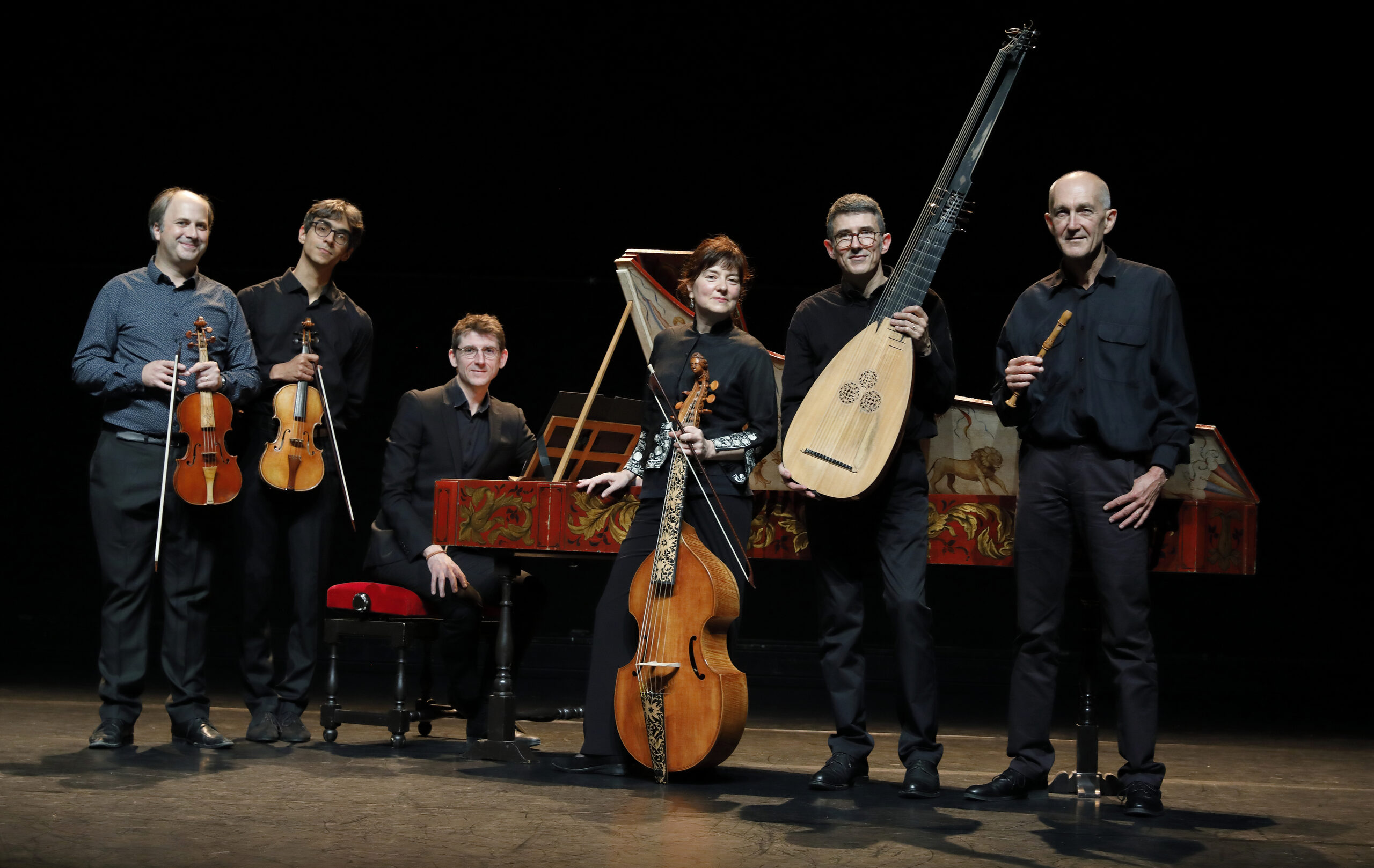
Founded in 2004 by Florence Bolton and Benjamin Perrot, the ensemble La Rêveuse has established itself as one of France’s finest groups dedicated to exploring the music of the seventeenth and eighteenth centuries. With a keen interest in the literary and social connections of music, the ensemble excels at recreating the atmosphere of the salons and theatres of yesteryear. Their four-CD collection (“London”), released by Harmonia mundi, offers a luminous journey through the musical London of the 18th century, a bustling capital, revealing the diversity of styles nourished by artistic immigration and cultural effervescence: from popular tunes to virtuoso pieces, from the theatre of Drury Lane to aristocratic salons. A wonderful invitation to rediscover London as one of the great centres of European Baroque music. The final volume in the series, London – circa 1760: J.C. Bach, C.F. Abel & Friends, was released in August 2025.
You began working on English music from the very founding of La Rêveuse in 2004, so more than twenty years ago?
La Rêveuse: We initially worked extensively on seventeenth-century English music—our first recordings were devoted to Henry Purcell. These explorations led us to discover other little-known yet important composers who shaped the specificity of English music in the seventeenth century: Henry Lawes, Nicholas Lanier, then Godfrey Finger, and also the Italian Giovanni Battista Draghi. But the same question arose for the eighteenth century: who are the composers who made English music, apart from Handel? London in the eighteenth century is a true cultural capital, and it is undoubtedly where one could hear the finest operas—thanks in particular to Handel—but also the finest concerts. There are countless books and studies on this composer, yet in the end we know relatively little about the history of English music of that era.
Your project also seeks to reflect on the cosmopolitanism of the city of London.
L. R.: Long before Brexit in 2020, people were already speaking for years of those migrants from many war-torn countries who died crossing the English Channel. Their dream was to reach London to build a life there. In the eighteenth century, many musicians and artists also crossed the Channel, but London was then a true land of welcome; we forget this today, for one can hardly say that the United Kingdom remains exemplary in this regard. These events were undoubtedly our point of departure and gave us the idea to develop a subject that would link ancient history with the history of today.

We considered how to highlight, in an innovative way, a few topics that seemed important to us, setting aside overly musicological aspects in favour of societal issues that still resonate today: how to build a culture that integrates the cultures of other countries, for the United Kingdom was very open to foreigners in the eighteenth century; what place to give to territories (provincial towns, rural life, and, in our case, also Scotland, which was united with England in the eighteenth century), for London was a very dominant city; how to imagine a culture that is not only for the elite, where everyone can find their place; what the place of women musicians is, etc.

Passionate about early music and want to read this subscriber-only article?
If you are not a subscriber, join the international Total Baroque community. Subscribe here from 5.00€.
I subscribe
If you are already a subscriber, sign in.
I sign in 

You must be logged in to be able to post comments.
Sign in