


 Behind this seldom-used word referring to a well-known nut (mandorla is the Italian word for the almond nut, to which shape it refers), the young ensemble already has a solid core and hopes to spread its fragrance more widely.
  By
By 


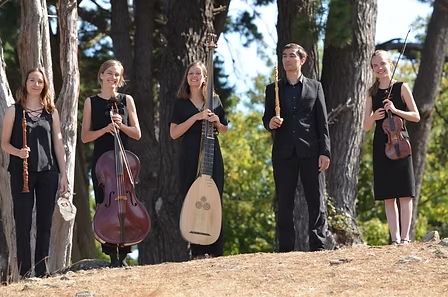
Founded in 2021, La Mandorle Ensemble was formed around two sisters and two friends, with an unusual line-up: theorbo, baroque oboe, violin, and cello. The ensemble places no restrictions on repertoire—from Gregorian chant to contemporary music—with a strong focus on the 17th and 18th centuries in France. Here is an interview with co-founder, lutenist and theorbist Élodie Brzustowski.
When and how was your ensemble established?
We started playing together in the summer of 2021. The group includes two sisters, and the ensemble was built around their friendships. At first, we played without much ambition, but we quickly began working toward becoming professional. By the following summer, we had already organized a tour in Bretagne. Since joining the EU’s Sustainable-Eeemerging program, our activity has intensified.
Why combine theorbo, cello, violin, and baroque oboe in your ensemble?
Initially, it was more a matter of personal affinity than of musical repertoire. The advantage of not having a harpsichord is that we are very mobile. It allows us to perform in a wide variety of venues. This configuration motivated us to explore the instruments’ possibilities, to find how the violin and oboe could complement one another. It might seem contradictory, but we looked to the oboe for warmth, and sought new sound textures in the theorbo.
Your repertoire spans diverse periods and styles, from Gregorian chant to pop, even including contemporary creation. What limits do you set for yourselves?
As long as we enjoy it, it can go into the program! That said, we still aim to be as historically and stylistically authentic as possible. Even if we didn’t have a defined repertoire in mind at the start, we naturally gravitated toward French 17th- and 18th-century music—we’re particularly fond of Robert de Visée. But we don’t limit ourselves to France: right now, we’re working on a project around Italian musicians in England. We try to bring these repertoires to life, which is why we also work with contemporary composers. We’re currently preparing a piece by Lucius Arkmann written for us: Fin de soirée chez Madame de Pompadour, with techno influences.
Passionate about early music and want to read this subscriber-only article?
If you are not a subscriber, join the international Total Baroque community. Subscribe here from 5.00€.
I subscribe
If you are already a subscriber, sign in.
I sign in 


You must be logged in to be able to post comments.
Sign in