


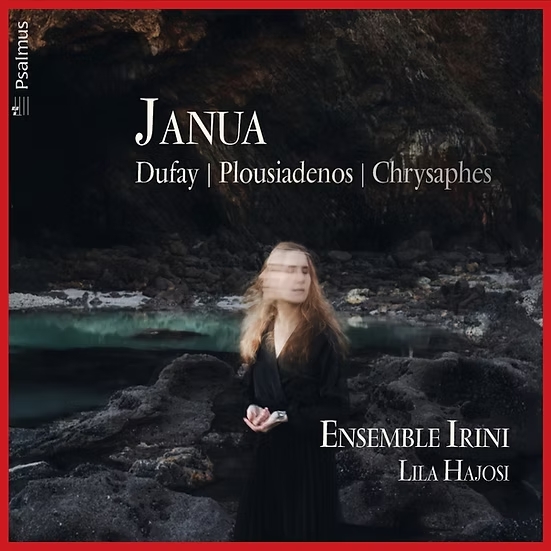
 With “JANUA”, the ensemble Irini and its director Lila Hajosi explore 15th-century vocal repertoires through a program built around Guillaume Dufay and Byzantine chant. An album that is both scholarly and sensory, inviting listeners to step outside conventional frameworks and open their ears to other forms of perception.
  By
By 


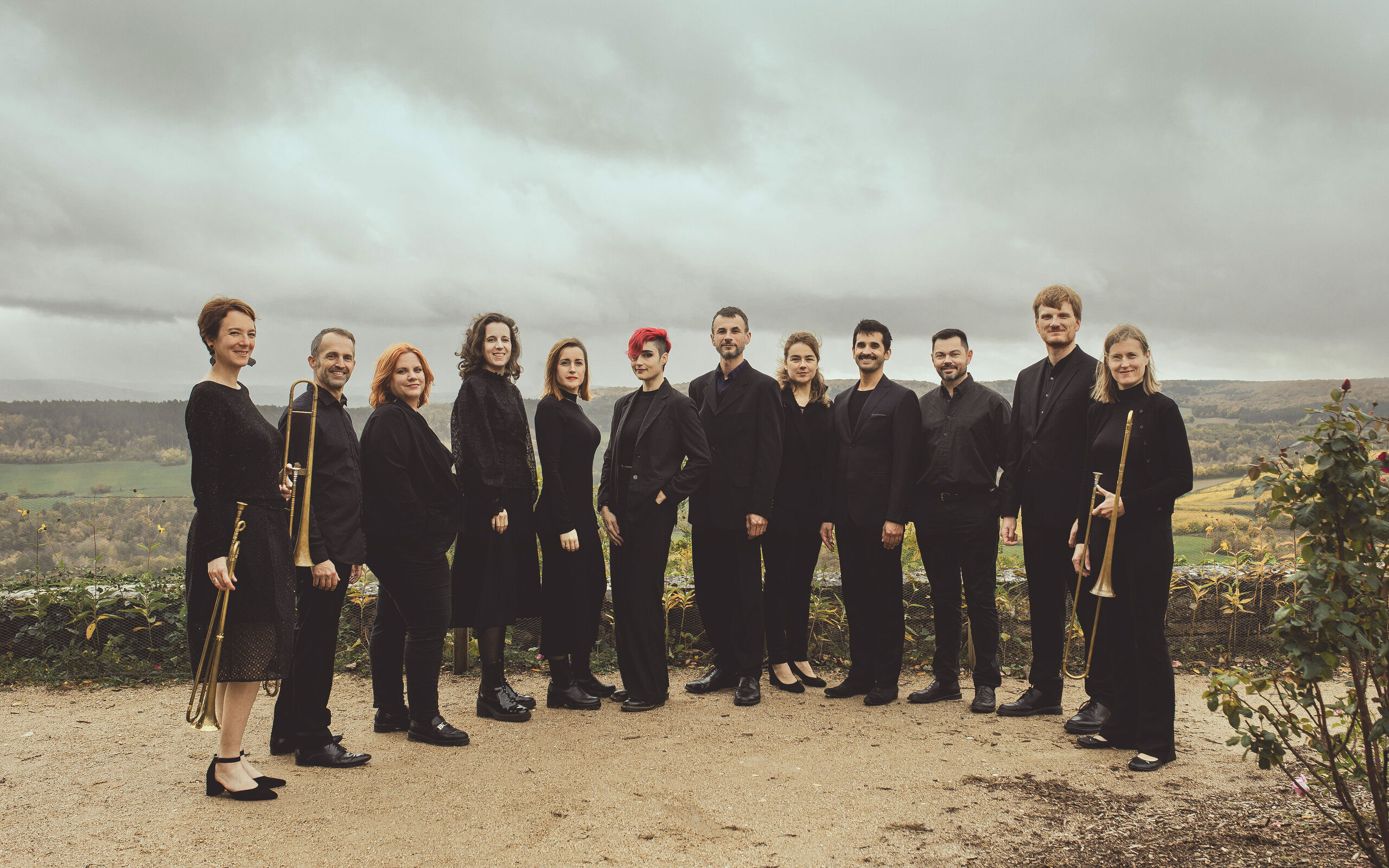
For several years, conductor Lila Hajosi—with her Ensemble Irini—has been forging a singular path within the early music landscape, at the crossroads of Eastern and Western vocal traditions. With JANUA, she shapes a journey that is as rigorous as it is sensitive, where the Franco-Flemish polyphonies of Guillaume Dufay stand alongside the long lines of Byzantine chant, in a fully embraced play of contrasts. Based on in-depth research into both sources and sound, the project explores two different ways of engaging with music. A demanding experience that reshapes listening and questions our relationship to the past.
Your program JANUA is rooted in a very specific historical moment, that of the attempted union between East and West in the 15th century. What made you want to tell this “story of an impossible reunification” through music today?
Lila Hajosi: The music itself! The starting point of JANUA, as with every program of Ensemble Irini, was a central piece around which I built the program. In this case, it was Dufay’s Nuper Rosarum Flores, which I discovered around 2012 during my musicology studies, specifically in Hermeneutics with Bernard Vecchione. Beginning from this work—whose discovery was a turning point in my journey—I explored, in widening circles, the conditions of its creation, the trajectory of its composer, and the historical and political context in which it was written. The narrative of this attempted union of the two Churches, and everything it conveys, imposed itself with complete clarity: it is simply the story of this music, which stands very far from the current injunctions made to artists not to engage with politics and to offer an Art fantasized as neutral, supposedly meant to distract from the reality of the world.
This music, on the contrary, is the conscious vehicle of an entire philosophical, theological, and political structure, with layers of meaning of rare subtlety, all inscribed within the sheer evidence of beauty. That’s what makes it such a powerful work, in my view: you can approach it simply as a music lover, or you can interpret it in an entirely different way by peeling back its many layers of meaning. I myself experienced this double shock—first aesthetic, then intellectual—when I discovered Nuper Rosarum Flores in that lecture hall at the University of Aix-en-Provence, and then when I listened to it again after Bernard de Vecchione’s class dissecting its many levels of meaning. Having fallen headfirst down this rabbit hole, I pestered everyone around me at the time, making them frenetically “endure” this double listening experience—without decoding and then with decoding—in the hope of triggering the same electrifying impact that had worked so well on me. The poor things!
In this album, we hear the dialogue between Dufay’s monumental motets and the long Byzantine chants. How did you conceive this balance between two such different musical languages, and how does this encounter actually come together in the ensemble’s sound?
L. H.: It is the DNA of Ensemble Irini and one of the reasons I founded it. Everything happened at once, so to speak: It all happened at once, so to speak: I started studying musicology, then enrolled at the conservatory, discovered Orthodoxy and Byzantine music, and learned about polyphony from the Middle Ages and the Renaissance; all these new horizons opened up in less than two years. I began my musical path very late—I took my first real lessons around the age of 18 with Henri Agnel (oud, vielle, and cittern)—and I plunged into the music of that medieval period which already fascinated me, but from a very “Mediterranean” perspective, rooted in oral transmission and without a concern for historicity, but with great freedom and a strong focus on the sensory, on emotion. It was only around the age of 20 that I decided to shift gears and approach this “early” music through research. My first year of musicology was tough; I was 21 and I didn’t know what a major triad was. I had to work hard! But I devoured this knowledge with a voracious appetite, and my atypical path allowed me to enter this academic dimension of Music with an already formed sensitivity, a freedom to travel between aesthetics, habits of improvisation, some stage experience, and an openness to other musical cultures that is unfortunately not often taught in highly specialized curricula. Growing up with Jordi Savall’s recordings certainly didn’t help me curb this thirst for freedom, I must say!
All this to say that for me, this dialogue between cultures was self-evident; I didn’t have to break down any walls, I never knew any walls. The desire to bring into dialogue these two worlds of the sacred—the Latin sacred, let us say, and the Orthodox sacred, let us say, of the “South”—came from my encounter with this repertoire in the Greek church in Marseille, and from a rather amusing little incident. I had been utterly captivated by the Cherubikon from the Liturgy of St. John Chrysostom, and, of course, I dove into books to understand what had fascinated me so. I had read in an article that the long, hypnotic melismas of this hymn were meant to represent the beating of the Cherubim’s wings…I presented this hypothesis to the priest who… burst out laughing, telling me that this was indeed a very Western reflection, always in the “logos”. He then took me up to the choir stand and said, “Look, from here you can see behind the iconostasis; the cantor watches me preparing Communion while he sings… As long as he sees that I am still busy, he makes melismas!” As I was immersed in my Hermeneutics classes, I was quite disconcerted. But it made me laugh, and it made me want to confront these two cultures and their very different approaches to the Sacred. The verticality of Latin sonic cathedrals and the horizontality of Byzantine melismas.
For the first time, you are incorporating instruments (sackbuts and medieval trumpets) into Ensemble Irini. What do they bring to your vocal aesthetic, and how do they contribute to this idea of sonic architecture and monumentality that you evoke?
L. H.: I’ll give you a “Greek” answer—above all, they are an immense technical asset when it comes to sustaining the incredibly long notes of the cantus firmus! This polyphonic style based on a cantus firmus uses a Gregorian chant or an excerpt from one, stretching out its note values considerably to create a “tenure” (which could be loosely compared to a jazz harmonic grid). This results in bass and tenor lines of very, very long values, which are extremely tiring for singers, both in terms of laryngeal endurance and mental stamina. It is “instrumental” writing in the fullest sense of the term—it is functional (which does not mean it is not aesthetic; the Middle Ages do not separate these two notions).
Long notes are also tiring for the sackbuts, of course, but combining the two allows for an intra-section relay that proves invaluable. Moreover, the stability of the instruments offers great comfort in terms of intonation—it is one less concern in a repertoire that demands a great deal of attention and concentration. Finally, their timbre is very rich in harmonics, which enhances the upper spectrum of the ensemble while grounding it with the solid, full-bodied low register that I am so attached to. I would have a hard time doing without them, in fact; for the next program, I have called for four! Lastly, the talent of the two musicians on JANUA, Sandie Griot and Claire McIntyre, offers a vast palette of colours, from the softest whisper to triumphant brilliance, moving from one nuance to another with remarkable agility—it is a joy as a conductor to have access to this entire sonic grammar to enrich my interpretation. I am all the more pleased as I specifically wanted female musicians for this program, brass instruments still being quite stereotypically associated with men.
If you had to guide listeners through JANUA, where would you suggest they begin? Is there a piece in the program that, for you, particularly encapsulates the spirit of the project—and why?
L. H.: Obviously, I would say that the centerpiece is Nuper Rosarum Flores, since it was this work that gave rise to JANUA, and because it is an extraordinary piece that, for me personally, makes my heart feel as though it might burst every time I listen to it or conduct it—so perfect, immense, and all-encompassing is it, visceral, synthesizing everything that moves me about the late Middle Ages: the pure, raw, and unadorned beauty of the music combined with a stratospheric level of intellectual construction…
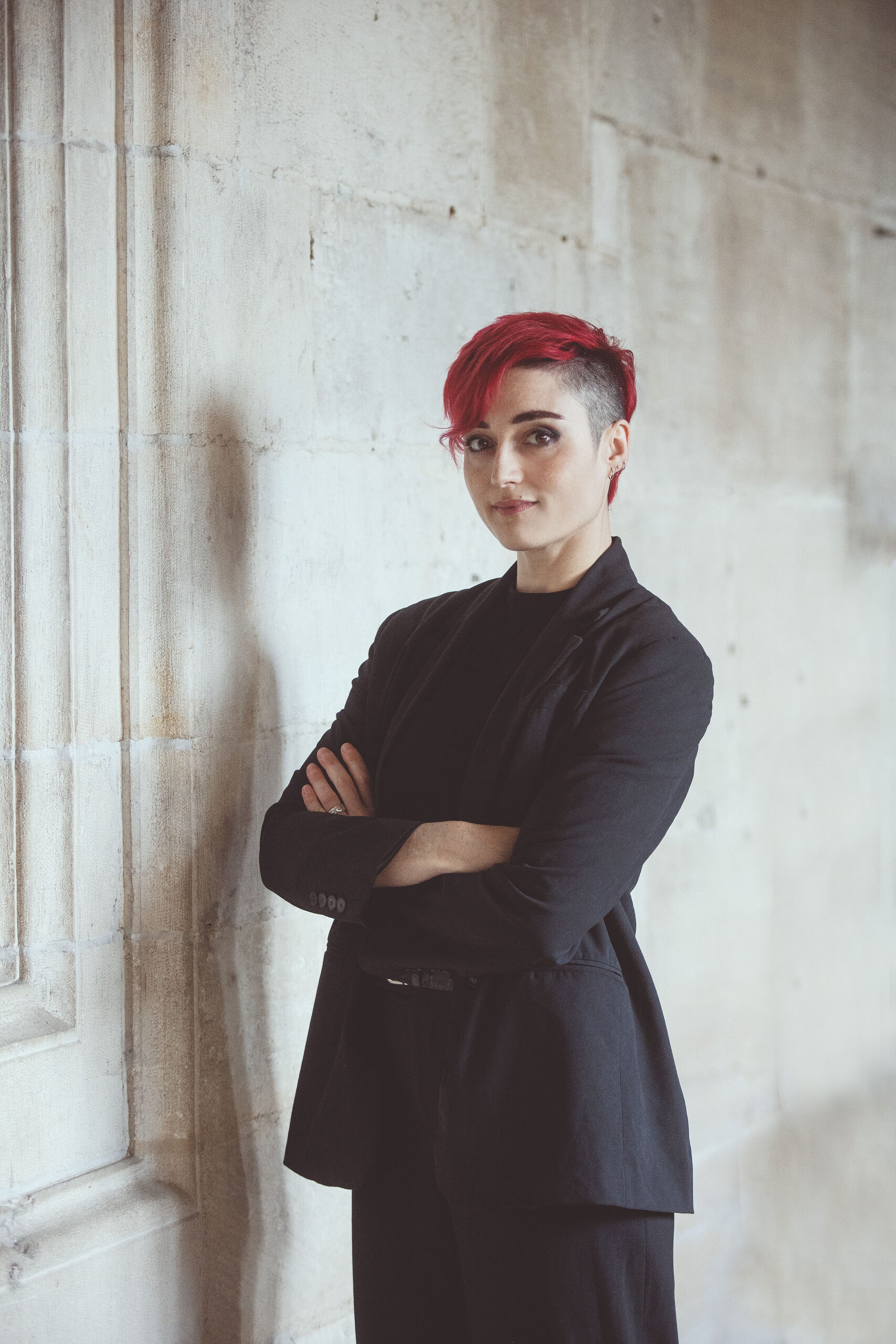
However, I would take the program in order, as it has been carefully conceived, along a narrative axis that follows the historical events highlighted by the program, with a thoughtfully structured alternation of worlds. Above all, I would advise taking time with this music, particularly Dufay’s motets, which I believe are more foreign to us today than the Byzantine pieces. It is interesting, in fact, to note that what comes from our own culture can appear just as distant and “alien” in the literal sense. This is due to a shift in aesthetic and philosophical paradigms that took place throughout the 16th century and truly came to dominate from the 17th century to the present day—it is what Théodora Psychoyou (IReMus) calls the transition from “analogical thought” to a “perceptual approach,” of which the Baroque era, with its repertoire of affects, seems to me the most striking example. This music by Dufay (these motets in particular) is not, in my view, background music. I even think it can be irritating if approached that way, especially given my aesthetic choices on this recording, with close microphones on the voices, making all the lines equally clear. At first, one no longer knows where to direct one’s ear, there is so much information—it’s the same feeling you get when you step inside Notre-Dame or stand beneath the dome of Santa Maria del Fiore: it’s the sheer scale of it all that overwhelms you and leaves you breathless. Today, we have lost this capacity for total, non-hierarchical attention; we struggle to accept the simultaneous perception of multiple layers of meaning and stimuli existing all at once, as we have become accustomed to being guided (through a melody accompanied, for example, by a linear narrative, or by images in which the subjects are clearly separated from the background, as is often the case with the overuse of long focal lengths in film).
This music is like a painting by Hieronymus Bosch: at first, we understand nothing; we perceive a general form that seems undeniably beautiful, yet does not fully imprint itself upon us… then we attach ourselves to one area, then another, we look more closely, then step back again; we organize our own gaze. In this way, the same work offers a new experience with each viewing (or listening!). I believe we must accept this “otherness” of Dufay’s pieces, accept being thrown into this total aesthetic, and find our own path through it—deconcentrating our listening in order to let ourselves be seized by the whole, before gradually finding points of connection according to what moves us: a harmonic progression here, a fragment of a line there. I am immediately reminded of a work like Kurosawa’s Dreams, with its wide shots in which everything remains in focus deep into the perspective, and where the images teem with detail, forcing the eye to “defocus” lest one miss an entire portion of the frame. We are engaged in pure contemplation, not understanding, and therefore not possession. These works resist us, and in doing so, can fascinate us if we allow them to. The Middle Ages, that distant era, has much to teach us in this regard. Enjoy the listening!

Upcoming
- May 22 – Printemps sacré, Tage Alter Musik in Regensburg, Germany
- May 24 – Invictae, Les Musicales en Barrois, Bar le Duc, France
- June 1 – O sidera, Les Invalides, Salle Turenne, France


You must be logged in to be able to post comments.
Sign in