


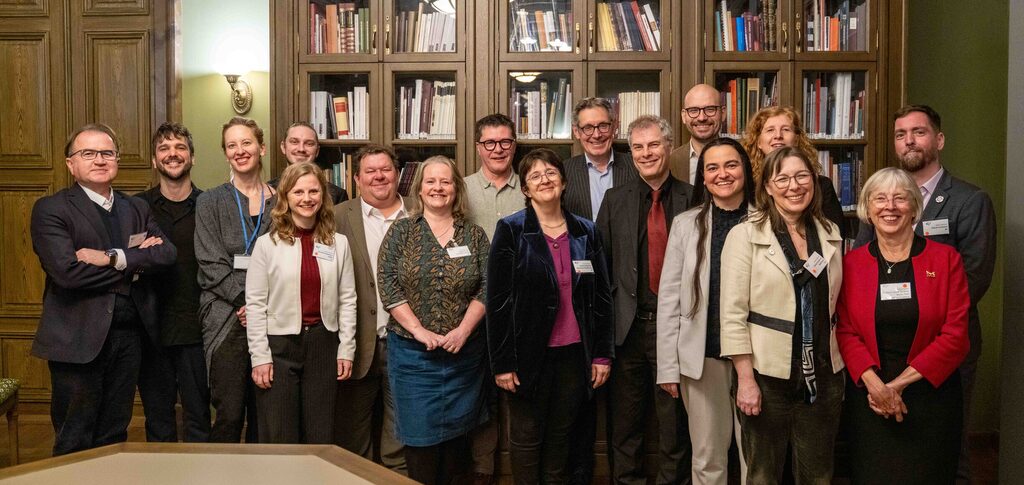
 With 182 members in 28 countries, including 91 festivals, 67 ensembles, and around 40 research institutes and academies, REMA-EEMN embodies a true European early music sector that proudly claims its independence.
  By
By 


Far from the closed circles of the 1960s to 1980s, early music has evolved today into a genuine European sector. The European Early Music Network (REMA-EEMN) is one of its dynamic driving forces, with 182 members in 28 countries. At the head of the network since spring 2025, Frenchwoman Isabelle Battioni embraces a clear identity: that of an “independent” sector—agile, curious, deeply European, and rooted in local communities.
You say: “We are part of the ‘indies’ of music.” What do you mean by that?
Isabelle Battioni: First of all, it’s a way of owning what we are: an independent sector, made up of ensembles, festivals, small but highly effective organizations that often operate with little resources, yet they work—close to the ground. We are not built on heavy institutions with large permanent platforms; we move forward with flexibility, through projects, alliances, curiosity. It is this biodiversity that makes us strong.
At what point did this “movement” become a sector?
I. B.: Between 2000 and 2005, the scale changed. The rise of the recording industry, the growth of knowledge, professionalization—all this pushed early music into another dimension. Since it was created in 2000, REMA followed this shift: from a network of programmers, we became a space that brings together the entire musical chain: ensembles, festivals, research centres, conservatories, publishers, instrument makers. We are no longer a “footnote” to classical music: we are a fully-fledged sector, with our systems of research, publishing, distribution circuits, and funding models—different, yes, but solid.

Passionate about early music and want to read this subscriber-only article?
If you are not a subscriber, join the international Total Baroque community. Subscribe here from 5.00€.
I subscribe
If you are already a subscriber, sign in.
I sign in 

You must be logged in to be able to post comments.
Sign in