


 On the occasion of the 300th anniversary of the original Concert Spirituel, Hervé Niquet reflects on his thirty-eight years at the helm of the ensemble, blending his passion for musicology, stylistic rigour, and freedom of tone.
  By
By 


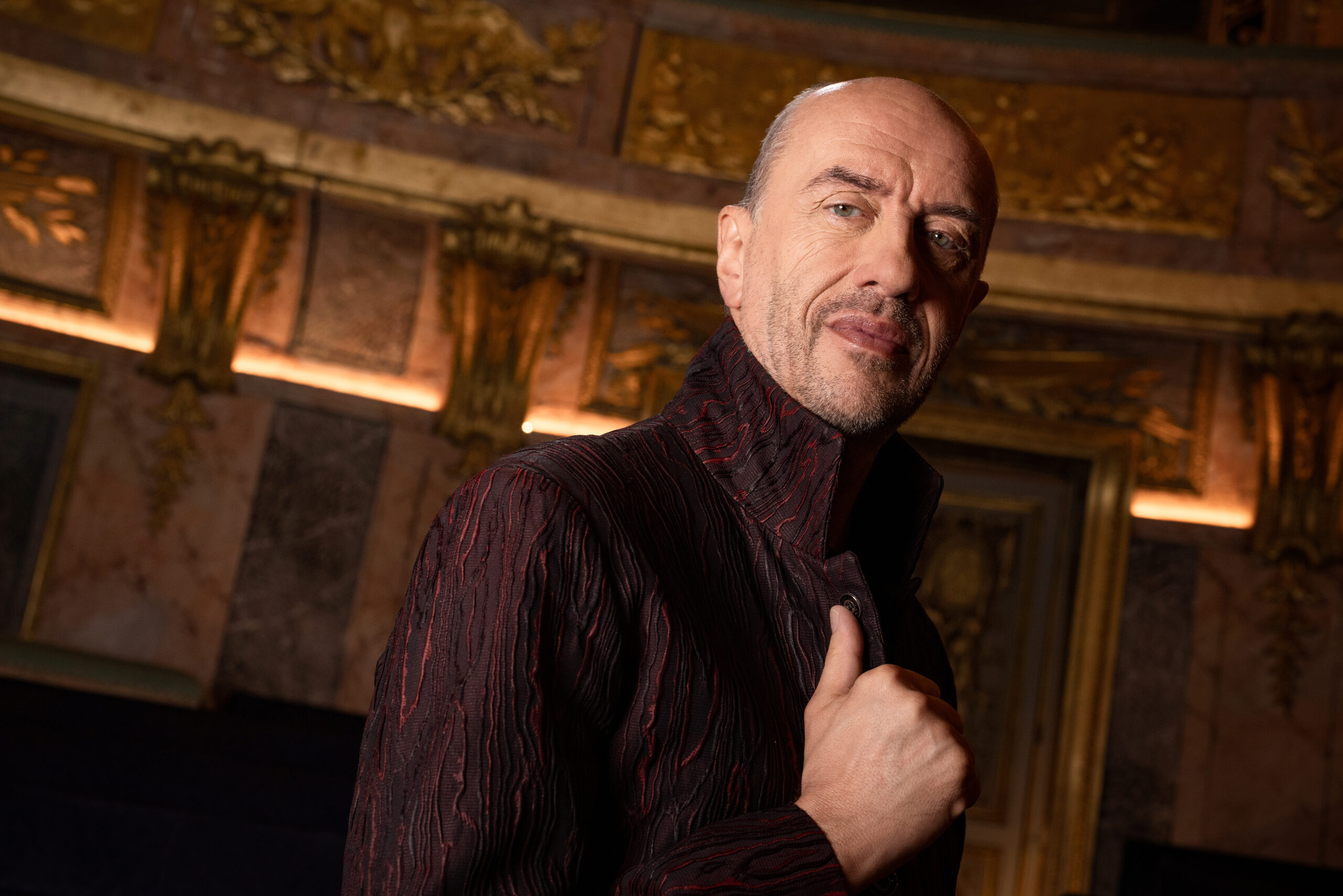
Three centuries apart, yet the original ensemble and the new one share a name and a taste for the spectacular. Founded in 1725 to entertain Parisians deprived of opera during Lent, the Concert Spirituel will celebrate its 300th anniversary in 2025. In 1987, Hervé Niquet resurrected it after more than two centuries of silence, making this historic ensemble both a playground and a field of research. For this anniversary season—featuring Striggio, Fauré, Lully, and even pâté en croûte—the conductor looks back on a career where historical precision often walks hand in hand with a flair for the dramatic.
On 22 April, at the Ferme de Villefavard, you celebrated the 300th anniversary of the original Concert Spirituel with the creation Pâté en croûte et vieux ragots [Pâté in a crust and old gossip]. You’ll be reviving it at Hardelot at the end of June. Pâté en croûte et vieux ragots… I love that title!
Hervé Niquet: Why does the title make you laugh?
It makes me hungry. And “old gossip” conjures up a very French spirit, a bit like François Villon. Where do you want to take the audience with this tribute?
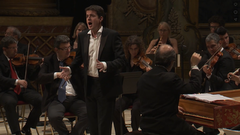
H. N.: Thanks to actors Shirley and Dino, I learnt the craft of acting, so nothing scares me anymore. And since neither the audience, nor the journalists, nor the critics come to rehearsals… I thought it was high time to impose one on them. Back in the day, the King would dine to music once a week, at the grand couvert. Louis XIV started the tradition, Louis XV carried it on, and Delalande, the composer, left behind three enormous collections of music for these occasions. I imagined the audience attending a rehearsal at Delalande’s (whom I play), the night before the royal supper, with the musiciens de la Chambre: a blend of cheerfulness, readings from period newspapers, seriousness, rows…
And why this theme for the 300th anniversary?
H. N.: Because I do whatever I want! I needed to offer a bit of everything: opera, sacred music, something over the top… and humour. It’s a season filled with pure pleasure.
For this anniversary season, you’re also bringing back Striggio’s Mass for 40 solo voices at the Théâtre Impérial de Compiègne on June 5. You called it the most complex work in Western music. What do you mean by that?
H. N.: First, there are 40 soloists, and 60 for the Agnus Dei. Then, it’s pure mathematics. It’s a bit like the philosophy that preceded the Age of Enlightenment: if you want the world to exist, you must best occupy the place you’ve been given. I explained that to the soloists; they thought I was a nutcase. The 40 vocal lines weave in every direction. After three hours, it still wasn’t working, and we were exhausted. I told them: “Just do exactly what’s written. I don’t want anything expressive. Everyone stick to their part!” We started again. In the end, half of them were crying with emotion. Everything clicked, the choirs fitted together, and when it all takes hold, it’s monumental…
What is the place of French early music today?
H. N.: William Christie saved French Baroque music: he gave our dusty relics a first coat of varnish. That’s what I learned from him. As for me, I realize I’ve never changed my way of working: first research, then strict application of what we know. No compromise. The old-timers tell me: “Every time we come back, we learn something new.” And the young ones: “No one’s ever told us about this…” I am dismayed. They’re very talented, they’ve learnt what needs to be done at the big schools, the Hochschule and all that… but they don’t know why they’re doing it. Fortunately, alongside that, other young musicians have returned to research, especially in medieval and Renaissance music. So that spurs the others to bust their asses a bit…
Passionate about early music and want to read this subscriber-only article?
If you are not a subscriber, join the international Total Baroque community. Subscribe here from 5.00€.
I subscribe
If you are already a subscriber, sign in.
I sign in 


You must be logged in to be able to post comments.
Sign in