


 ‘French masterpieces’, Bach father and son, not to mention Scarlatti and Spain’s ‘Siglo de Oro’: this week’s images take you from Paris to Hanoi, from Tallinn to Hamburg, via Vienna and Ávila, through works that, whilst contrasting, move us all in unison.
  By
By 


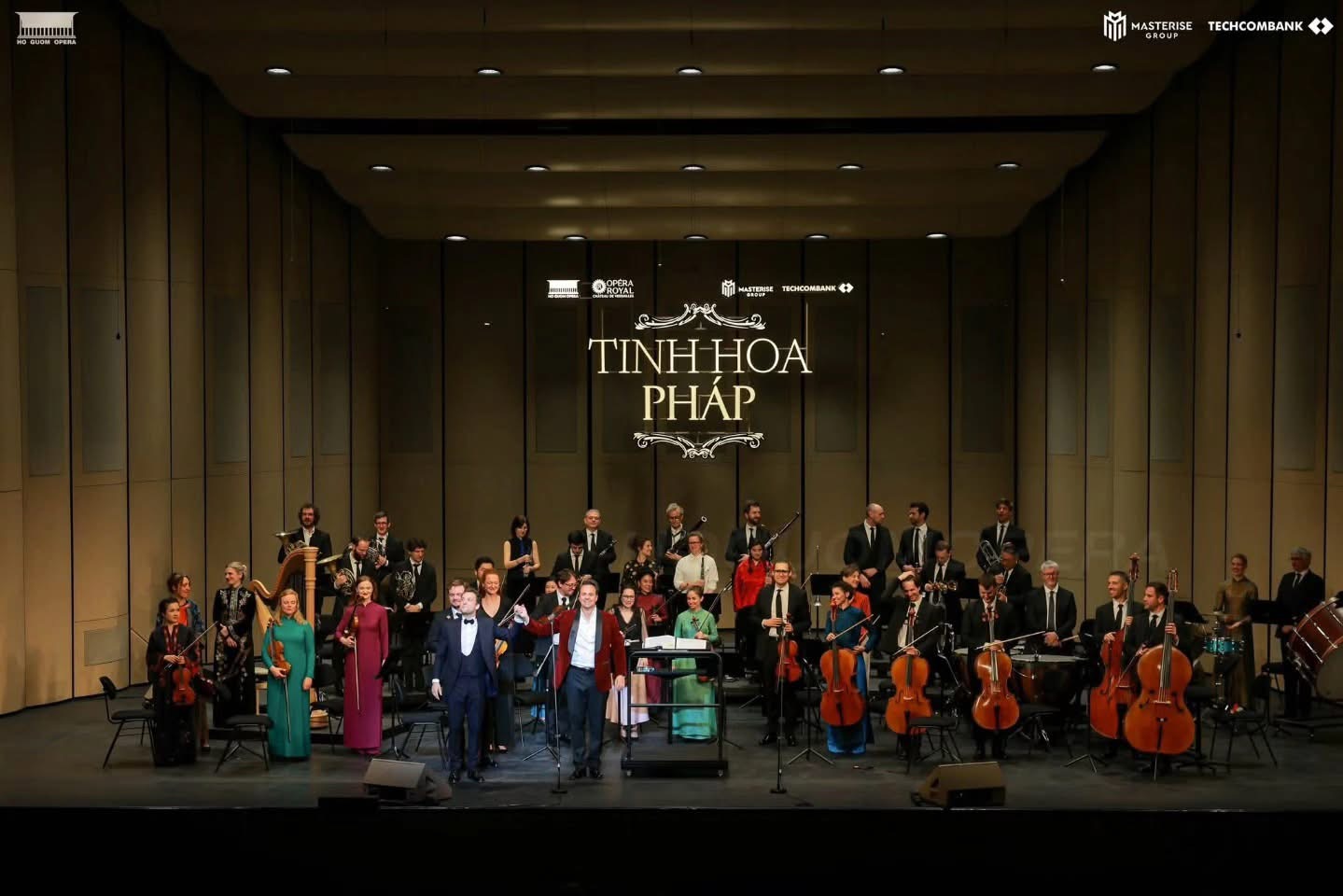
In Hanoï (Vietnam), ‘French masterpieces’ by the Orchestre de l’Opéra Royal of Versailles
At the Ho Guom Opera House in Hanoi, the Orchestra, Choir and Academy of the Opéra Royal of Versailles, conducted by Victor Jacob, presented two evenings of opera arias from “French masterpieces”, in the presence of President Tô Lâm, the Ministers of Culture, the Interior and Foreign Affairs, and an audience of over a thousand.
With Julien Behr, Fanny Valentin, Camille Taos-Arbouz De Morgon, Alexandre Adra, Victor Jacob and the Orchestre & Chœur de l’Opéra Royal de Versailles.
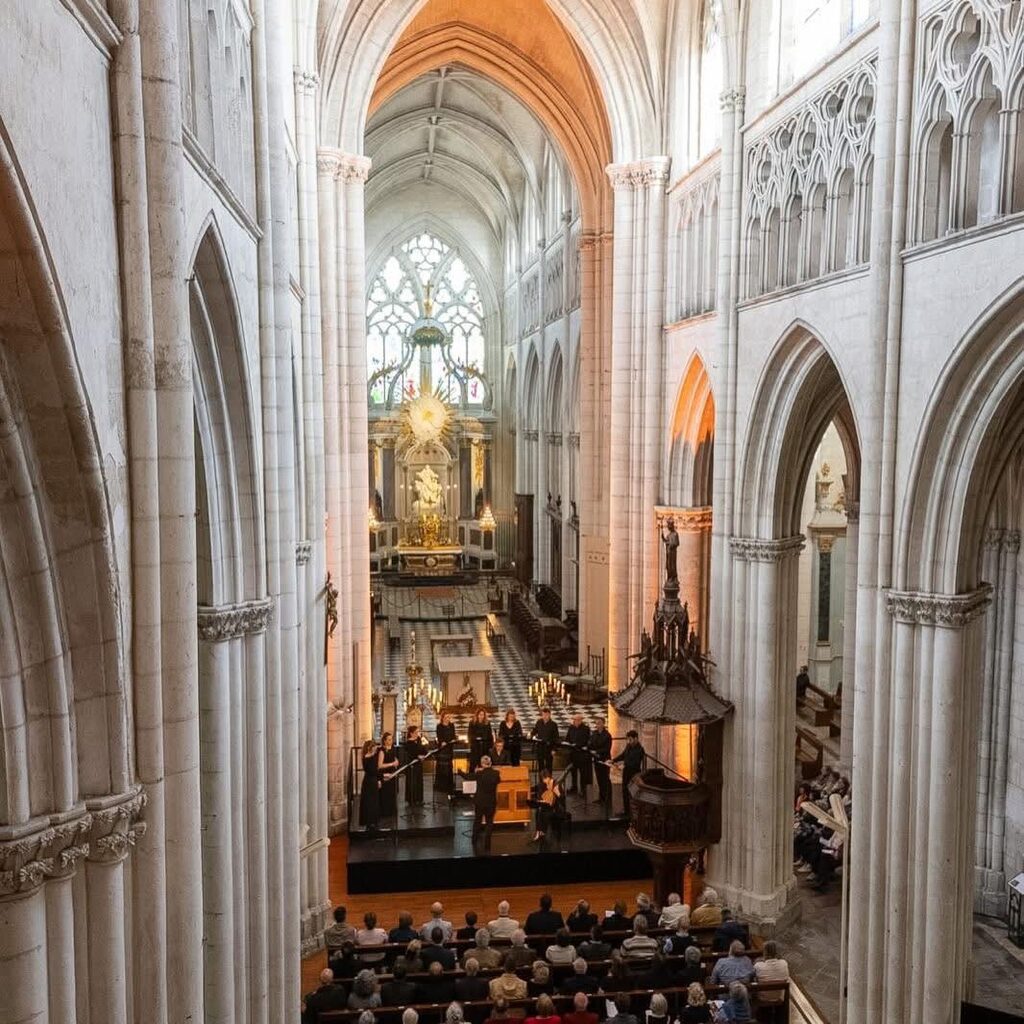
In Luçon (France), a Stabat Mater performed by Les Arts Florissants
Concluding the 10th edition of the Festival de Printemps, held in the Vendée region, the singers and instrumentalists of Les Arts Florissants performed Domenico Scarlatti’s Stabat Mater in Luçon Cathedral. Probably composed in Rome between 1714 and 1719, this piece depicts with striking expressiveness the suffering endured by the Mother of Christ at the time of the Crucifixion, and remains without doubt the composer’s most famous and most frequently performed sacred work.
With Les Arts Florissants.
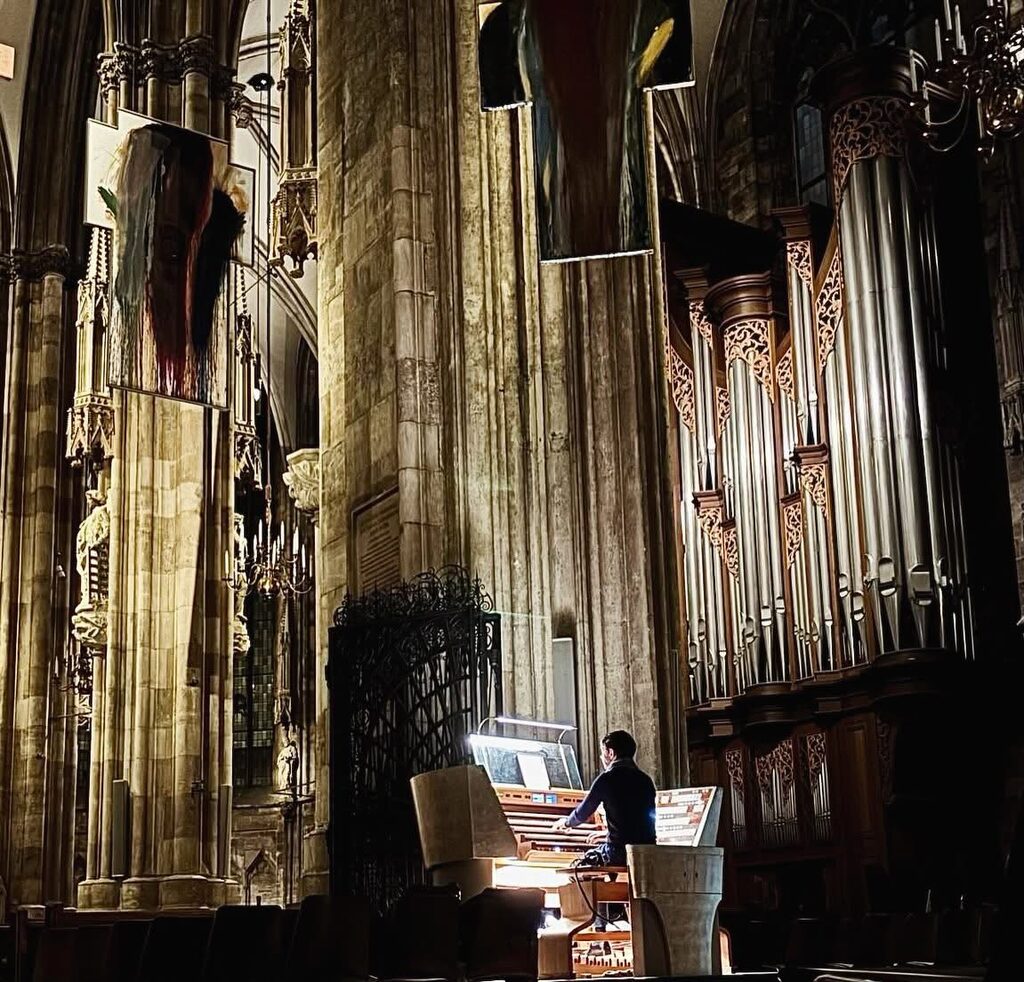
In Vienna, Emmanuel Arakélian plays Bach on the organ at St Stephen’s Cathedral
In front of an audience of over 600 people, Emmanuel Arakélian performed a recital on the new organ at St Stephen’s Cathedral in Vienna. Inaugurated in 2020, this distinctive instrument has a console situated in the centre of the nave, allowing the audience to admire the organist’s virtuoso performance across the instrument’s five manuals. The programme featured preludes, arias and fugues by Bach, as well as pieces by Alexandre-Pierre-François Boëly, Felix Mendelssohn and Sergei Rachmaninoff.
With Emmanuel Arakélian.
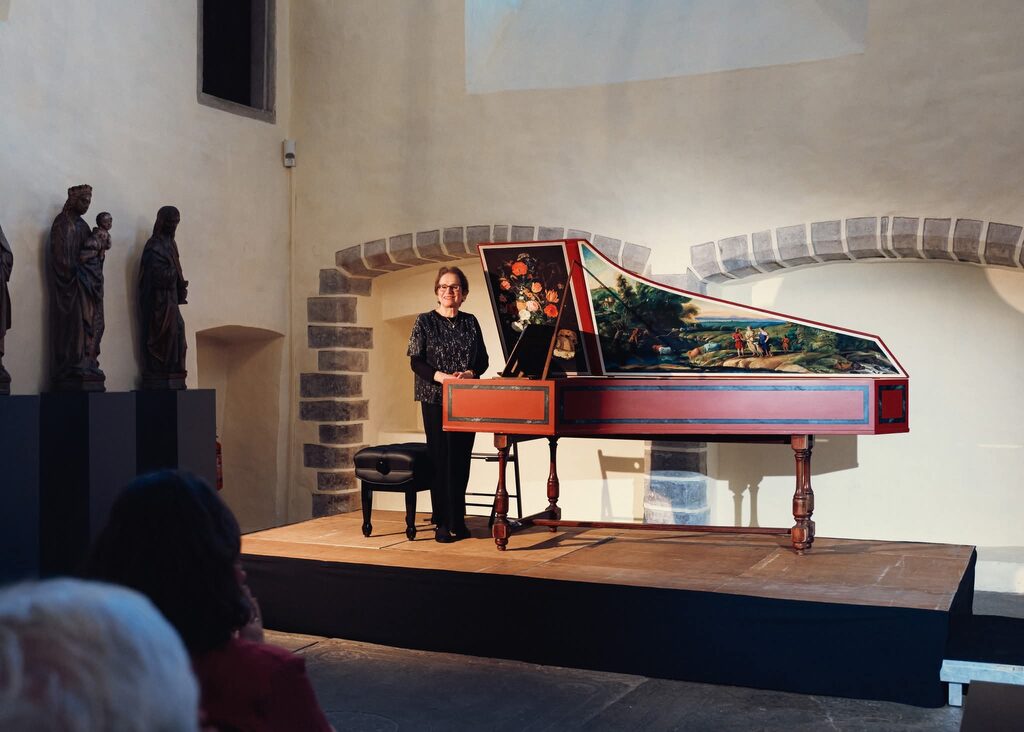
In Tallinn (Estonia), Couperin and C.P.E. Bach performed by Aline Zylberajch
To open the 14th Tallinn Harpsichord Festival (Estonia), Aline Zylberajch presented a concert entitled “Couperin – C.P.E. Bach, painters of two souls”. Although they lived in different eras and social circles — one at the court of Versailles, the other in the intellectual circles of Prussia —, Couperin and C.P.E. Bach shared a common goal: to move the listener. When performed side by side, their works reveal two 18th-century artistic perspectives grappling with the same aesthetic question: how can music convey order, temperament, vulnerability and the stirrings of the soul all at once?
With Aline Zylberajch.
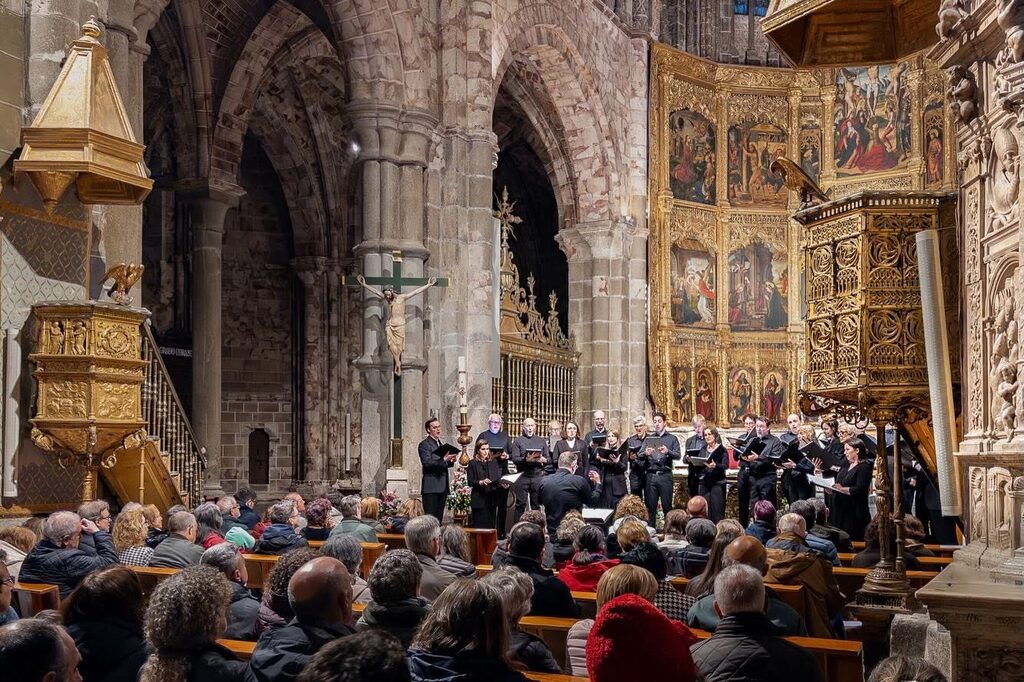
In Ávila (Spain), The Renaissance Singers perform Sebastián de Vivanco
The London-based choir of The Renaissance Singers, celebrating its 80th anniversary this year, chose to highlight the music of Sebastián de Vivanco in the Ávila Cathedral, performing his Requiem alongside the Spanish vocal ensemble Schola Antiqua, conducted by Juan Carlos Asensio. Sebastián de Vivanco, an underexposed composer from the spanish “Siglo de Oro” (Golden Age), was a chorister in said cathedral alongside Tomás Luis de Victoria, and pursued a career in priesthood like him. He published 3 books of selected works between 1607 and 1610, including its Requiem, which has recently been reissued by musicologist Jorge Martín and recorded by The Renaissance Singers.
With Schola Antiqua, Juan Carlos Asensio Palacios and The Renaissance Singers.
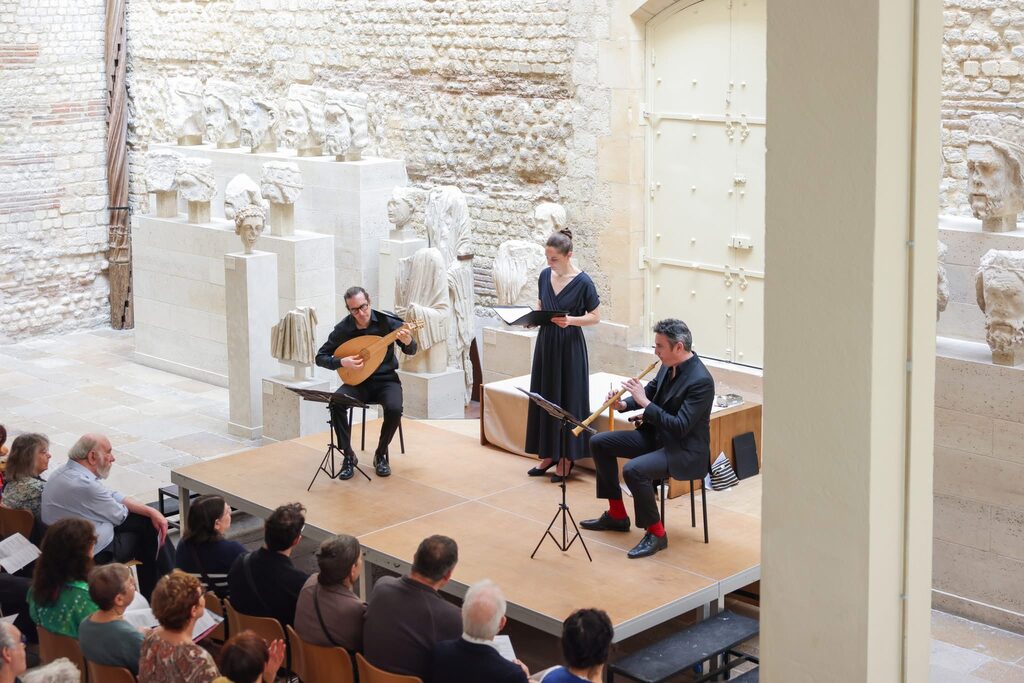
In Paris, ‘Into the Wind’ and ‘The Lady with the Unicorn’
As part of the ‘Unicorns’ exhibition at the Musée de Cluny in Paris, the ensemble Into The Winds presented a concert and talk on the theme ‘The Lady and the Unicorn in Her Kingdom’, offering an immersion into the musical world of 16th-century France, the period in which the famous tapestry of the same name was commissioned.
With Maud Haering, Miguel Henry, Adrien Reboisson.
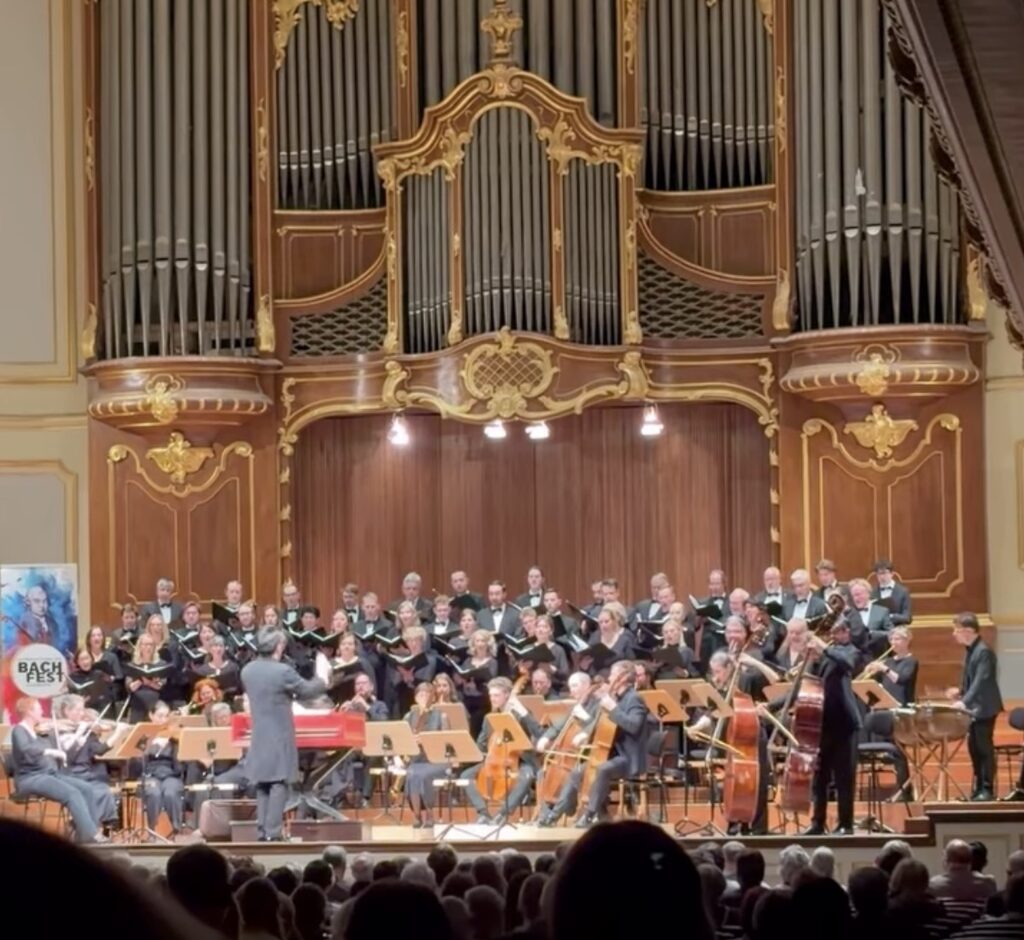
In Hamburg, the closing concert of the 4th Bachfest
The closing concert of the 4th Hamburg International Bach Festival, held in the main hall of the Laeiszhalle, showcased two vivid examples of Johann Sebastian Bach’s “secular” works. In the Dramma per musica ‘The contented Aeolus’ (BWV 205), the composer displays the full richness of the orchestral palette, evoking both the raging storm and the gentle breath of the wind. In ‘The Contest between Phoebus and Pan’ (BWV 201), Bach deliberately contrasts simple, rustic music for Pan with elegant, virtuosic music for Phoebus, resulting in a charming and witty musical contest. For this concert, the Carl-Philipp-Emanuel-Bach-Chor from Hamburg and the Barucco ensemble from Vienna were conducted by David Chin for the former piece, and by Hans Jörg Albrecht for the latter.
With Catalina Bertucci, Sophie Rennert, Daniel Johannsen, Shimon Yoshida, Klaus Häger, Daniel Ochoa, David Chin, Hansjörg Albrecht, the Carl-Philipp-Emanuel-Bach-Chor Hamburg and the ensemble Barucco.

You must be logged in to be able to post comments.
Sign in