


 Fabio Biondi does not play Vivaldi: he makes Vivaldi speak through the violin. Between traditional Italian virtuosity and the finely crafted grammar of Baroque research, he has spent nearly fifty years defending the idea that music is a language rather than a mere question of tonality. We look back on a seminal encounter and his album of The Four Seasons, which went on to achieve international success.
  By
By 


Violinist and conductor, tireless explorer of musical sources and an international figure of the Baroque revival since the 1990s, Fabio Biondi embodies a fertile paradox: a musician trained on the modern violin who has become one of the most flamboyant interpreters of historically informed performance. While his Four Seasons album remains a global discographic milestone, his relationship with the Venetian composer has never been a fixed ideology, but rather a permanent conversation between past and present, original rhetoric and the flesh of the Italian sound. A look back at his relationship with Vivaldi, and at the history of the mythical 1991 Four Seasons album.
What is your personal rapport with Vivaldi?
Fabio Biondi: My encounter with Vivaldi came through a woman who was essential in my life: my modern violin teacher, Anna Maria Cotogni. She was a musician with I Musici di Roma, the ensemble that, since the 1950s, played a decisive role in the worldwide dissemination of Vivaldi, notably with The Four Seasons. She trained me for five years—which is a long time for a teacher and her student. With her, Vivaldi was not an archive but an original language, a breathing entity. Through her, I heard, played, and worked on Vivaldi continuously, because she was constantly on tour with programmes devoted to him. She explained his music to me the way one tells the story of a city with its alleyways, its climate, its sudden flashes, its luminous contrasts. And so, my first Vivaldian seasons were born before the sonetti [the poems that accompany each of the concertos]: alone, facing the musical language and its rhetoric!
You are referring to the 1980s?
F. B.: I must acknowledge that at the time, Italy was still playing a Vivaldi deeply rooted in the great modern violin tradition: a solar, voluptuous sound, an almost “narcissistic” instrumental heritage, in the best sense of the term—a tradition shaped by decades of interpretazione italianissima. But at the same time, a very different shock was taking place in my personal record collection: that of historically informed performance, an aesthetic revolution carried in particular by Nikolaus Harnoncourt. It’s not that I chose Baroque music; it’s that listening to it ignited something inside me. Music became a site of investigation rather than a ready-made export. Ultimately, that’s it: my encounter with Vivaldi was a dialectical love at first sight, nourished by confrontations, doubts, conceptual and sensory revelations, without ever renouncing the original grammar or the memory of sound. I learned to love Vivaldi in layers: stratigrafie of the ear, of passion, and of learning…
Today, at 64, you say you remain influenced by both traditions. Why is this double influence necessary to your artistic identity?
F. B.: Because I don’t believe in monolithic authenticity. Authenticity is not a closed museum. On the one hand, there is what only the older generations of Italian violinists knew how to keep alive: this desire for warmth, this instrumental vocalità from Tartini to Corelli, and then in the legacy that carried Vivaldi into the twentieth century. On the other hand, the revolution of historically informed research: source philology, period treatises, a figurative, oral, percussive language articulated according to a grammar that had been forgotten—and then rediscovered. And I was born in between. It’s not a compromise: it’s a casa stylistica bifronte, a two-dimensional stylistic approach.
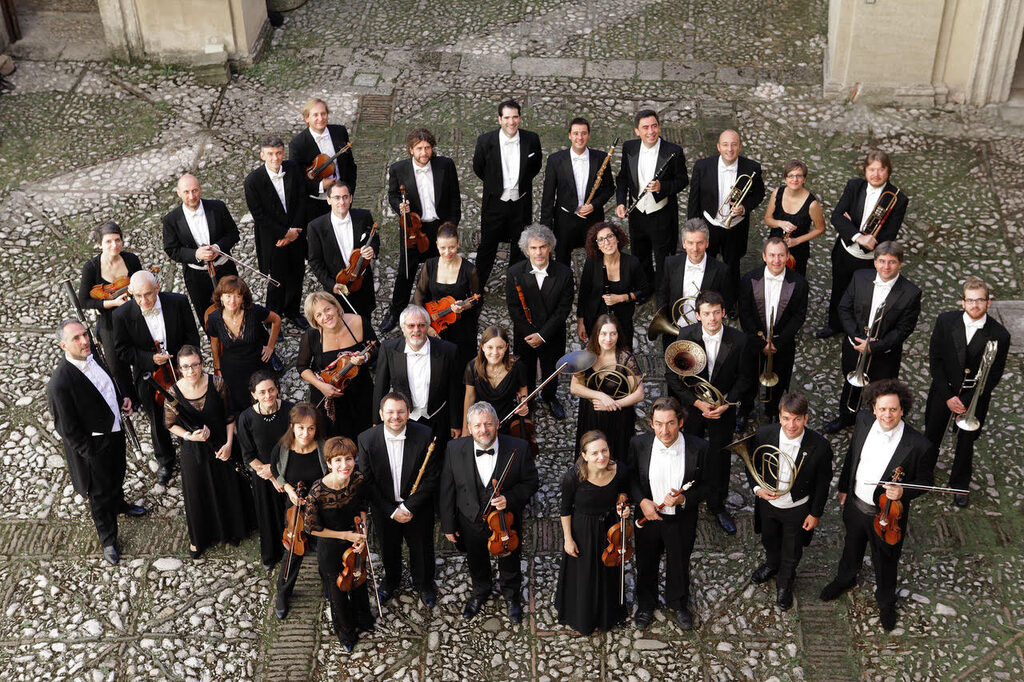
In the 1970s and 1980s, baroque and modern were separated by an aesthetic iron curtain: modern violinists saw you as a misfit, and orthodox baroque musicians as an intruder if your bow or your vision were not historical. That shaped me. From this, I drew an almost moral lesson: tolerance must become a method of listening. With Vivaldi, I have always felt the need to unite these two inseparable dimensions: the warm soul of the Italian violin and the rigour of the sources. Without one or the other, authenticity becomes either cold folklore or blind emphasis.
Passionate about early music and want to read this subscriber-only article?
If you are not a subscriber, join the international Total Baroque community. Subscribe here from 5.00€.
I subscribe
If you are already a subscriber, sign in.
I sign in 
You must be logged in to be able to post comments.
Sign in