


 At 31, she is a flautist, organist, improviser, occasional researcher and, now, a teacher at the conservatoires of Strasbourg and Innsbruck. She performs with Jordi Savall, Amandine Beyer, Andrea Marcon and Francesco Corti, while also pursuing her own projects with the Duo Alter Ego and the Girandola Quartett.
  By
By 


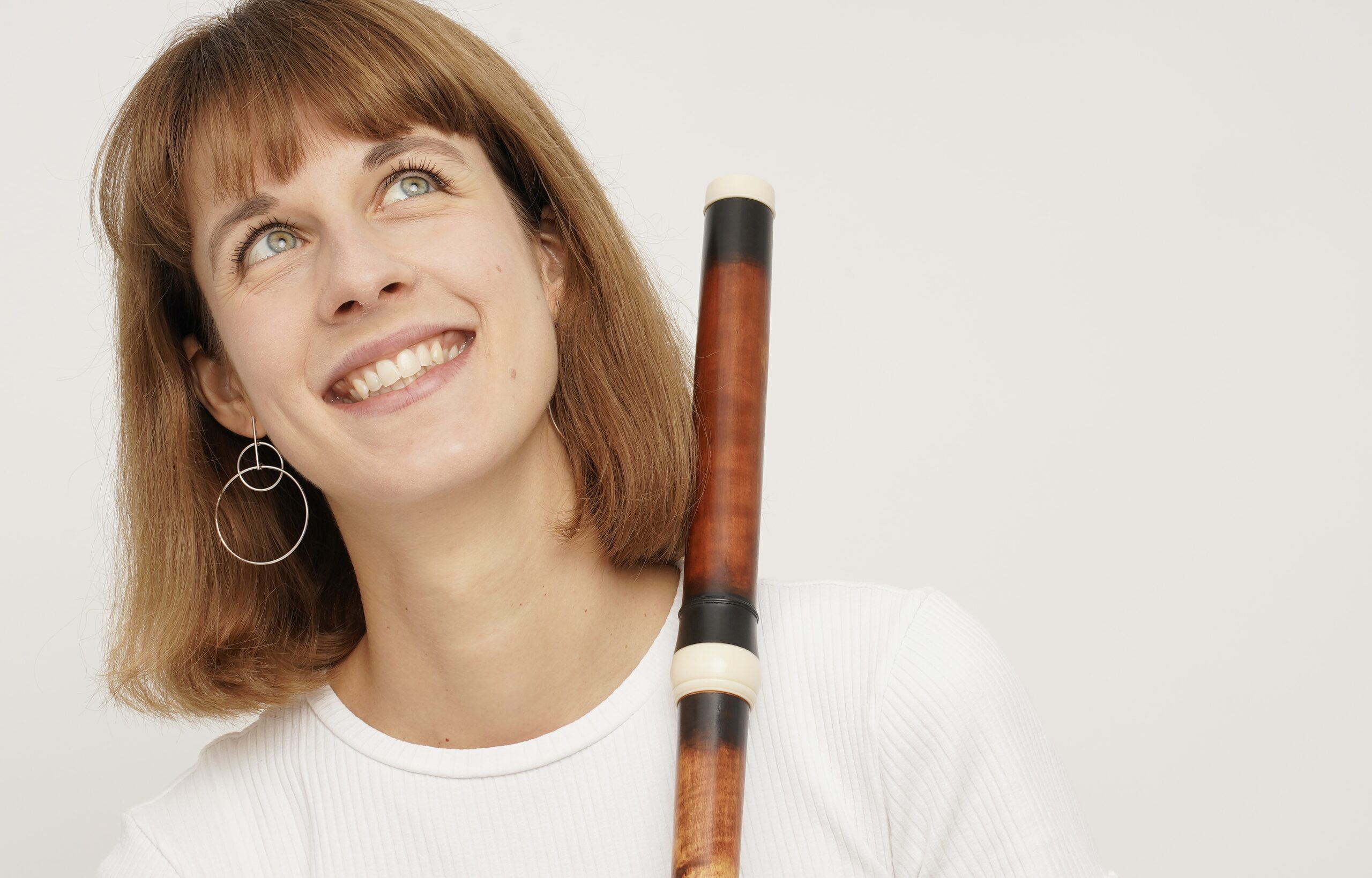
At 31, Eleonora Bišćević belongs to this new generation of musicians for whom the boundaries between instruments, repertoires, and practices are there to be crossed. Born in Monza into a Croatian family, she grew up and trained at the Giuseppe Verdi Conservatory in Milan, then at the Schola Cantorum in Basel, which, she says, “changed [her] life.” She is a flautist, organist, improviser, occasional researcher, and now a teacher at the conservatories in Strasbourg and Innsbruck. She can be found performing with Jordi Savall, Amandine Beyer, Andrea Marcon, and Francesco Corti, as well as with her own ensembles, Duo Alter Ego and the Girandola Quartett. We meet in Strasbourg, after an astonishing solo recital combining traverso and organ pedals, and between two concerts in Berlin and Spain with Jordi Savall. With infectious enthusiasm, she talks about her journey, her taste for forgotten scores, her discovery of improvisation, the day-to-day realities of a musician’s life, and the European identity that suits her so well.
In Strasbourg, at the Stras’orgues Festival (France), you presented a rather unusual combination: traverso and organ, playing both the flute and the organ pedals yourself. Emmanuelle Dauvin takes a similar approach with violin and organ. Could this be a new trend?
Eleonora Bišćević: I don’t know! I know Emmanuelle’s work through social media, but we don’t know each other personally. What is amusing is that we developed this idea independently of each other. Perhaps there are many other musicians doing it. When you play both instruments yourself, the idea actually comes quite instinctively: you’re playing the flute and you think, your legs are free… so why not use them? And the flute is a melodic instrument that almost always needs someone else. The idea of being able to accompany yourself is very appealing. Since I am also an organist and spend a lot of time in churches, I have had many opportunities to experiment with this combination, particularly during services. Obviously, it takes a great deal of work.
How did you come up with the idea?
E. B.: Someone had told me about a violinist who played this way. I thought, “Why not try it with the flute?” And I immediately loved it. The registers of the organ and the flute blend very well. My work on improvisation then allowed me to take it further, improvising on the flute over bass lines played on the pedals. And then I discovered that Nikolaus Bruhns (1665–1697) was already doing something similar in the 17th century! I find it fascinating to see something that existed in the past returning today as a “trend.” The Strasbourg concert, however, was a first for me. Damien Simon had seen a short video I had posted and invited me to give this recital. Until then, I had mainly used this combination during services. I had never built an entire concert programme around it. The experience made me want to continue and take this project elsewhere.
Passionate about early music and want to read this subscriber-only article?
If you are not a subscriber, join the international Total Baroque community. Subscribe here from 5.00€.
I subscribe
If you are already a subscriber, sign in.
I sign in 

You must be logged in to be able to post comments.
Sign in