


 On the occasion of the recording of the complete Op. 22 String Quartets by Luigi Boccherini, violinist Daniel Pinteño and Concerto 1700 offer a lively and experimental take on the string quartet in 18th-century Spain. Research into historical sources, interpretive freedom, and addressing the challenges facing the recording industry today: an interview that closely connects artistic vision and the practical realities of the profession, at a time shaped by budgetary constraints and streaming.
  By
By 


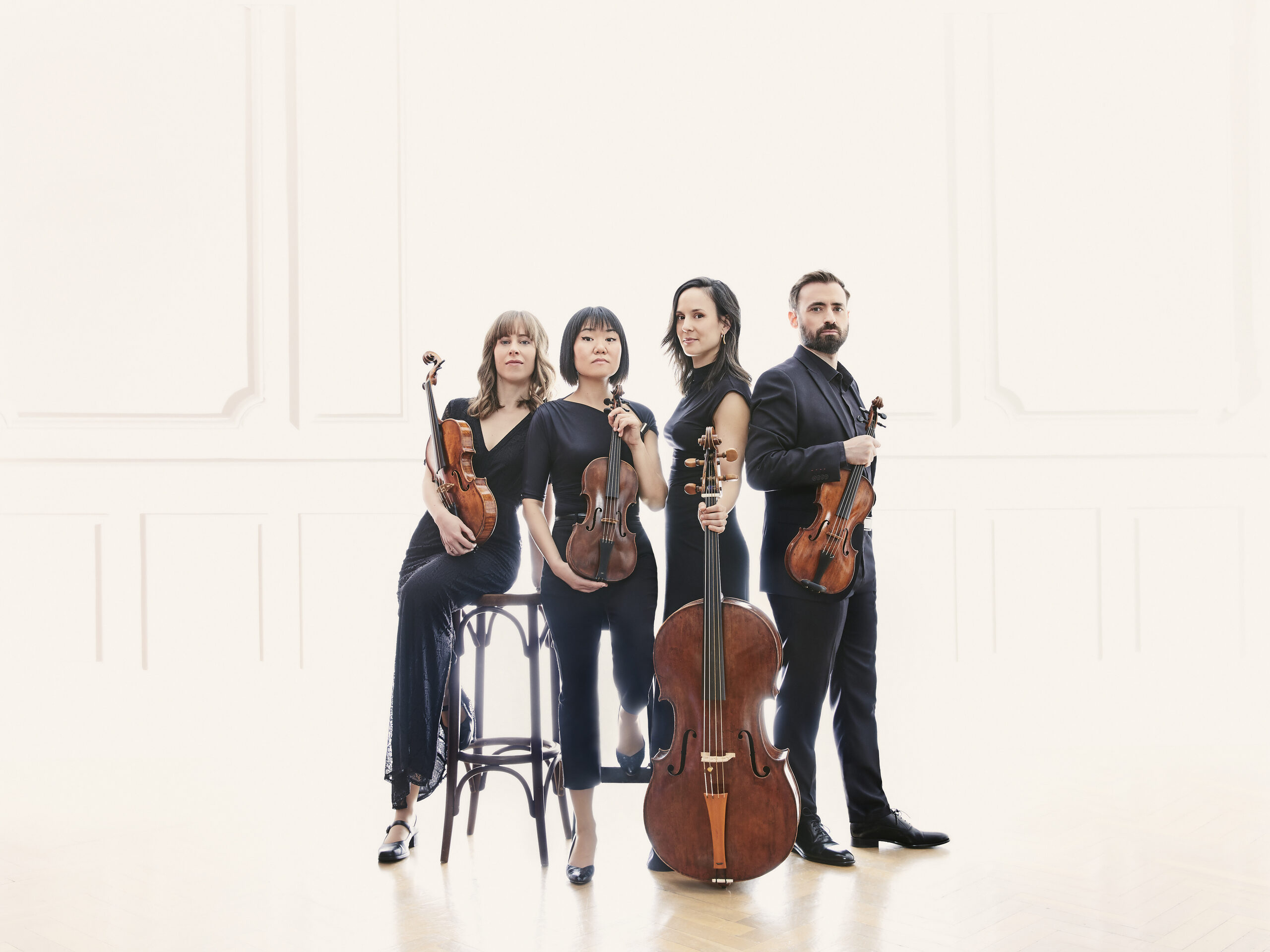
Following their recording of the Op. 3 String Quartets by Gaetano Brunetti, released last year, Concerto 1700 has now turned to the complete Op. 22 String Quartets by Luigi Boccherini (1743–1805), recently published on their own label, 1700 Classics. Total Baroque Magazine met with violinist and director Daniel Pinteño, joined for this recording by Fumiko Morie (second violin), Isabel Juárez (viola), and Ester Domingo (cello). From the actual production of records to how they are financed, including the crucial role of public subsidies and the new role of recordings in the age of streaming, the interview sheds light on the economic realities of the industry today. By revealing the constraints involved in such a project, it makes listening to the recording all the more meaningful and informed.
How did this project come about?
Daniel Pinteño: Our ensemble focuses on rediscovering and highlighting music of seventeenth and eighteenth century Spain and we do this by exploring two paths: one more vocal and baroque, the other centred on chamber music, which we explored through our recording of divertimenti by Gaetano Brunetti. Last year, we recorded his Op. 3 Quartets (1774), so next it was his contemporary Boccherini’s turn. We fancied recording a complete opus number, because, despite his importance, it is actually quite hard to find full sets of his work recorded. It’s also a nod towards Madrid: this opus was composed here, in Boadilla del Monte, during the last year of his patron’s internal exile there, in a palace frequented by Goya and other artists of the first order.
Which sources did you use?
D. P.: As far as I know, there is a modern French edition of the score, but we have basically used the first edition, published in Paris shortly after it was composed, which can be found in the Bibliothèque nationale de France and is digitally accessible to anyone interested. Boccherini had an arrangement with his employer, infante Luis of Spain, and was able to get his work published in Austria and France, so he would be on everyone’s lips. Boccherini was then the most famous composer in Europe, more so than Haydn. Back then, it was rare to find full scores. The focus was more on providing practical playing materials, which is why they are usually found in individual parts. The manuscript might indeed be a general score, but its whereabouts are currently unknown.
How would you describe this music?
D. P.: Both Boccherini and Haydn can be considered the fathers of the string quartet; they simply have different approaches. Where Haydn focuses on structure and its development, Boccherini is more of a painter, concerned with texture and the colour individual instruments can bring, which I find very interesting. Boccherini was a virtuoso cellist, quite unusual in an age when famed soloists tended to be violinists or harpsichordists, and he gives the cello moments to shine. It is music he possibly played himself. This also makes his quartets unlike others, in which the first violin leads the way; here, the cello also introduces melodic material. A lot of it works in pairs: you can have both violins playing, then the cello and viola take over. There is a dialogue, a conversation between paired instruments. Listeners should pay close attention to the colours and textures that Boccherini creates, as they are part of his highly personal approach to the genre.
Passionate about early music and want to read this subscriber-only article?
If you are not a subscriber, join the international Total Baroque community. Subscribe here from 5.00€.
I subscribe
If you are already a subscriber, sign in.
I sign in 



You must be logged in to be able to post comments.
Sign in