The Legacy of the Franco-Flemish Renaissance Masters
BELGIUM – NETHERLANDS
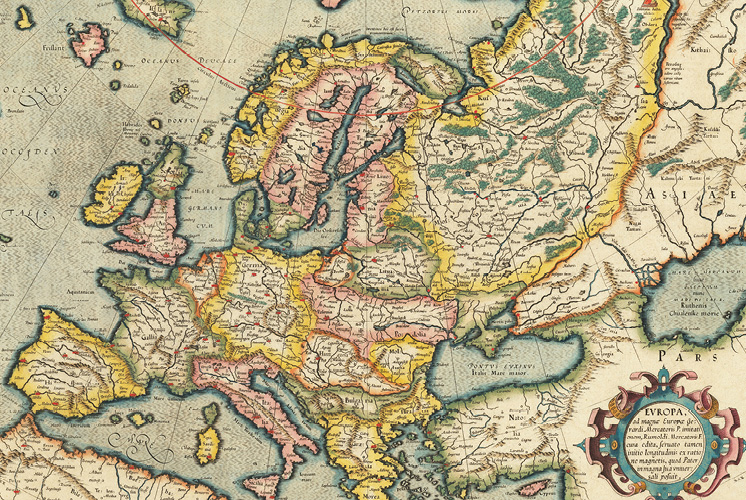
Building on the legacy of the Franco-Flemish polyphonists of the Renaissance and the Baroque traditions of Northern Europe, festivals in Belgium and the Netherlands foster a dialogue between musical heritage and musicological research. From Utrecht to Namur, from Bruges to Liège, by way of Antwerp, a true route of the musical Low Countries emerges, where the greatest international ensembles meet the new generation of the European Baroque scene.
The six festivals are presented in the order in which they open, from June to September. The contents below list them all and allow you to go directly to each entry, where you will find the dates, venues, artists and main highlights. Wishing you a wonderful summer of music!
The 2026 Festival Musical de Namur presents its 63rd edition under the theme “Voyage, Voyage”: a journey without time zones, where one moves freely between styles, eras, and forms. The festival logically begins with the Baroque, because everything flows together there. In Rome, Leonardo García-Alarcón, the Chœur de Chambre de Namur, and Cappella Mediterranea will open the festival with works by Luigi Rossi, Alessandro Scarlatti, Gregorio Allegri, and Giovanni Giorgi. Holy Week experienced as an inner dramaturgy: tense, concentrated, without superfluous ornament. In Paris, the Baroque changes scale, but not intensity, with Actéon by Marc-Antoine Charpentier, performed by Scherzi Musicali under the direction of Nicolas Achten. In Venice, Salve Regina explores another facet of the Baroque: that tears set to music. Antonio Vivaldi, Giovanni Battista Pergolesi, Alessandro Scarlatti, George Frideric Handel, and Giovanni Battista Ferrandini, performed by Coline Dutilleul and Ensemble Clematis, give shape to sorrow. In Lisbon, the Concerti grossi of António Pereira da Costa, brought to life by Ensemble Bonne Corde and Diana Vinagre, remind us that Portuguese Baroque is anything but peripheral.
Bruges will once again become one of Europe’s capitals of early music with a new edition of the MA Festival, heir to the prestigious Musica Antiqua festival which was founded in the 1960s and is now directed by Anna Danilevskaia. Set in the heart of one of Europe’s best-preserved medieval cities, the Belgian festival continues to embody a singular model: that of a gathering where historical research, artistic experimentation, and the younger generation engage in constant dialogue. The 2026 edition will bring together several major figures of the international Baroque scene. The opening concert will be given by Il Pomo d’Oro in a programme devoted to Wolfgang Amadeus Mozart, preceded by a contemporary creation by Belgian composer Siebe Thijs. Also on the programme are Vox Luminis, harpsichordist Jean Rondeau, pianist Jiaxin Min, the ensemble Postscript and Elisabeth Hetherington, as well as The BanXhies. Also noteworthy are Le Consort, Ensemble Cairn, and Salomé Gasselin in a programme combining Henry Purcell and Keith Jarrett, alongside several young ensembles from the new European early music generation. As every year, the concerts will take place in several emblematic venues in Bruges, including the Concertgebouw Brugge, the city’s historic churches, the Belfry, and the Abbey of Ter Doest in Lissewege. This interplay between architectural heritage and music is an integral part of the festival’s identity. The MA Festival also remains a key venue for fostering artistic exchange thanks to the MA Competition, the historic international competition whose final will take place on August 6. Masterclasses, professional meetings, and programmes for young artists complete a 2026 edition confirming Bruges as one of the great European crossroads of contemporary early music.
Beginning on August 21, Antwerp will host a new edition of Laus Polyphoniae, undoubtedly the world’s largest festival devoted to medieval and Renaissance polyphony. Organized by AMUZ since 1994, this event has become one of Europe’s leading centres for early music, at the intersection of performance, musicological research, and education. The 2026 edition is centred on the theme “Meerstemmig Europa ca. 1600,” which could be translated as “Polyphonic Europe around 1600.” It will explore the musical trends that swept across Europe at the turn of the 17th century: Italian influences, Franco-Flemish traditions, Iberian and English legacies, in an era marked by religious and aesthetic upheavals. Between the Gothic vaults of Flemish churches, the Baroque Hall of AMUZ, and Antwerp’s former merchant palaces, the programme brings together several of the greatest specialised vocal ensembles. Among them are Collegium Vocale Gent, Vox Luminis, Huelgas Ensemble by Paul Van Nevel, Stile Antico, The Gesualdo Six, New York Polyphony, and tenor and lutenist Paul O’Dette. Other guests include Tenebrae, Ensemble Irini by Lila Hajosi, Scherzi Musicali, Cappella Mariana, and Utopia Ensemble. Also noteworthy is the International Young Artist’s Presentation, or IYAP, a true showcase for the new European Baroque generation. The ensembles Ossian’s Dream, Ensemble Pampinea, Il Concerto Intempestivo, Primo Getto, Trio Turbulences, and KIMA will present their first professional programmes there. Beyond the concerts, Laus Polyphoniae remains true to its intellectual and cultural heritage: conferences, workshops, a summer school with Cappella Pratensis, musicological introductions and engagement with Antwerp’s historic sites are an integral part of the experience.
In Liège, from September 4 to October 11, the early music festival Les Nuits de Septembre will celebrate its 69th edition under the theme “Voyages” through eleven concerts. From Baroque Scandinavia to Renaissance South America, by way of medieval Naples and Ottoman Turkey, the festival explores the circulation of artists, maritime routes, and cultural cross-pollinations. These many trajectories reveal just how much early music remains an art in perpetual motion, where imaginaries constantly intersect and transform one another. This enchanted journey will be carried by some very great performers, both established and emerging: Lucile Richardot and Ensemble Correspondances under the direction of Sébastien Daucé, Rachel Podger, Micrologus, L’Arpeggiata, La Capriola, Lark’s Echoes, Ensemble Danguy, Dialogos, Pierre Derhet and Maxime Melnik, the Makam Trio, and Ensemble Satellite.
In mid-June, Bachfestival Dordrecht 2026 will celebrate its tenth anniversary. As usual, for three days the festival will transform the churches, courtyards, and historic sites of the oldest city in the Netherlands into a musical laboratory devoted to Johann Sebastian Bach. Faithful to its spirit, the festival is not limited to a heritage celebration: Bach becomes a meeting point between styles, generations, and aesthetics. The 2026 programme reflects this openness. Alongside major figures of Baroque performance such as Rachel Podger, Ton Koopman, the Nederlandse Bachvereniging, harpsichordist Mahan Esfahani, Lucie Horsch, and the Freiburger Barockorchester, the festival also welcomes more cross-disciplinary proposals, such as the meditative jazz of trumpeter Avishai Cohen. This ability to bring tradition and modernity into dialogue is precisely what makes Dordrecht unique. The setting also plays an essential role. Between the majestic Grote Kerk Dordrecht, the canals, and the old merchant houses, Dordrecht offers an almost intimate atmosphere. This atmosphere adds to the charm of a festival that emphasizes listening, intimacy, and the free movement of audiences between concerts.
Festival Oude Muziek Utrecht will celebrate its 45th edition from August 28 to September 6, once again confirming its status as the largest early music festival in the world. For ten days, Utrecht will become the true European heart of medieval, Renaissance, and Baroque music, with more than two hundred concerts, conferences, workshops, and events spread throughout the city. The 2026 theme, “Giving Voice,” will explore every form of the human voice, from Gregorian chant to Baroque opera, from medieval troubadours to the monumental polyphonies of the Renaissance. The festival will notably welcome L’Arpeggiata and three countertenors—Valer Sabadus, Arnaud Gluck, and Alois Mühlbacher—under the direction of Christina Pluhar. As every year, the programme also includes major names in early music: Le Concert Spirituel by Hervé Niquet, Tenebrae Choir, Solazzo, La Tempête, Gli Angeli Genève by Stephan McLeod, The Gabrieli Consort, Le Poème Harmonique, Correspondances, A Nocte Temporis, and Les Musiciens de Saint-Julien by François Lazarevitch. The festival’s great nerve centre will once again be the TivoliVredenburg complex, but concerts will also take place in Utrecht’s Gothic churches, cloisters, and historic venues, creating the unique atmosphere that has made the festival renowned for forty years. Beyond the concerts, Utrecht remains a vibrant hub of learning and discovery: competitions for young ensembles, free concerts, musicological symposia, an early instrument market, and masterclasses all contribute to making the festival a veritable global centre for early music.


 Building on the legacy of the Franco-Flemish polyphonists of the Renaissance and the Baroque traditions of Northern Europe, festivals in Belgium and the Netherlands foster a dialogue between musical heritage and musicological research. From Utrecht to Namur, from Bruges to Liège, by way of Antwerp, a true route of the musical Low Countries emerges, where the greatest international ensembles meet the new generation of the European Baroque scene.
  By
By 




You must be logged in to be able to post comments.
Sign in