


 “Floridante” triumphs in Bayreuth, Vox Luminis brings together forty voices in Utrecht, Micrologus unveils a rediscovered manuscript in Rimini, La Capriola wins the Van Wassenaer Competition and Arcangelo closes Gstaad with Bach: a look back in pictures at some of the week’s highlights.
  By
By 


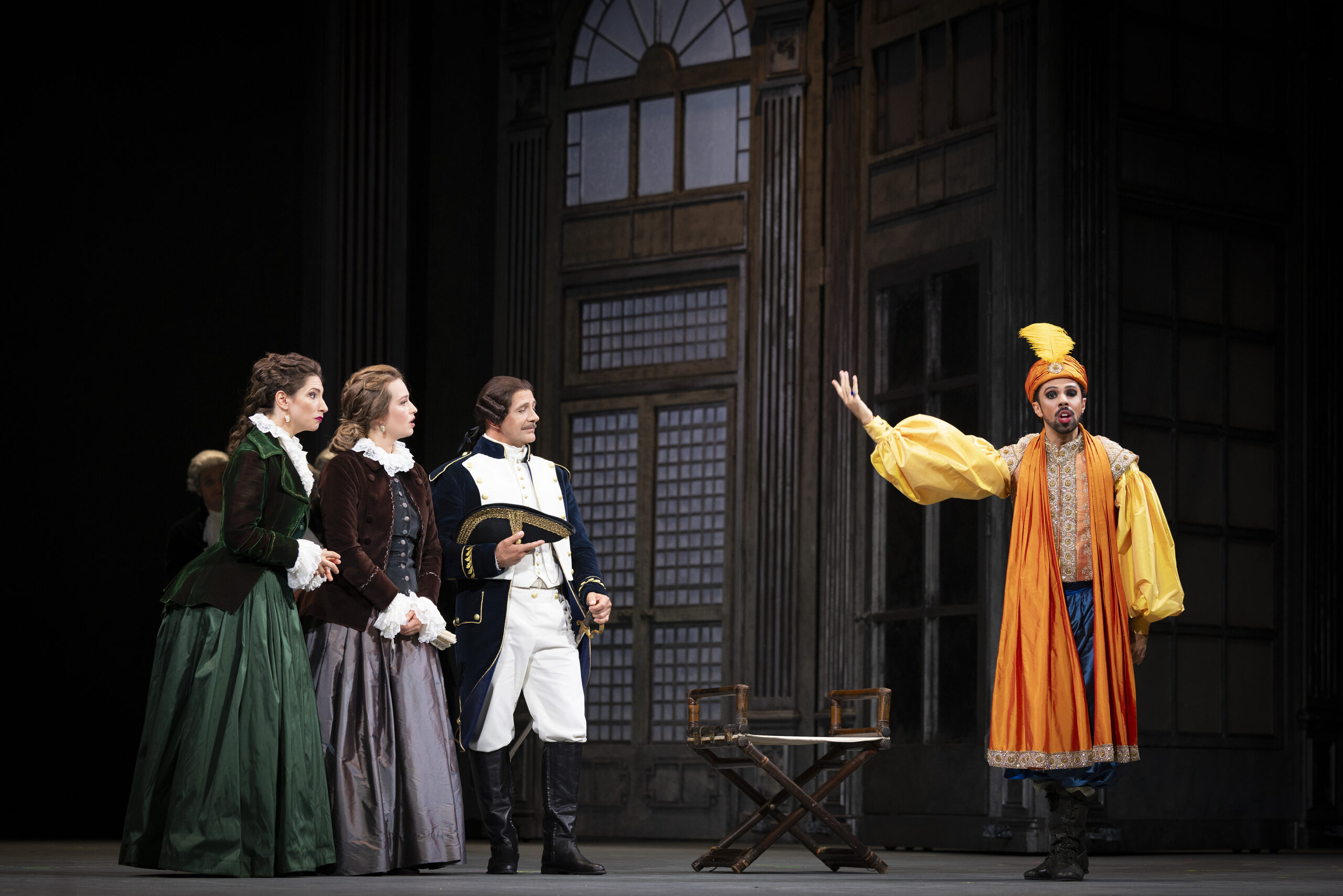
Handel’s Floridante triumphs at Bayreuth Baroque
At Bayreuth Baroque, Handel’s rarely performed opera Floridante proved a hit with audiences and critics alike. Max Emanuel Cencic’s production, which transposes the action to a dark English manor house and turns Oronte into a predatory tyrant, has been praised by critics for its theatrical force and thriller-like atmosphere. The musical performance has met with unanimous acclaim: Markellos Chryssicos and the Wrocław Baroque Orchestra have been praised for their flexibility, energy and subtle palette of colours. Cencic delivers a noble, intelligently sung Floridante, while Sonja Runje proves a particularly expressive and agile Elmira. Eva Zalenga charms with the brilliance of her Rossane, while Bruno de Sá impresses with his high notes, agility and stage presence. Several critics have stressed that this revival demonstrates how Floridante, long overshadowed by Handel’s better-known operas, deserves a more regular place in the repertoire. And the Süddeutsche Zeitung concludes that Bayreuth Baroque remains true to its spirit of discovery.
With Max Emanuel Cencic, Sonja Runje, Eva Zalenga, Bruno de Sá, the Wrocław Baroque Orchestra and Markellos Chryssicos.
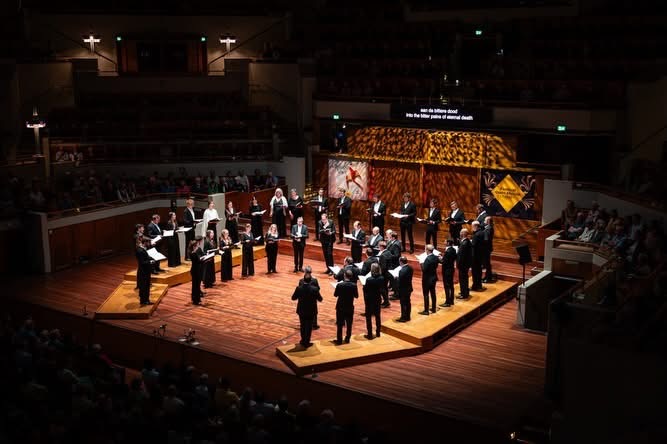
Vox Luminis closes the Utrecht Early Music Festival
The closing concert of the 2026 Utrecht Early Music Festival on Sunday 6 September was given by Vox Luminis in an exceptional enlarged formation, Vox Luminis XL, under the direction of Lionel Meunier. The particularly spectacular programme culminated in Thomas Tallis’s forty-part motet Spem in alium, perfectly in keeping with the festival’s 2026 theme, ‘Giving Voice’. Tallis was joined by three other major works of English and Italian polyphony: Thomas Morley’s Funeral Sentences, Alessandro Striggio’s Ecce beatam lucem, likewise conceived for exceptionally large vocal forces, and John Sheppard’s Media vita in morte sumus. Another concert on this final day featured Céline Scheen and Ensemble Castelkorn, the festival’s ensemble in residence, in the programme Soave devozione.
With Céline Scheen, the Ensemble Castelkorn, Vox Luminis and Lionel Meunier.
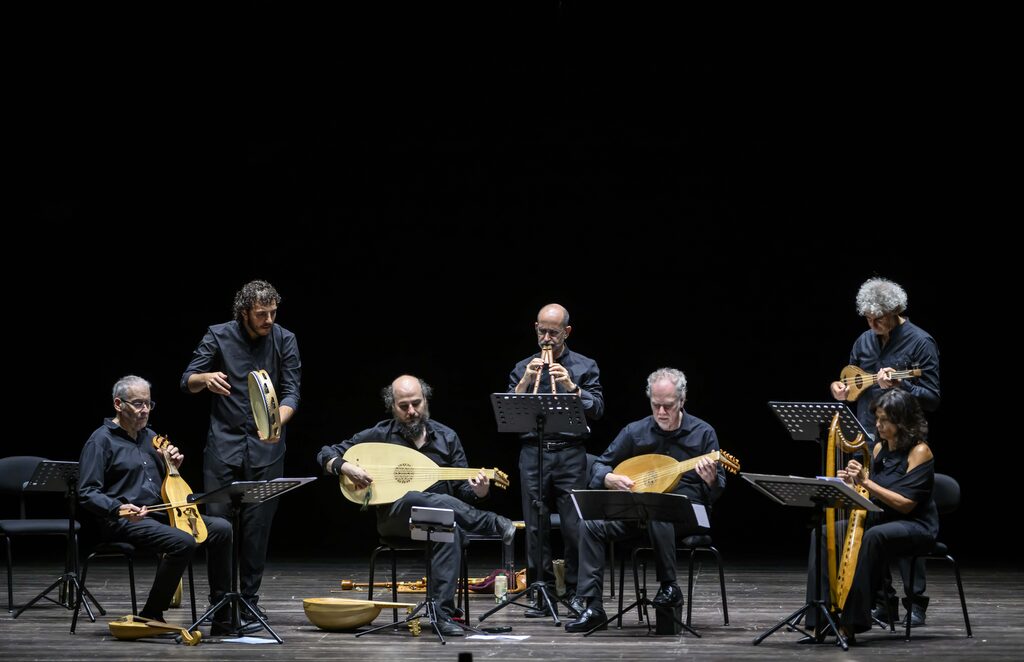
In Rimini (Italy), Micrologus unveils previously unknown music from the San Gaudenzo manuscript
At Rimini’s Teatro Galli, Micrologus presented, as part of the 77th edition of the Sagra Musicale Malatestiana, a concert entitled ‘Soave odor per l’universo spande’, featuring previously unknown fourteenth-century music from the San Gaudenzo III manuscript. The existence of this collection of songs associated with the Malatesta court had remained unknown until it was recently discovered that the precious musical manuscript had been dismantled and cut into numerous strips to reinforce an account book from the now-vanished monastery of San Gaudenzo. Restoration and digitisation work has made it possible to reconstruct this new source of Italian Ars Nova. The concert’s poetic title comes from an anonymous three-part ballata, performed alongside the other previously unknown works, including ‘Né te né altra vogl’i’ amar giammai’ by the period’s most celebrated composer, Francesco Landini, whose text was known but whose music had been lost. The high expectations raised by this exceptional discovery were fulfilled thanks to the experience Micrologus has accumulated over more than forty years, during which the ensemble has helped bring the ‘dolce stil novo’ of Italian Ars Nova to wider attention, earning it the privilege of unveiling this small musical treasure.
With the ensemble Micrologus.
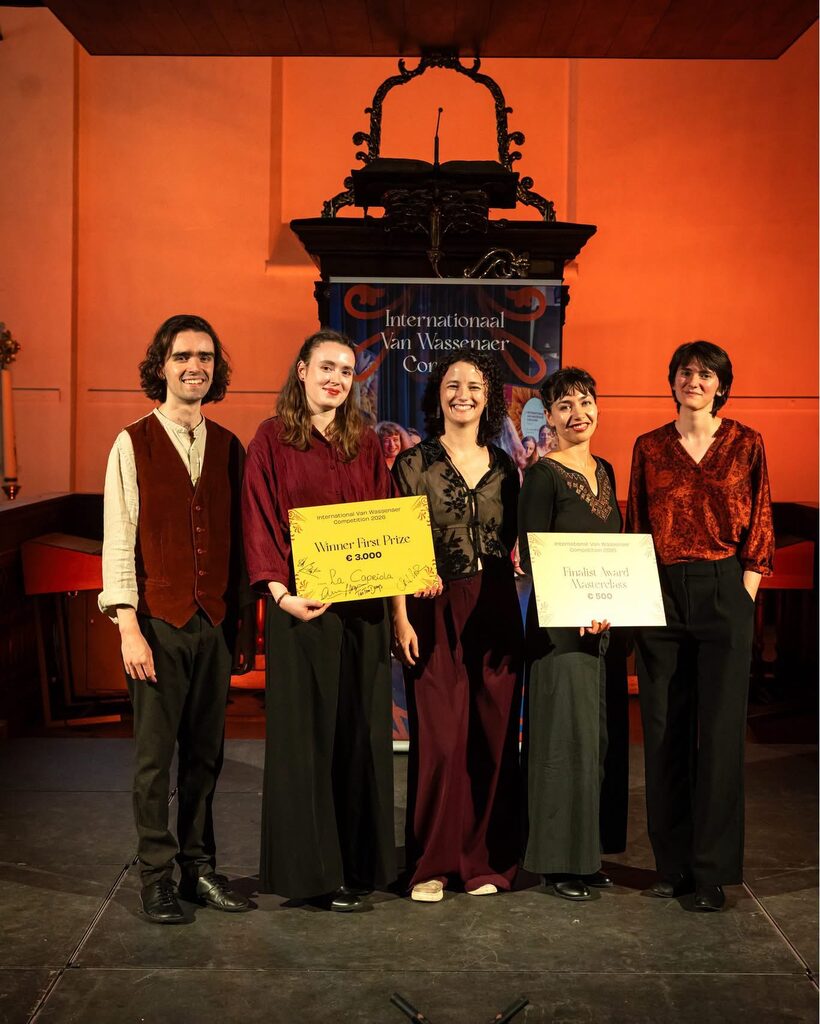
La Capriola wins the Van Wassenaer Competition
First Jury Prize for the French ensemble La Capriola – Martin Billé, Charlotte Ger, Camille Fritsch, Elizabeth Sommers and Dorine Lepeltier-Kovács – at the International Van Wassenaer Competition, held as part of the Utrecht Early Music Festival, one of the world’s leading early music festivals. The competition final can be watched here.
With La Capriola.
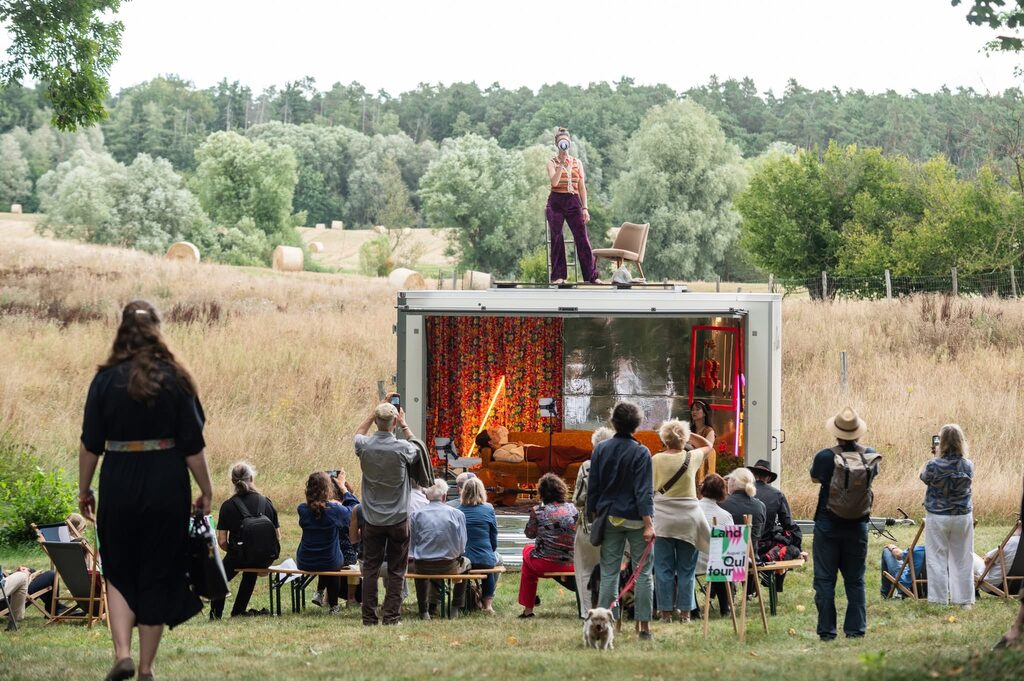
Berlin: Dowland and the future of melancholy at KALIT Festival 2026
As every year at the end of summer, the KALIT Musik- und Literaturfestival took over Gutshaus Friedenfelde, north of Berlin, for a weekend. The programme devised by Wolfgang Katschner and Christian Filips took ‘The Future of Melancholy’ as its theme, marking the 400th anniversary of John Dowland’s death. Rather than offering a conventional commemoration, however, KALIT set Dowland alongside Purcell, the Beatles, contemporary music, improvisation and literature. The programme featured Sophie Rois, Monika Rinck, lautten compagney, Capella Angelica, Ensemble Quillo, the young KALIT Ensemble für Alte Musik Brandenburg and students from the Ernst Busch Academy of Dramatic Arts. On Sunday, A Melancholic Walk offered a three-hour journey combining concerts and readings centred on Dowland and his contemporaries.
With the lautten compagney BERLIN, Capella Angelica, Ensemble Quillo and the KALIT Ensemble für Alte Musik Brandenburg.
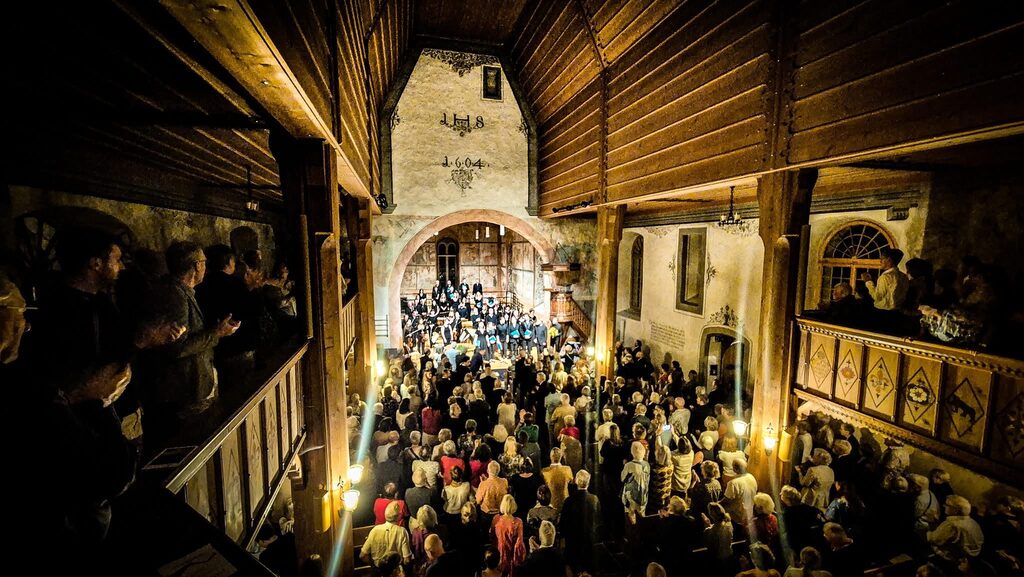
Arcangelo closes the Gstaad Menuhin Festival
To close the 70th edition of the Gstaad Menuhin Festival, at the historic church in Saanen, Arcangelo, directed by its founder Jonathan Cohen, performed Johann Sebastian Bach’s Mass in B minor with soloists Jeanine De Bique, Eva Zaïcik, Hugh Cutting, Nick Pritchard and Florian Störtz. The 2026 edition, under the theme ‘Family Matters’, was the first organised by the festival’s new Artistic Director, violinist Daniel Hope.
With Jeanine De Bique, Eva Zaïcik, Hugh Cutting, Nick Pritchard, Florian Störtz, Arcangelo and Jonathan Cohen.

You must be logged in to be able to post comments.
Sign in