


 A financial document, a simple register of dues collected from the lands of the Benedictine monastery of San Gaudenzo, founded in Italy in the 14th century, concealed a treasure: a collection of 89 songs, including 19 previously unknown works, among them one by Francesco Landini, the most prestigious composer of the Italian Ars Nova. These pieces will be presented in Rimini on September 4 and performed for the first time by Ensemble Micrologus at Rimini’s Galli Theatre.
  By
By 


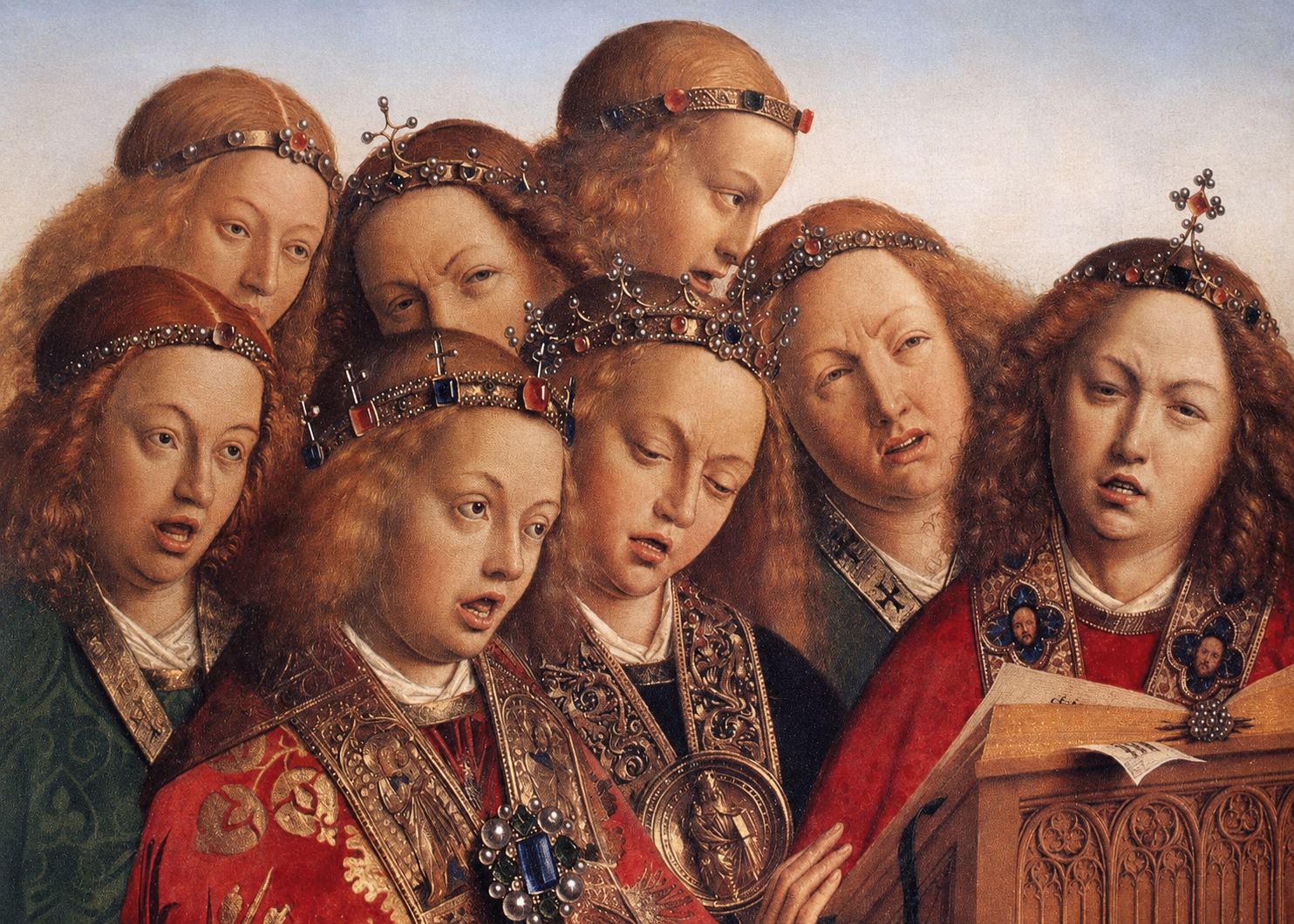
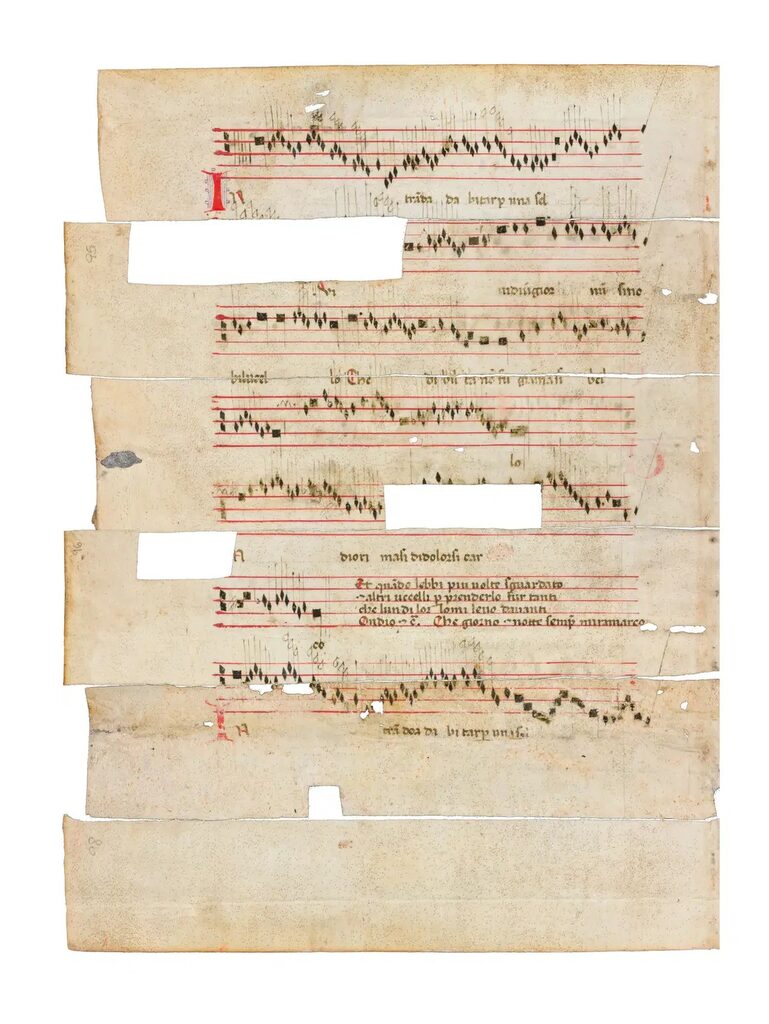
The list of musical sources relating to the Italian Ars Nova repertoire has been enriched in Rimini, Italy, by an unexpected new anthology dating from the late 14th century, which also includes previously unknown works among its compositions. This collection of songs was compiled by Francesco Zimei, a musicologist at the University of Trento, from a parchment whose leaves had been dismantled and cut up to reinforce a set of ordinary accounting documents, namely a register of dues collected from the lands of the Benedictine monastery of San Gaudenzo, founded in the Middle Ages outside the city walls in the Emilia-Romagna region, and later destroyed under Napoleonic rule.
A musical puzzle
The story behind this discovery is fascinating: after recovering and then reassembling (as if they were pieces of a jigsaw puzzle) the 179 strips of parchment resulting from the dismantling of the musical codex—which was evidently deemed unimportant by the 16th-century copyist-bookbinder tasked with reusing it—it became possible to reconstruct it using new technologies.
It should be noted that such dismantling is not an isolated case: at the end of the Renaissance, with the advent of the printed book, cartularies, which brought together administrative documents in manuscript form, were “recycled” as supports for paper administrative registers, and scattered fragments of lost codices, the disiecta membra, are found throughout Europe’s archives and libraries.
The first person to notice, by chance, in 2016, the presence of musical fragments in the reinforcements of an accounting register held at the State Archives of Rimini was Giacomo Baroffio, a specialist in liturgical chant, who alerted musicologist Francesco Zimei, an expert on the Ars Nova, that this was notation dating from the great flourishing of polyphonic music in the late Middle Ages.
Aware of the importance of this discovery, and after examining the accounting register, Zimei approached the Archives’ management to request that restoration work be carried out with the aim of reconstructing the cut-up manuscript. He brought the matter to the attention of both the Ministry of Cultural Heritage and Activities and the Central Institute for the Pathology of Archives and Books, and, thanks to the involvement and support of these institutions, succeeded in launching a restoration process that led to the discovery of previously unknown scores.

Passionate about early music and want to read this subscriber-only article?
If you are not a subscriber, join the international Total Baroque community. Subscribe here from 5.00€.
I subscribe
If you are already a subscriber, sign in.
I sign in 


You must be logged in to be able to post comments.
Sign in