


 With this album, José Coca Loza devotes his first solo recital on record to two composers who gave the bass voice a spectacular role: Handel and Caldara. A programme tailored to the Bolivian singer’s agility, range and dramatic power.
 By
 2 minutes


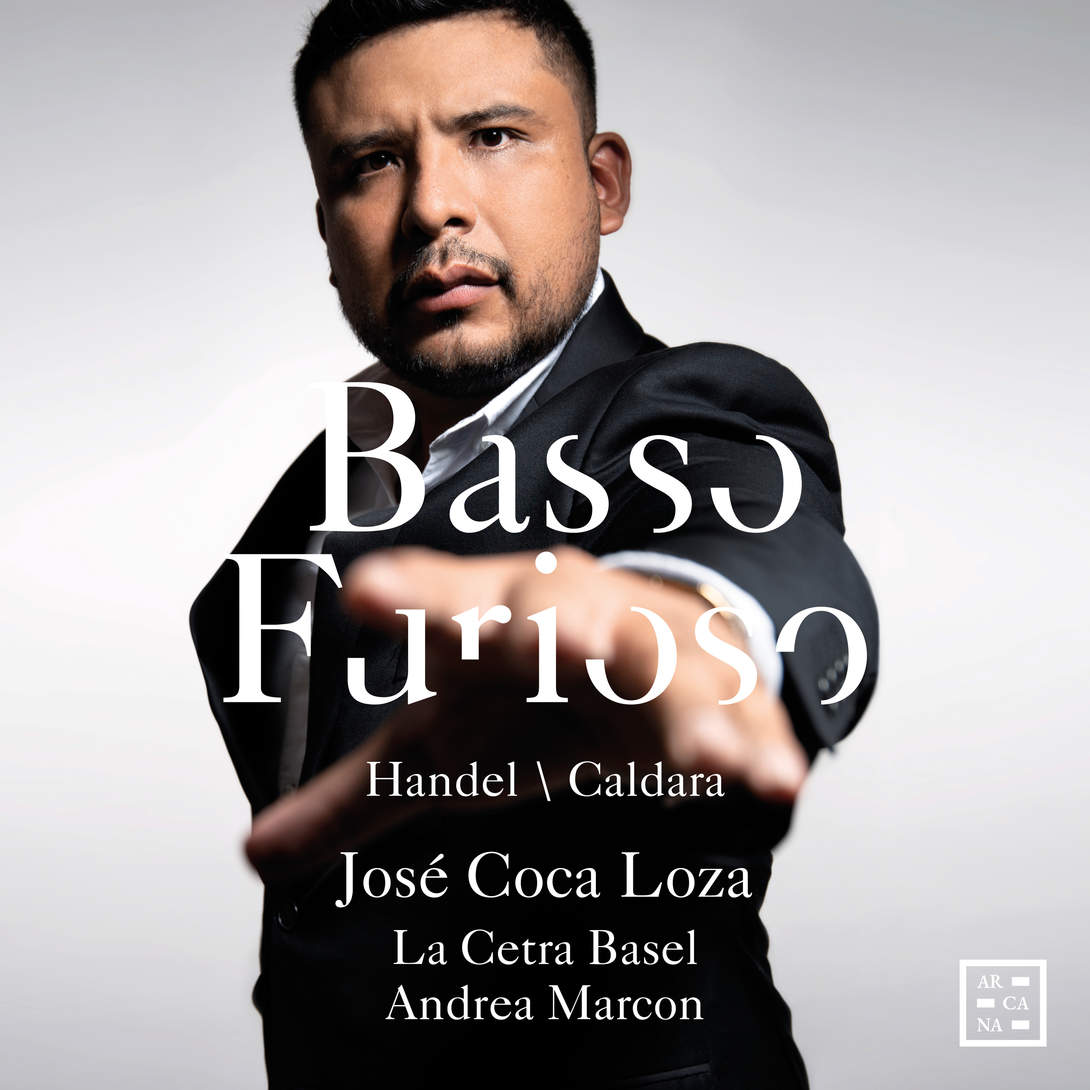
Released by Arcana, Basso Furioso brings Handel and Caldara together around a common thread: the virtuoso bass in the first half of the eighteenth century. With La Cetra Barockorchester Basel under Andrea Marcon, José Coca Loza explores repertoire written for singers of exceptional ability, from London to Vienna. Music particularly well suited to a voice as ample as it is agile.
Virtuoso arias for extraordinary voices
In London, Handel had basses of formidable ability at his disposal. Giuseppe Maria Boschi (1698–1744), a mainstay of the Royal Academy of Music, appeared alongside Antonio Montagnana (before 1710–after 1750), whose voice one contemporary compared to “a cannon”. In Vienna, Caldara worked with Christoph Praun (1696–1771), one of the leading basses of the Hofkapelle, renowned for his exceptional range and ease in the most demanding coloratura. Of the four arias written for him and included here, three receive their first recording.
One only has to hear what these scores demand to understand the reputation of their original interpreters. Caldara pushes the bass towards an almost instrumental virtuosity, particularly in “Di timpani e trombe il cielo rimbombe”, where the voice takes up the figures of the four trumpets. Handel places equal demands on range and stamina: Polyphemus spans more than two octaves in “Fra l’ombre e gl’orrori”, “Nel mondo e nell’abisso” unfolds in highly exposed coloratura, while the great scene from Floridante, restored here in its complete da capo version, requires both breath and endurance. Elsewhere, in Agrippina, it is the sheer depth of the register that is tested. The range of qualities expected from a great bass at the beginning of the eighteenth century is quite dizzying.
Basso con agilità!
José Coca Loza has exactly the resources this repertoire demands. Born in Cochabamba and trained in Basel, among other places, he knows Andrea Marcon and La Cetra well: it was with them that he made his first appearances as a soloist during his student years. In 2019, after winning the Voci Olimpiche competition in Vicenza, Marcon suggested that they make a recording together. The subsequent research into Christoph Praun gave rise to the programme of this first solo recital.
The voice first impresses through its firm foundation: the lower register is full and direct, while the emission remains highly flexible. Coca Loza negotiates coloratura and wide leaps with impressive clarity, maintaining a bright, even timbre throughout the range. The recitatives are particularly lively, carried by crisp diction and well-judged inflections.
La Cetra responds with plenty of drive, Andrea Marcon shaping the attacks and bringing out the orchestra’s colours with precision. Above all, there is an obvious musical understanding between Coca Loza and Marcon that makes one want to hear them together again in concert or on stage. Intelligently conceived, the programme makes full use of the singer’s wide-ranging abilities and turns Basso Furioso into a particularly successful first solo recital.

You must be logged in to be able to post comments.
Sign in