


 In Berlin, the “Tage Alter Musik”, the Staatsoper Unter den Linden’s annual early music festival, takes place every November. An opportunity to look back at the eventful founding of this opera house in 1742 by King Frederick II of Prussia, alongside his Kapellmeister and composer Karl Friederich Graun, whose opera “Cleopatra e Cesare” was performed at its opening.
 By
 11 minutes


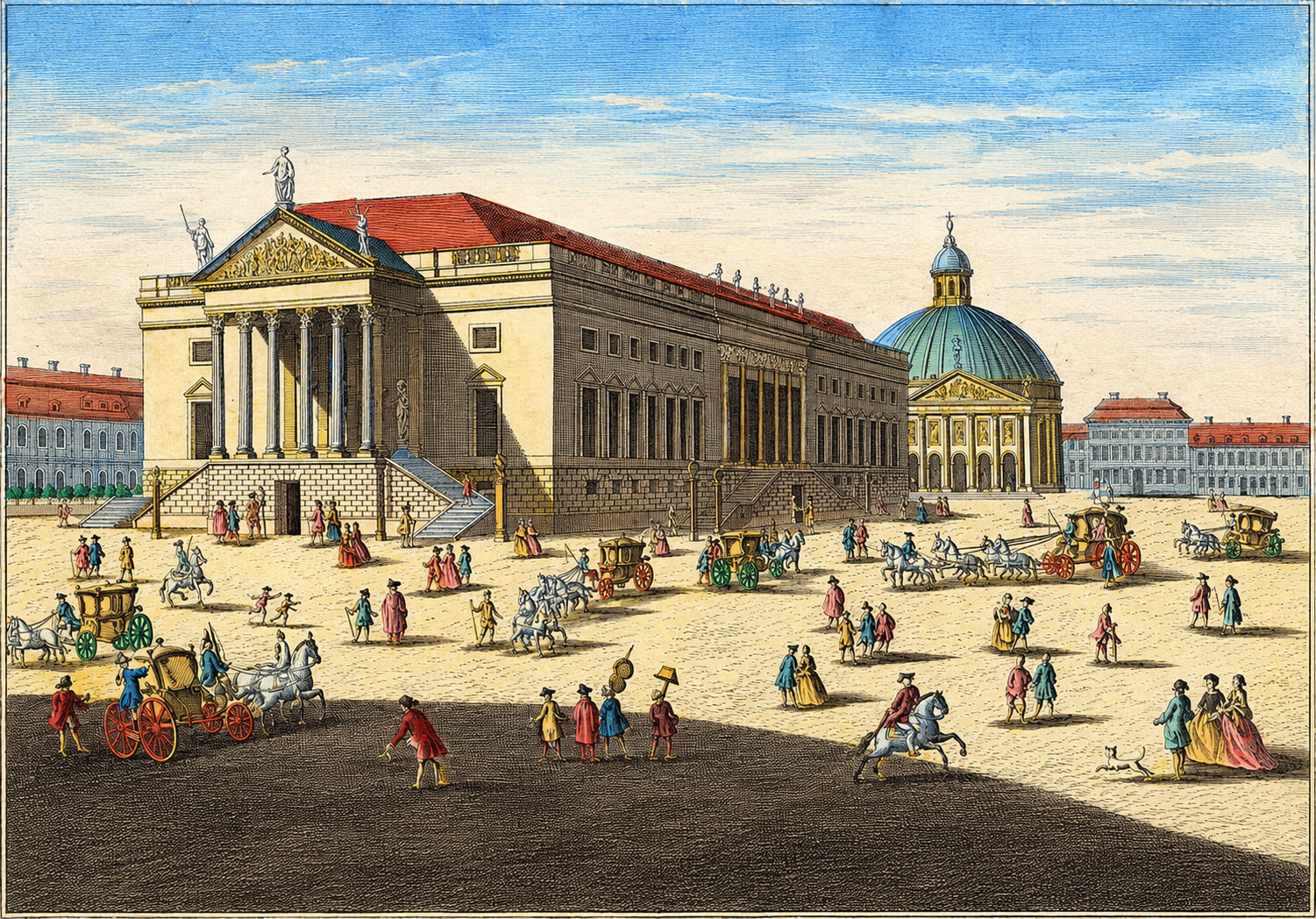
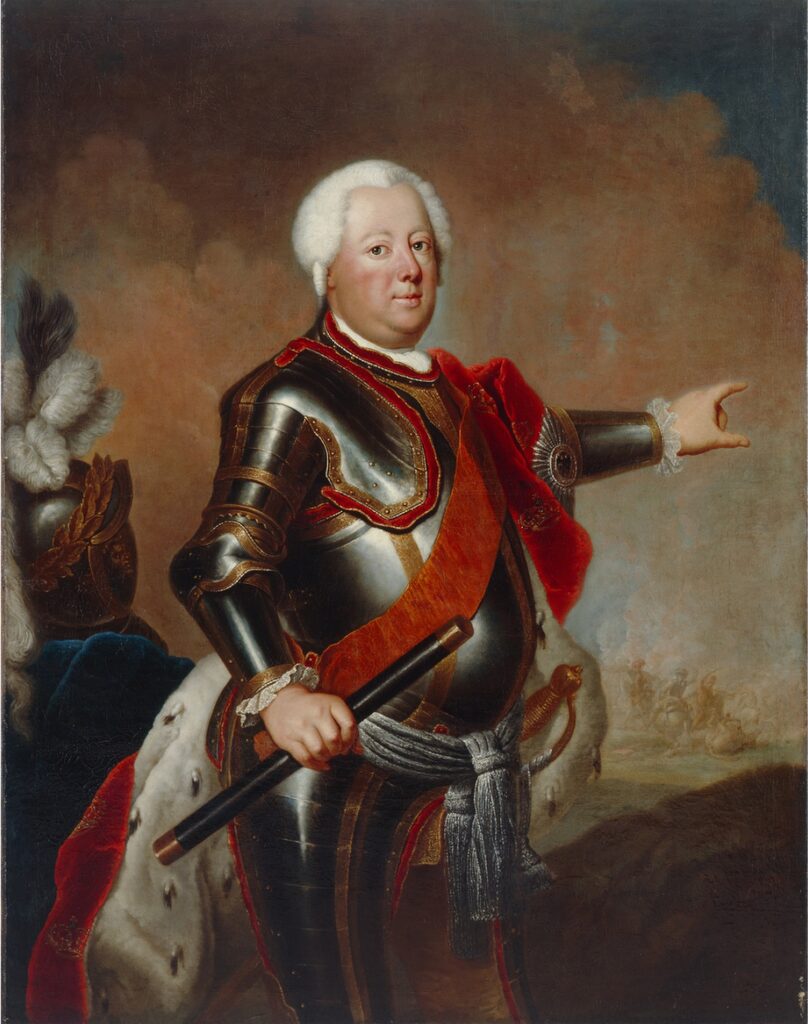
Berlin, December 7, 1742. Despite a snowstorm and bitter cold, court dignitaries and city residents flock to the new opera house commissioned by their king, Frederick II of Prussia. The building is still under construction, scaffolding surrounds its façades, and the interior decorations remain unfinished. Yet beneath the thousands of candles illuminating the auditorium, the performance promises to be magnificent: Cleopatra e Cesare, an opera specially composed by Carl Heinrich Graun, the court composer and Kapellmeister, featuring Italian singers, French dancers, and German musicians. Behind this eventful inauguration lies the ambition of a monarch with a passion for music—a flutist and composer himself, but also a formidable political strategist. For Frederick II, opera is more than entertainment: it is an instrument of prestige and power. On the occasion of the Staatsoper Unter den Linden’s Tage Alter Musik, Total Baroque Magazine recounts the turbulent beginnings of this Berlin institution, which would become one of the great centres of European opera.
December 7, 1742, in Berlin. The big day has arrived: the inauguration of the Opera House on Unter den Linden (“Under the Linden Trees”), built at the behest of King Frederick II of Prussia. It is bitterly cold this evening, and there is even a snowstorm! The audience making its way toward the new building probably has little opportunity to take in the surroundings. Just as well, because nothing has been put in order yet: the site is empty and desolate, and construction debris lies scattered everywhere!
Royal Splendour Amid the Scaffolding
In the middle of a vast open space stands the building, rectangular and immense, made to look even larger by the scaffolding surrounding it. The entrance is majestic in its proportions, everything grand and spacious, like a Greek temple. Inside, however, there are no paintings yet, no gilding or stucco decorations, just a rough coat of whitewash on the corridor walls.
After passing through the vast corridors and staircases wide enough to accommodate sedan chairs, we reach the auditorium. It is like stepping into brilliant sunshine! Thousands of candles have been lit, bathing everything in light. Which also makes it possible to see that nothing here is finished either! A canvas canopy has been stretched across the ceiling to conceal it. There are not even any seats in the boxes: wooden benches will have to do. Close to the stage, in the stalls, armchairs have nevertheless been arranged for the royal family. The princes and princesses are already seated.
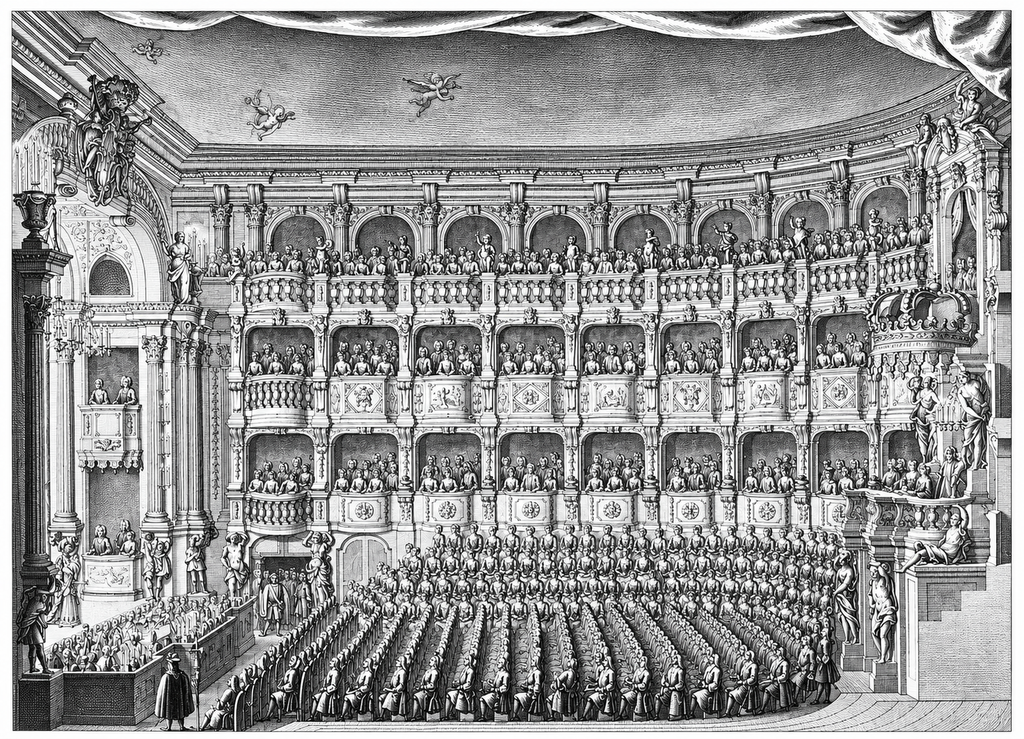
The orchestra is in place, ready to be directed from the harpsichord by Carl Heinrich Graun, His Majesty’s composer and Kapellmeister. Graun has the privilege of wearing a long white wig and a magnificent red suit, as does the concertmaster, Franz Benda.
The audience has been allowed to arrive well in advance. Even the generals and senior officers, who will have to stand in the stalls throughout the performance, are already there in full dress uniform. The boxes on the ground floor have been reserved for foreigners, and attendants have visited every inn in Berlin to distribute tickets to them. The first two tiers of boxes are occupied by ministers, senior officials, and ladies in court dress, while the third is reserved for the city’s residents.
An Opera Made to Measure
Suddenly, everyone rises. A fanfare sounds from the trumpets and timpani of the royal bodyguards, positioned on either side of the stage. All eyes turn toward the left of the orchestra: the king enters. He surveys the auditorium with a satisfied gaze (at last, his dream is coming true), gracefully acknowledges the audience, and takes his seat. Immediately, at a signal from the director of court entertainments, standing just behind the king, Kapellmeister Graun launches into the Overture, in the French style. As the first suitably solemn measures sound, the audience sits down again amid the rustle of silk, satin, and velvet.

Passionate about early music and want to read this subscriber-only article?
If you are not a subscriber, join the international Total Baroque community. Subscribe here from 5.00€.
I subscribe
If you are already a subscriber, sign in.
I sign in 

You must be logged in to be able to post comments.
Sign in