


 The recording of The Four Seasons by Amandine Beyer and her ensemble Gli Incogniti (released in 2008) is among the benchmark interpretations of Vivaldi’s work. For the violinist, this recording was anything but a closed chapter in a “sound museum”: it was a sensory shock, a door opening onto the unknown and, more recently, a choreographed playground.
  By
By 


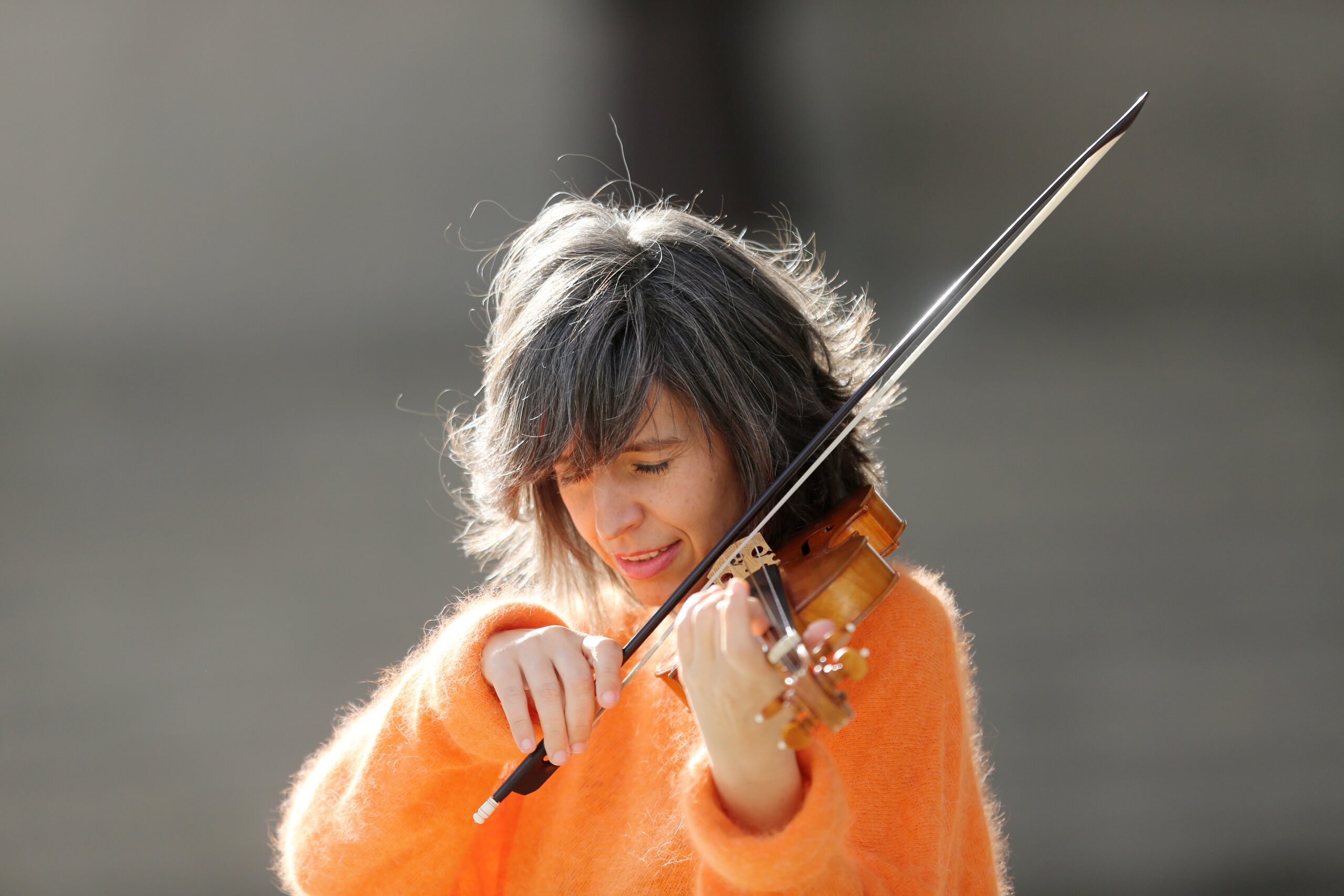
As celebrations marking the 300th anniversary of The Four Seasons set the tempo of the European music scene, Amandine Beyer’s trajectory has emerged as one of the striking narratives of this musical odyssey, anchored by her 2008 recording. Invited at a very young age by the ensemble Les Passions, she experienced, in a chapel in Toulouse in the south of France, a genuine temporal dislocation—so intense that she even forgot her violin on a bus! A few years later, her ensemble Gli Incogniti, then in search of a label, signed with Zig-Zag Territoires for a landmark interpretation of The Four Seasons. But far from a “hit” that would eclipse everything else, Amandine Beyer champions a work that multiplies the possibilities: multiple editions, poetic sonnets, choice of tempos, narrative affects and, now, an imagination renewed by baroque and live dance, where the violin dialogues with the body. Between shared erudition with musicologist Olivier Fourès and choreographic tremors on stage, here is the story of a performer “occupied” by Vivaldi until this danced version of The Four Seasons.
You have been associated with The Four Seasons ever since your 2008 version. How did your story with this work begin?
Amandie Beyer: It began in a completely impromptu way, almost like something out of a novel. I received, at a very young age, an invitation from Jean-Marc Andrieux, then director of the Montauban Conservatory and founder of an ensemble known at the time as the Orchestre baroque de Montauban [which later became Les Passions]. I must have been about twenty-five. The concert took place in Toulouse, in the university chapel. I still remember the atmosphere: a wooden interior tinted blue, laden with gilding… As I was playing, I felt as though I had been teleported back to the eighteenth century. Casanova, festivities, flamboyant Italy…
That sensation of time travel fascinated me. And, as if everything had to be intense from the very first minute, I was so overwhelmed by the event that I forgot my violin on a bus in Toulouse! But despite the stress, I felt immense joy: a conductor who listened closely, a delightful group, rare human kindness. My first encounter with Vivaldi was a shock—but a happy one, a founding shock.
And after that, did your presence in the recording world follow very quickly?
A. B.: Not exactly as a direct continuation of that first concert, but in the momentum it gave me. My ensemble Gli Incogniti was then looking for a label. After a long journey, we joined Zig-Zag Territoires, later absorbed by Alpha/Outhere. From this itinerary of houses and musical identities, what remains today is a slightly bittersweet feeling: it’s a shame that the name Zig-Zag has disappeared, but that is also the life of a catalogue—shifting, organic, like the repertoire we champion.

Passionate about early music and want to read this subscriber-only article?
If you are not a subscriber, join the international Total Baroque community. Subscribe here from 5.00€.
I subscribe
If you are already a subscriber, sign in.
I sign in 


You must be logged in to be able to post comments.
Sign in