


 Dominique Visse, 71, an instrumentalist, singer, and founder and director of the Ensemble Clément Janequin—which he still leads—is also a music copyist. He has just donated 23 new handwritten scores to the library collection of Les Arts Florissants, for whom he once worked as a transcriber. Copies of works by Charpentier and, more unusually, Moulinié and Grandi… The renowned haute-contre looks back on this little-known craft.
 By
 7 minutes



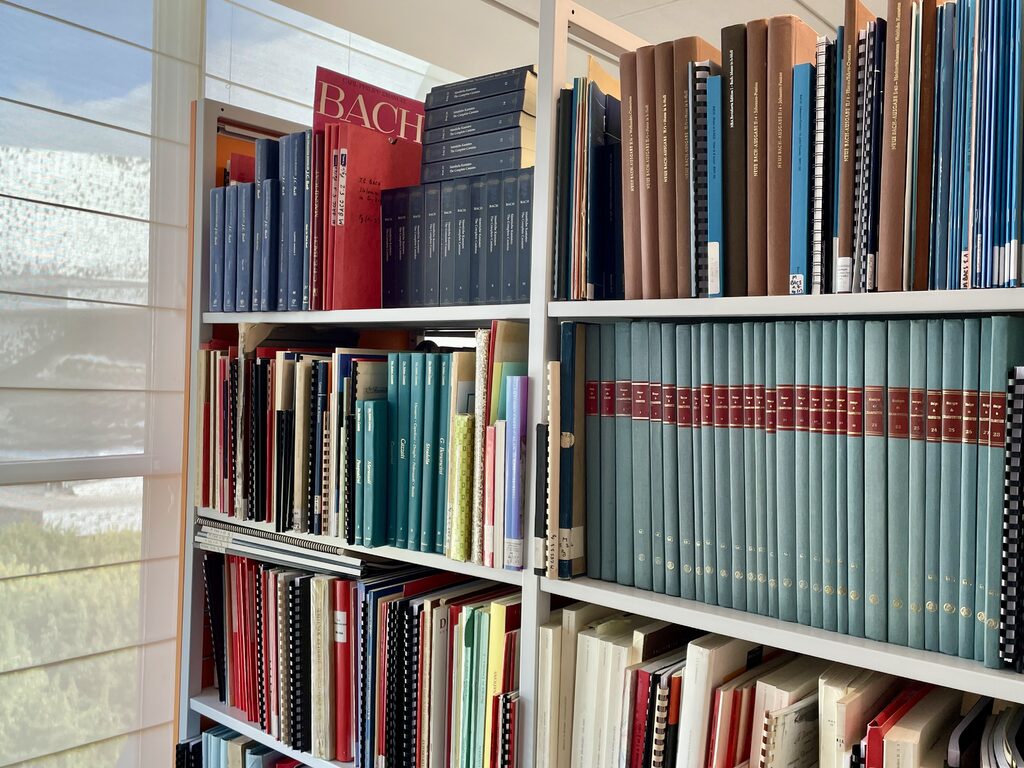
160 linear metres of shelving housing some 20,000 items: such is the extent of the collections of Les Arts Florissants. Beginning in the 1990s, William Christie decided to bring the ensemble’s documentary holdings together in a single location, the Cité de la Musique. A collection unique in the field of Baroque music, it brings together scores, books, monographs, catalogues, and facsimiles. Facsimiles that, barely 40 years ago, were not yet available. While manuscripts are now transcribed and reproduced using computers, back then all transcriptions were made by hand, with pen and ink. It was in this context that Dominique Visse began transcribing early manuscripts held in the archives of the Bibliothèque nationale de France for the young ensemble. He has now chosen to donate this work to a collection that, as Fannie Vernaz, musical adviser in charge of the library since 1993, describes it, is “a living record of the work of Les Arts Florissants.”
These manuscripts are reminders of a bygone era. Why have you chosen to donate them to Les Arts Florissants? Is it a desire to pass on this knowledge or to preserve the memory of the past?
Dominique Visse: First and foremost, because I think it is only right. It was work I was paid to do as an employee of Les Arts Florissants. There was no point in having these scores sitting beside me on my desk, unused. Donating them was better for preserving their memory. I therefore felt it was only right that they should go back to Les Arts Florissants: it was work we did together, Bill [William Christie], all the members of the ensemble, and I.
Before Les Arts Florissants, your very first transcriptions were of works by Charpentier. What prompted you to begin this work?
D. V.: When I started making music in the 1970s, photocopiers were still very scarce. I was living in Normandy at the time, where I was involved with small music academies and ensembles. It was, of course, a rather remote region back then, where getting hold of music was difficult. Having documents photographed cost a fortune, and it sometimes took months—two or three months—to obtain a score. So we simply copied everything by hand. I soon started copying in ink. Perhaps it was a touch of nostalgia for my early childhood: I learned to write at school using an inkwell and a dip pen, and I have always been fascinated by calligraphy.
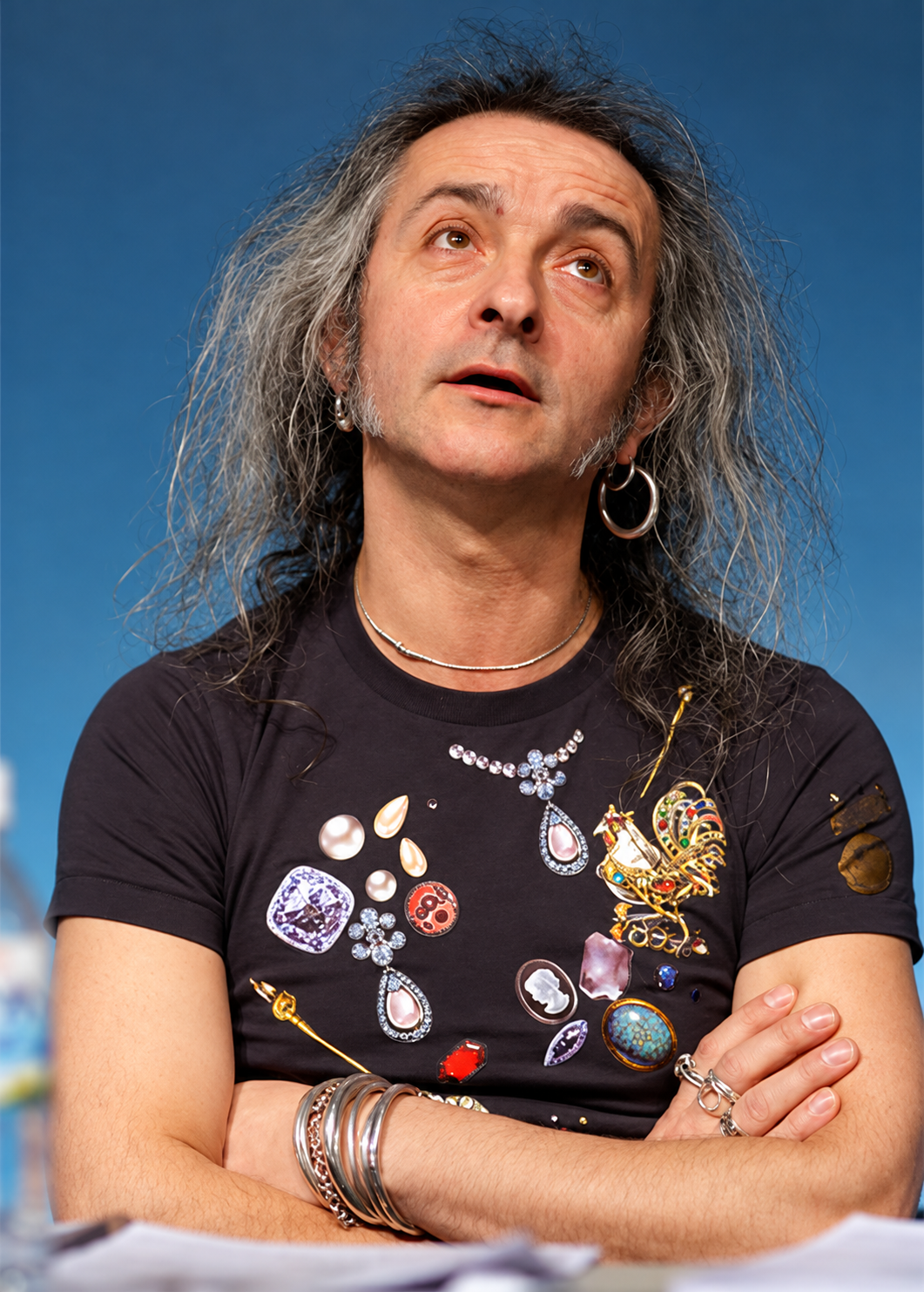
You met William Christie during courses with René Jacobs. Afterwards, he invited you to join his ensemble. How did you subsequently become the copyist for Les Arts Florissants?
D. V.: I first joined Les Arts Florissants in 1979 as a singer. It was the ensemble’s early days, like a family just coming into being. I’ve always been quite versatile, and I was Bill’s chauffeur because I was the only one with a car, the person who put up the library shelves because I knew how to use a drill, and so on. (laughs) And Bill was an absolutely outstanding cook! All these things, outside music, brought us closer together. I didn’t do the first transcriptions for Les Arts Florissants, and Bill wasn’t entirely satisfied with them. When I showed him mine, he immediately wanted me to work with him on repertoire research and become the ensemble’s official transcriber.
How did you go about producing them?
D. V.: I worked on how to draw the notes so that they would be both attractive and quick to write. I formed each note in a single movement rather than two or three, as you would when drawing it properly—first the notehead, then the tail, and finally the stem. To do this, I made my own equipment. I filed down the nibs so that I could write as quickly as possible without making things too complicated. For the ink, I mainly used India ink because it doesn’t run if it gets wet or damp. It also produces much stronger contrast when photocopied. I did my copying at the Bibliothèque nationale, where the manuscripts are kept. At first, they allowed me to copy an original Charpentier score—a unique document—with my pen and India ink right there on the table. But they soon took it away from me. It was too dangerous! Instead, they had me work from microfilm.
Passionate about early music and want to read this subscriber-only article?
If you are not a subscriber, join the international Total Baroque community. Subscribe here from 5.00€.
I subscribe
If you are already a subscriber, sign in.
I sign in 



You must be logged in to be able to post comments.
Sign in