


 No portrait, no biography, only a handful of documents that can be counted on the fingers of one hand: almost everything about Camilla de Rossi has vanished. All she left behind were four oratorios composed for the Viennese court between 1707 and 1710. Yet they are enough to reveal a distinctive, inventive, and fully accomplished musical language, sketching the profile of a composer of remarkable musical audacity.
  By
By 


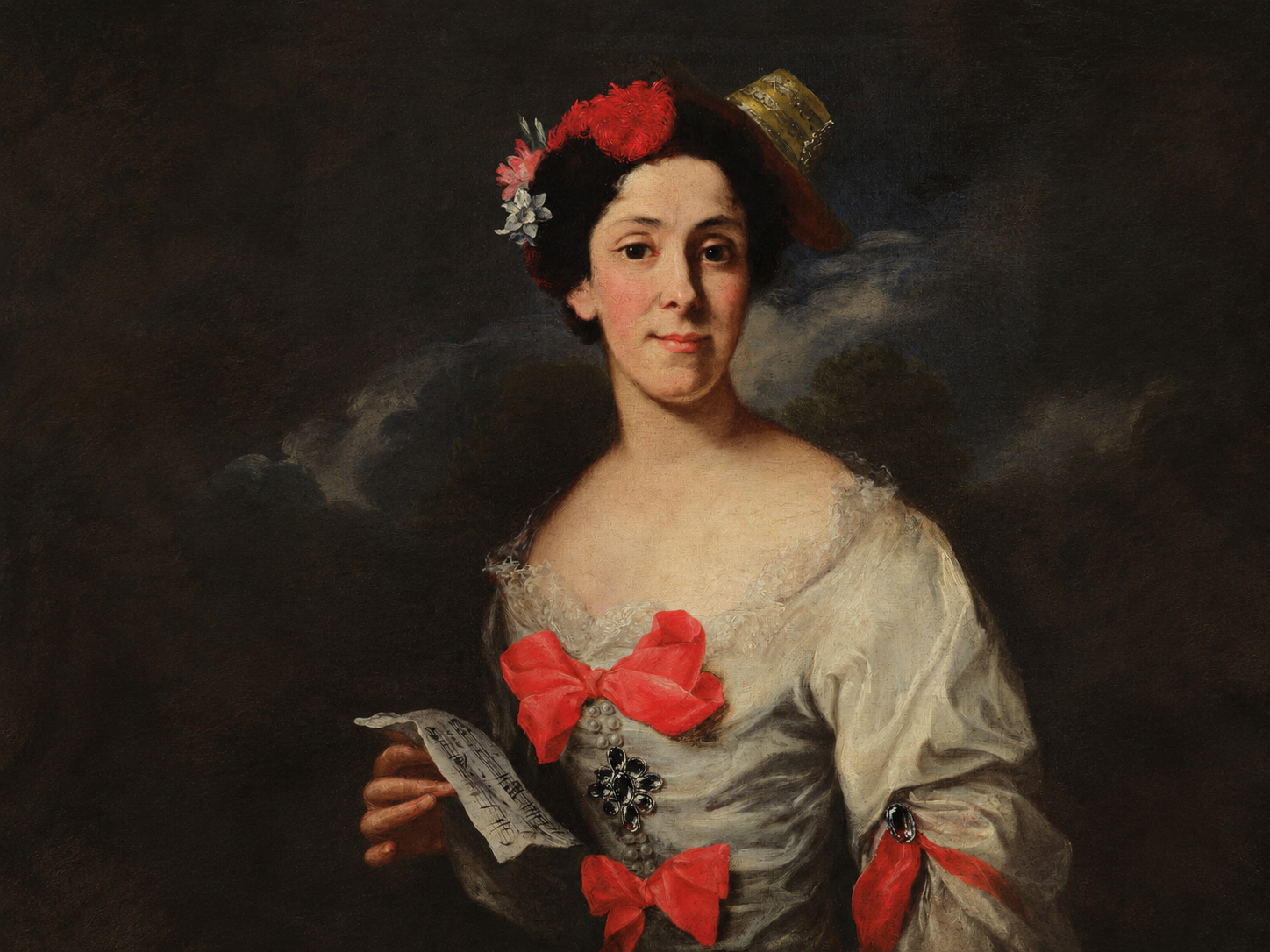
Vienna, the beginning of the eighteenth century. In the shadow of the splendours of the Habsburg imperial court, a woman is composing. Almost nothing is known about Camilla de Rossi: neither her date nor place of birth can be established with certainty, nor the circumstances of her arrival at the court of Joseph I. The sources describe her simply as “Romana.” Between 1707 and 1710, she composed four oratorios for the imperial chapel: Santa Beatrice d’Este, Il sacrificio di Abramo, Il figliuol prodigo, and Sant’Alessio. A secular cantata is also attributed to her. This small body of work, supported by daring librettos and inventive instrumental writing, is nevertheless enough to make a singular voice heard in a musical world where women composers remained a tiny minority.
A Roman Woman at the Court of the Music-Loving Emperor in Vienna
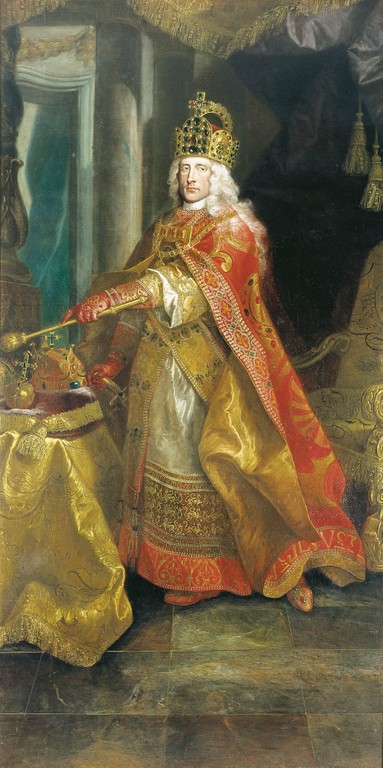
Joseph I (1678–1711), who ascended the throne in 1705 as Holy Roman Emperor and Archduke of Austria, was an enlightened music lover. A composer himself, he fostered a vibrant musical life at his court. It is in this context that Camilla de Rossi emerges, almost as if by magic. Contemporary Viennese scores refer to her as “Romana.” She was therefore probably born in Rome or its surroundings, perhaps around 1670–80.
Did she ever meet her imperial patron in person? In any case, the printed libretto of her first known oratorio indicates that the initiative for its musical setting came from Joseph I himself: “Posto in Musica per Comando di S[ua]. M[aestà]. Cesarea dalla Sig[no].* Camilla de Rossi[,] Romana.” (Set to music by order of His Imperial Majesty by Camilla de Rossi, a Roman woman.) But how did this Italian woman attract the emperor’s attention? It remains a mystery. Her activity in Vienna appears to have been confined to a brief period, between 1707 and 1710.
After that, nothing. No trace, no document. It is as if the composer simply evaporated, leaving behind a handful of works that continue to intrigue musicologists to this day.
Santa Beatrice d’Este: War in Music
One of her earliest oratorios, Santa Beatrice d’Este, is based on a libretto written by Cardinal Benedetto Pamphili, an influential figure in Baroque Rome. The text, already set to music in 1689 by Giovanni Lorenzo Lulier—with an instrumental introduction by Arcangelo Corelli—tells the story of two noble nuns, Beatrice d’Este (1191/92–1226) and Giuliana di Collalto (1186–1262), confronted by a ruthless warlord: Ezzelino III da Romano.

Passionate about early music and want to read this subscriber-only article?
If you are not a subscriber, join the international Total Baroque community. Subscribe here from 5.00€.
I subscribe
If you are already a subscriber, sign in.
I sign in 

You must be logged in to be able to post comments.
Sign in