


 With “Folías y Glosas”, Concerto Scirocco brings to life the instrumental world of sixteenth- and seventeenth-century Spain. From ministriles and dances to ostinato basses and improvised variations, Giulia Genini leads Cabezón, Ortiz, Falconieri and Praetorius through a programme in which forms travel, transform and constantly change colour.
  By
By 


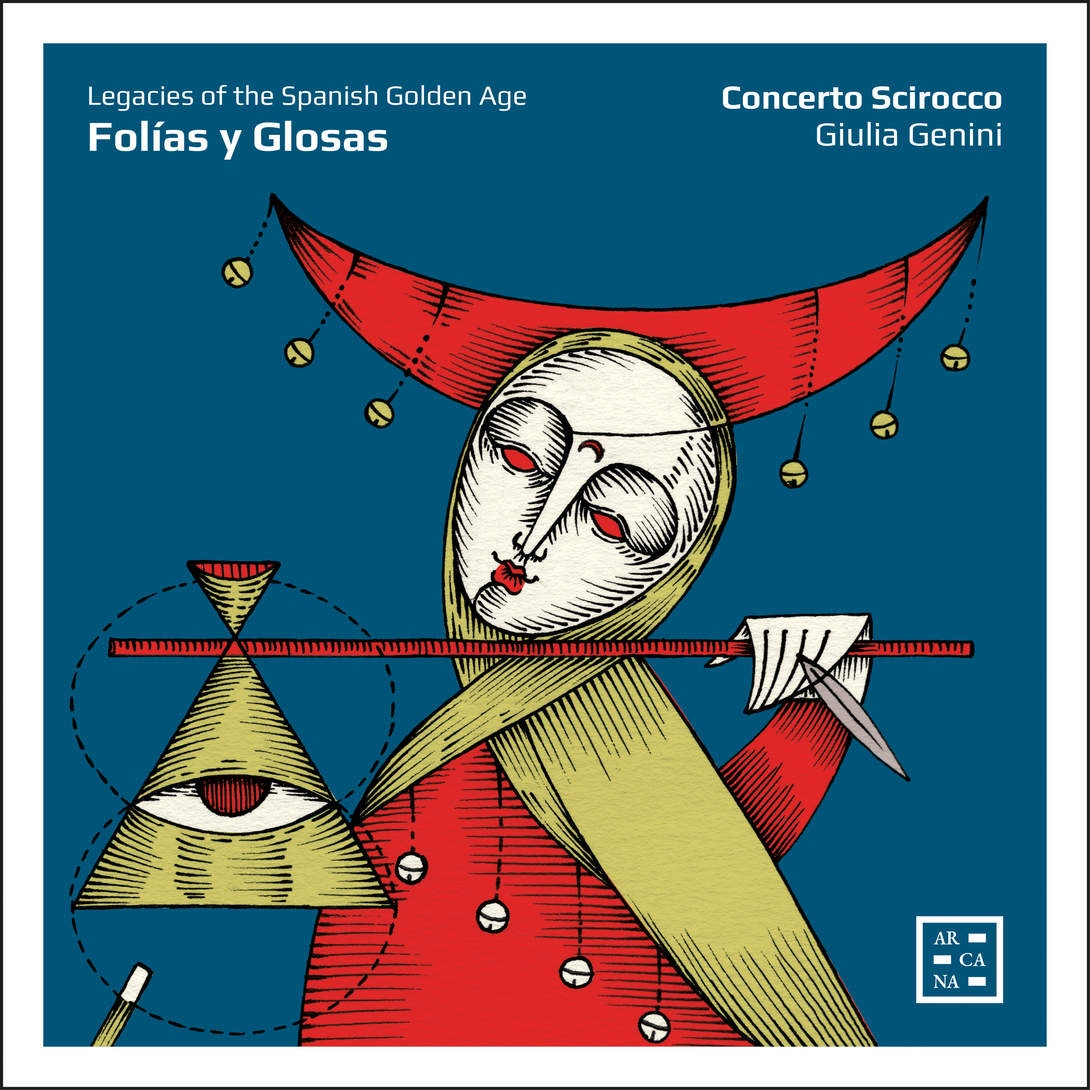
With Folías y Glosas. Legacies of the Spanish Golden Age, released on Arcana, Concerto Scirocco and Giulia Genini delve into the instrumental practices of the Spanish Golden Age. There is no single prevailing colour here: the brilliance of the alta cappella is answered by more intimate consorts, winds by strings, and the vihuela and guitar by keyboards. Across twenty-two tracks, the ensemble spans almost two centuries of music, following two essential practices in this repertoire: the folía, a harmonic framework ideally suited to variation, and the glosa, the art of embellishing and reinventing a given line.
The album thus takes on the character of a sonic laboratory. Keyboard works by Antonio de Cabezón pass to cornetts, shawms, sackbuts and dulcians; Diego Ortiz’s Recercadas turn La Spagna and the Folía into playgrounds for variation; Josquin’s Mille regretz reappears as a pavane by Tielman Susato before being transformed once more in a diminution by Giulia Genini. From track to track, the score emerges less as something fixed than as material to be shifted, embellished and recomposed.
Spain soon spills beyond its own borders. La Spagna circulates throughout Europe; Michael Praetorius takes up the Spagnoletta; and Spanish-ruled Naples becomes one of the main meeting points between Iberian and Italian traditions. It is there that Diego Ortiz directs the Real Cappella, and later that Andrea Falconieri publishes his dances, sinfonias and Folías in 1650. The latter push the principle right to the threshold of the High Baroque: ten variations that already anticipate the “modern folia”, soon to become a fully-fledged melody in its own right, endlessly transformed through variation.
This constant circulation is particularly well suited to Concerto Scirocco, whose core sound is built around cornetts, sackbuts, recorders and dulcians. Under the direction of recorder and bassoon player Giulia Genini, the ensemble plays with changing textures and timbres: the brilliance of the winds, the earthier grain of the bajón, the softness of the viols and the rhythmic drive of the dances. Folías y Glosas does more than document the instrumental practices of the Spanish Golden Age: above all, it recaptures their movement, freedom and spirit of play.

You must be logged in to be able to post comments.
Sign in