


 What do Couperin, Forqueray, Marais and Rameau reveal about one another when they portray each other in music? With “Carré d’As”, Les Timbres brings together self-portraits, tributes and musical evocations, revealing four distinct personalities behind four of the great names of French Baroque music.
 By
 2 minutes


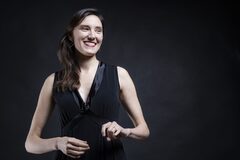
With Carré d’As (“four aces”), Les Timbres brings together François Couperin, Antoine Forqueray, Marin Marais and Jean-Philippe Rameau through a series of musical portraits and self-portraits. Yoko Kawakubo on violin, Myriam Rignol on viola da gamba and Julien Wolfs on harpsichord set these four major figures of the French Baroque in dialogue in an album released by Château de Versailles Spectacles as part of its “La Chambre des Rois” collection.
The title neatly sums up the idea behind the recording: four “aces”, four composers whose names alone evoke some of the high points of French Baroque music. Yet rather than offering a straightforward anthology, Les Timbres takes as its starting point a particularly evocative practice of the period: pieces named after fellow musicians, turning them into musical portraits. Couperin thus composes La Superbe, ou La Forqueray; Forqueray responds with La Couperin and La Rameau; Rameau, in turn, writes La Forqueray and La Marais. Around them, Jean-Féry Rebel, Louis de Caix d’Hervelois, François d’Agincourt, Louis-Antoine Dornel, Jacques Duphly, Josse Boutmy, Charles-Alexandre Jollage and Pierre-Nicolas Lafont extend this intricate hall of mirrors.
These portraits by others are matched by self-portraits. Couperin places himself in his Quatrième Livre de pièces de clavecin with La Couperin; Antoine Forqueray leaves La Forqueray, published posthumously by his son; Marin Marais depicts himself in the Sonate à la Marésienne from La Gamme et autres morceaux de symphonie; and Rameau includes La Rameau in his Pièces de clavecin en concerts. The ensemble has taken the idea as far as possible: the album includes five portraits of Couperin, eight of Forqueray, four of Marais and three of Rameau, including the self-portraits.
The strength of the programme lies precisely in this web of connections. The point is not to look for literal biographical likenesses in each piece, but to hear how a name becomes a musical character: elegance, gravity, fire, depth or virtuosity conveyed through a viol line, a violin gesture or a harpsichord texture. The very make-up of Les Timbres allows the perspective to shift constantly, from solo instrument to trio. What emerges is therefore less a gallery of fixed portraits than a conversation across generations, in which each composer seems to comment on, admire or sometimes challenge another.
This long-standing familiarity with the music lies at the heart of Les Timbres’ approach. The trio explains that it develops its repertoire over time, and some of these pieces have been with the musicians for nearly twenty years. Their chamber-music practice is therefore one of long maturation, in which deep knowledge of the score is intended not to restrict interpretation but to allow greater freedom. That is perhaps what gives Carré d’As its full meaning: behind the learned play of titles and references, four composers re-emerge as living personalities, observing and answering one another through their music. An album that turns musical portraiture into conversation and reminds us how vividly 18th-century French music could give sound a face.


You must be logged in to be able to post comments.
Sign in